
The E-commerce Circular Economy Tech Stack

Last verified: June 2026
Key takeaways
- A circular economy tech stack spans six layers: reverse logistics, recommerce, rental/subscription, warranty/repair, sustainability reporting, and product lifecycle management.
- Most brands can start with just reverse logistics and recommerce tooling — the rest layers in as you scale.
- The EU's Digital Product Passport is forcing brands to think about product traceability earlier than many realise — battery DPP compliance is mandatory from February 2027.
- No single platform covers every layer. You'll be running three to five tools even in a lean setup.
- Exchange-first return flows and branded resale channels are the highest-ROI circular moves for most DTC brands right now.
Returns aren't waste. Excess inventory isn't dead weight. A product used once isn't at the end of its life. That's the operating premise behind the circular economy — and increasingly, it's what the most profitable e-commerce brands we talk to are actually building around.
But "going circular" means nothing without the right software underneath it. You need tools that handle returns without haemorrhaging margin, platforms that turn those returns into resale revenue, systems that track individual units across rental and warranty cycles, and reporting that holds up against an increasingly demanding EU regulatory environment. None of that happens on a spreadsheet.
This article breaks down the full circular economy tech stack for e-commerce brands — what each layer does, which tools are worth considering, and where to start if you're not ready to deploy all of it at once. It's aimed at operations managers and brand founders running mid-market DTC or multi-channel businesses, probably on Shopify or Amazon, who want a sustainable operation without overcomplicating their stack. For broader context, see our EU expansion operations stack and the 7-figure DTC stack.
Reverse logistics
Reverse logistics software manages what happens after a customer decides they don't want something. Done badly, returns eat your margin and your CS hours. Done well, they convert a refund into an exchange, retain revenue, and feed usable stock back into your resale or refurb channel. This is the first layer most brands build — and the one that pays back fastest.
Loop Returns
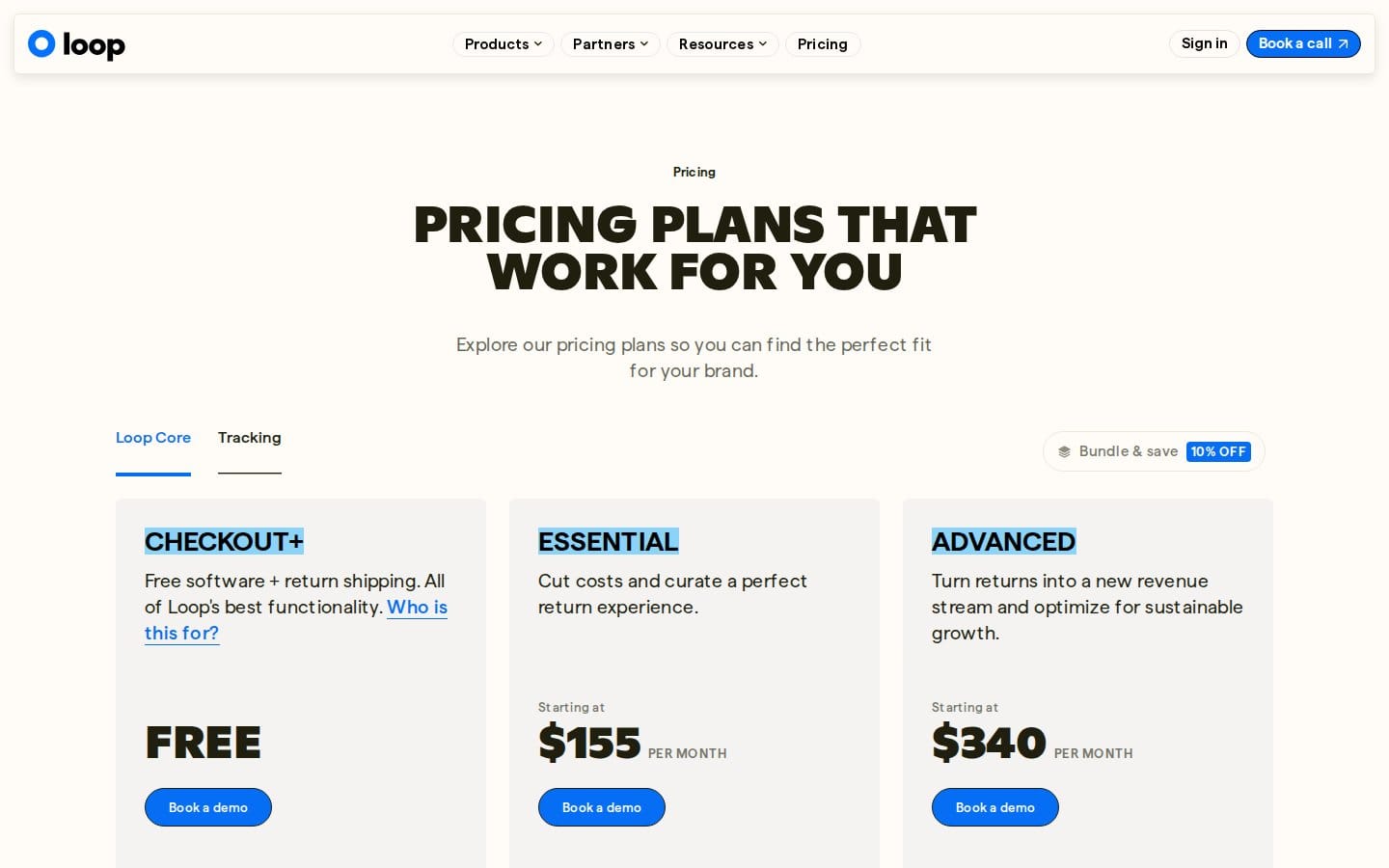
Loop Returns is an exchange-first post-purchase platform built primarily for Shopify brands. The core idea is that a return should be a chance to keep the customer spending — not just an outbound refund. The "Shop Now" feature lets customers browse the full catalogue during the return flow and apply their return credit to anything, not just a straight swap of the same item. For a brand processing 500 returns a month, converting even 20% of those into exchanges at a similar AOV adds up quickly.
Strengths
- Exchange-first return flow with Shop Now and Instant Exchanges keeps revenue in-house rather than triggering a refund
- Automated return policies and workflows reduce manual CS handling at volume
- Built-in fraud detection protects against serial returners and policy abuse
Best fit
High-volume Shopify brands that want to convert returns into retained revenue rather than just process refunds cleanly. One thing to model before you commit: order tracking pricing is based on plan and monthly shipment volume, with a flat fee covering a set estimate and a per-shipment fee above that threshold. If you're weighing options, our roundup of Shopify returns apps covers the broader landscape.
AfterShip Returns
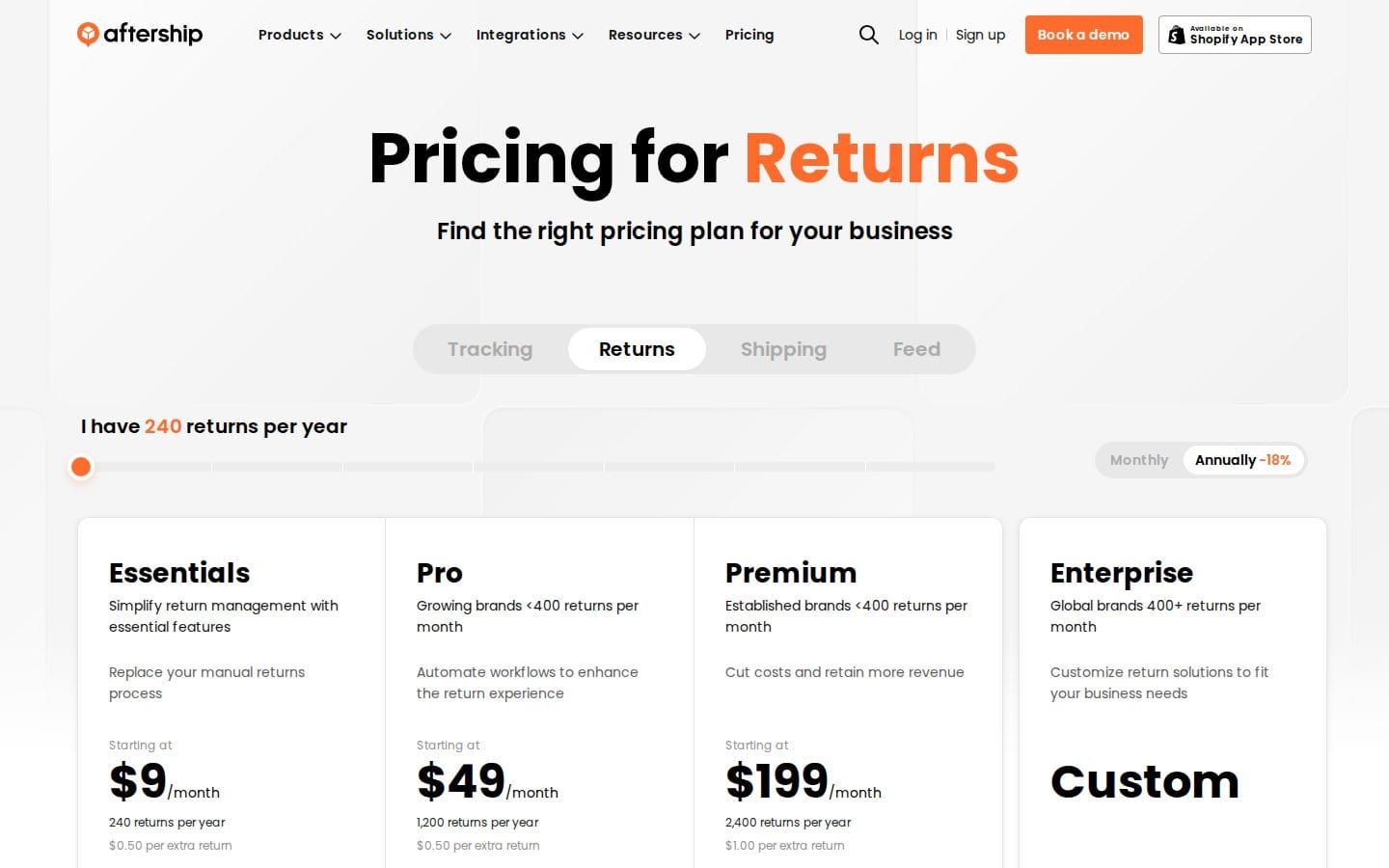
AfterShip Returns is a returns automation platform covering branded returns pages, automated resolution workflows, and incentivised exchanges. It integrates with a wider range of platforms than Loop — including BigCommerce and WooCommerce — so if you're not Shopify-native, this is usually the more natural fit.
Strengths
- Branded returns page keeps the post-purchase experience on-brand rather than handing customers off to a generic portal
- Real-time return shipment tracking cuts "where's my refund?" tickets
- Incentivised exchanges and store credits give brands levers to retain revenue during the return flow
Best fit
Multi-platform brands (Shopify, BigCommerce, WooCommerce) or those at earlier volume stages where cost efficiency matters more than enterprise-level exchange automation. Worth knowing: all pricing tiers cap annual return volumes, and overages incur additional per-return fees — so model your projected return volume before choosing a tier.
Recommerce platforms
Returns that can't go back out as new don't have to be written off. Recommerce platforms turn graded, non-new stock into a revenue-generating resale channel — either embedded in your own storefront or routed through a managed marketplace. This is the layer that closes the loop between reverse logistics and actual recovered margin.
Arrive Recommerce
Arrive Recommerce is a full-stack recommerce solution covering SKU itemisation, grading, catalogue integration, and branded resale storefronts. The core idea: your non-new returns, excess inventory, and damaged goods get routed into a resale channel that sits inside your own brand experience — not offloaded to a third-party liquidator at pennies on the pound.
Strengths
- Recommerce Management System covers the full operational workflow: identification, grading, routing, and catalogue integration
- Ecommerce storefront technology embeds branded resale directly into your native website
- Full Stack Analytics combines front-end sales data with back-end operational metrics so you can see actual recovery rates by SKU
Best fit
Brands with enough return or excess stock volume to justify a dedicated resale channel. Requires physical return processing either in-house or through a designated 3PL — factor in that operational overhead before signing up.
Treet
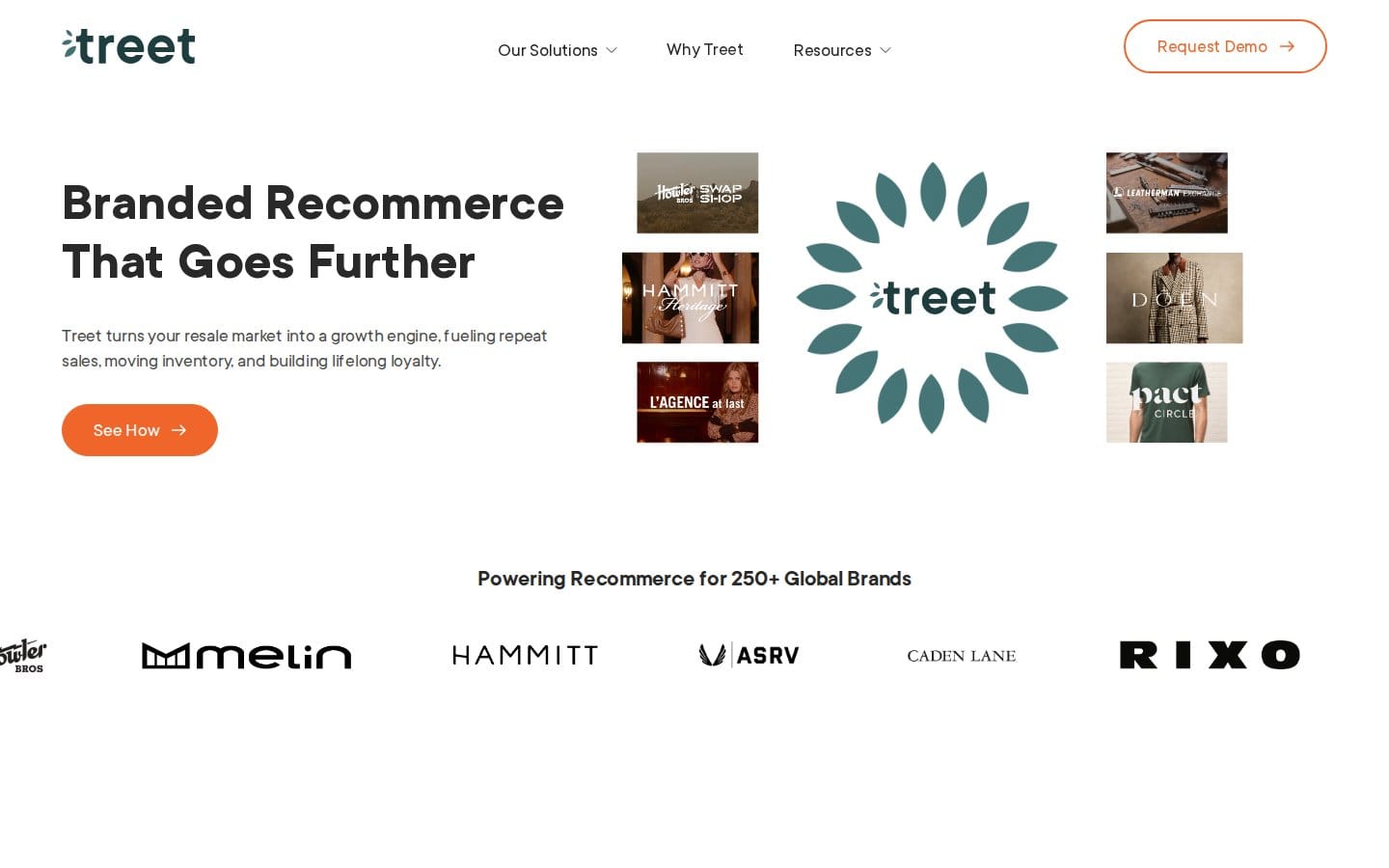
Treet is a branded resale platform with a particular focus on customer retention and marketing automation around the secondhand experience. It connects recommerce with loyalty, post-purchase emails, and AI-driven shopping recommendations — a more complete CX play than pure recommerce operations tools tend to offer.
Strengths
- Automated Marketing Engine (Price Drop Alerts, Post-Purchase Emails, AI Shopping Recs) drives resale conversion without manual campaign work
- Integrates directly with Loop, Happy Returns, and major loyalty platforms including Yotpo and LoyaltyLion
- Launch is measured in days rather than months — a meaningful difference for lean teams
Best fit
Fashion and lifestyle brands that want resale to feel like a proper part of their brand story, not a liquidation outlet. One gotcha worth knowing: products historically deleted from Shopify won't appear in the Treet Product Catalog and need manual upload — so audit your catalogue hygiene before onboarding. Fashion brands should also read our sustainable operations stack for fashion brands for the broader compliance context.
Rental and subscription management
Product-as-a-service is still niche for most e-commerce brands, but it's growing fast in furniture, baby equipment, outdoor gear, and electronics. Managing recurring billing, asset tracking, and return logistics for rented or subscription physical products requires purpose-built tooling. Standard Shopify subscription apps weren't designed for it.
circuly
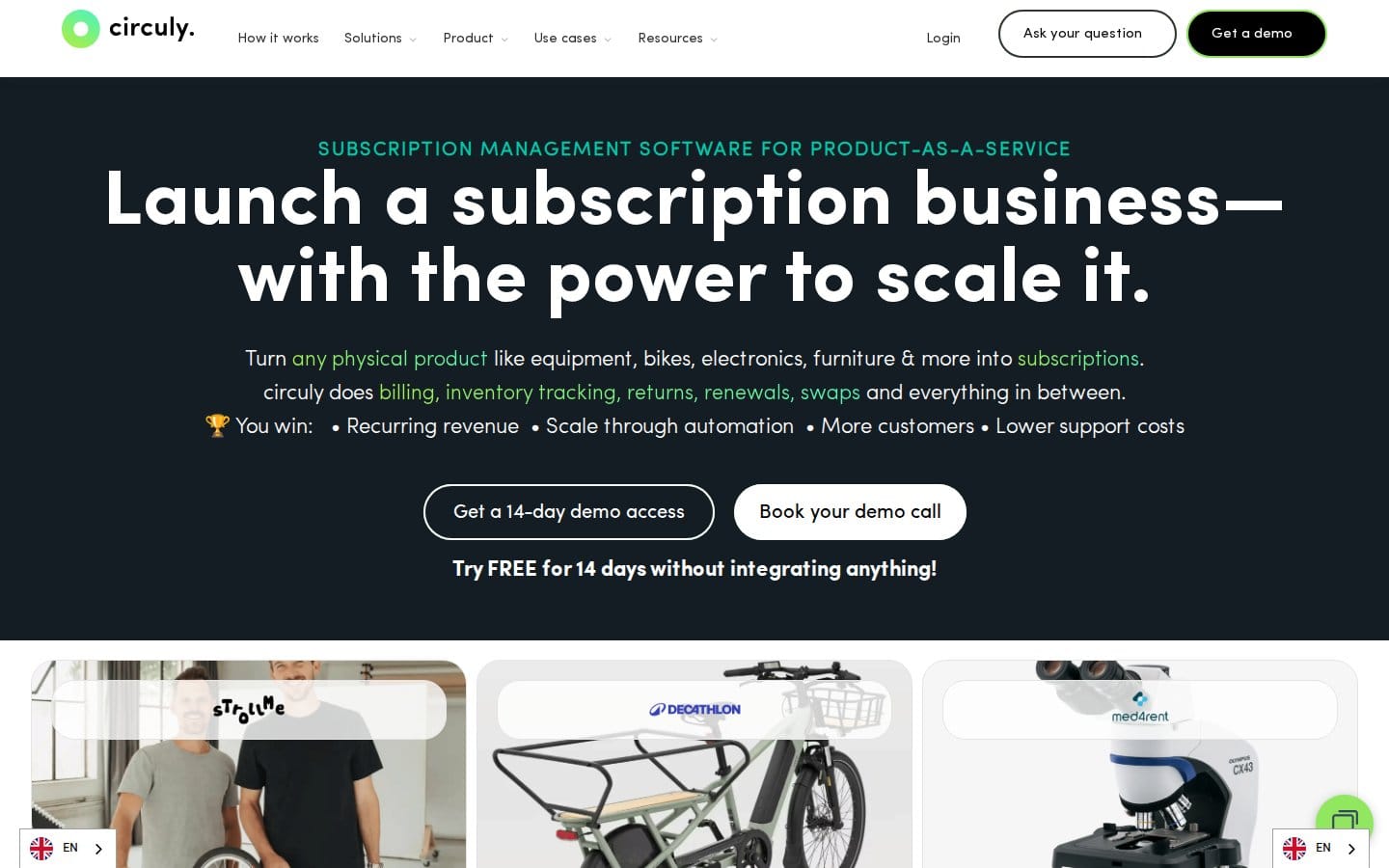
circuly is a subscription and rental management platform built specifically for physical products. It handles the full lifecycle: recurring billing, asset tracking, refurbishment status, dunning, and customer self-service for swaps, returns, and payment retrial. It integrates with Shopify, WooCommerce, and Shopware, and connects to Stripe and Adyen for payment processing.
Strengths
- Product and asset tracking covers inventory, returns, and refurbishing status — not just billing cycles
- Automated dunning and debt collection handles the awkward payment-failure scenario without manual intervention
- Flexible pricing logic supports complex rental models (short-term, long-term, swap-based)
Best fit
Brands launching a product-as-a-service or circular rental model from scratch. One thing to know: the default shop cart processes rent or buy orders but not both simultaneously. You'll need the circuly cart for combined transactions — a meaningful consideration if your store sells both ways.
Supercycle
Supercycle is a Shopify-native platform covering calendar rental, subscription rental, membership-based item swapping, and serialised resale with full item history. It's the most tightly integrated option for brands that want circular models running directly inside their Shopify storefront and POS without a separate system.
Strengths
- Covers multiple circular models in one platform: calendar rental, subscription, membership swap, and resale with history
- Risk management tools include ID verification, e-signatures, deposits, and card vaulting — essential for high-value rental items
- Native Shopify POS integration means in-store rental and online rental run on the same inventory
Best fit
Shopify merchants who want rental and resale to live natively in their existing storefront. Trade-in functionality is listed as coming soon — if that's a core requirement, factor that into your timing.
Warranty and repair management
This is the circular layer most brands underinvest in. It's where you extend product life rather than just processing an end-of-life return. Done well, it reduces refund rates, generates repair revenue, and feeds data back into product development. Dedicated tools outperform bolted-on helpdesk workflows here by a wide margin.
Claimlane
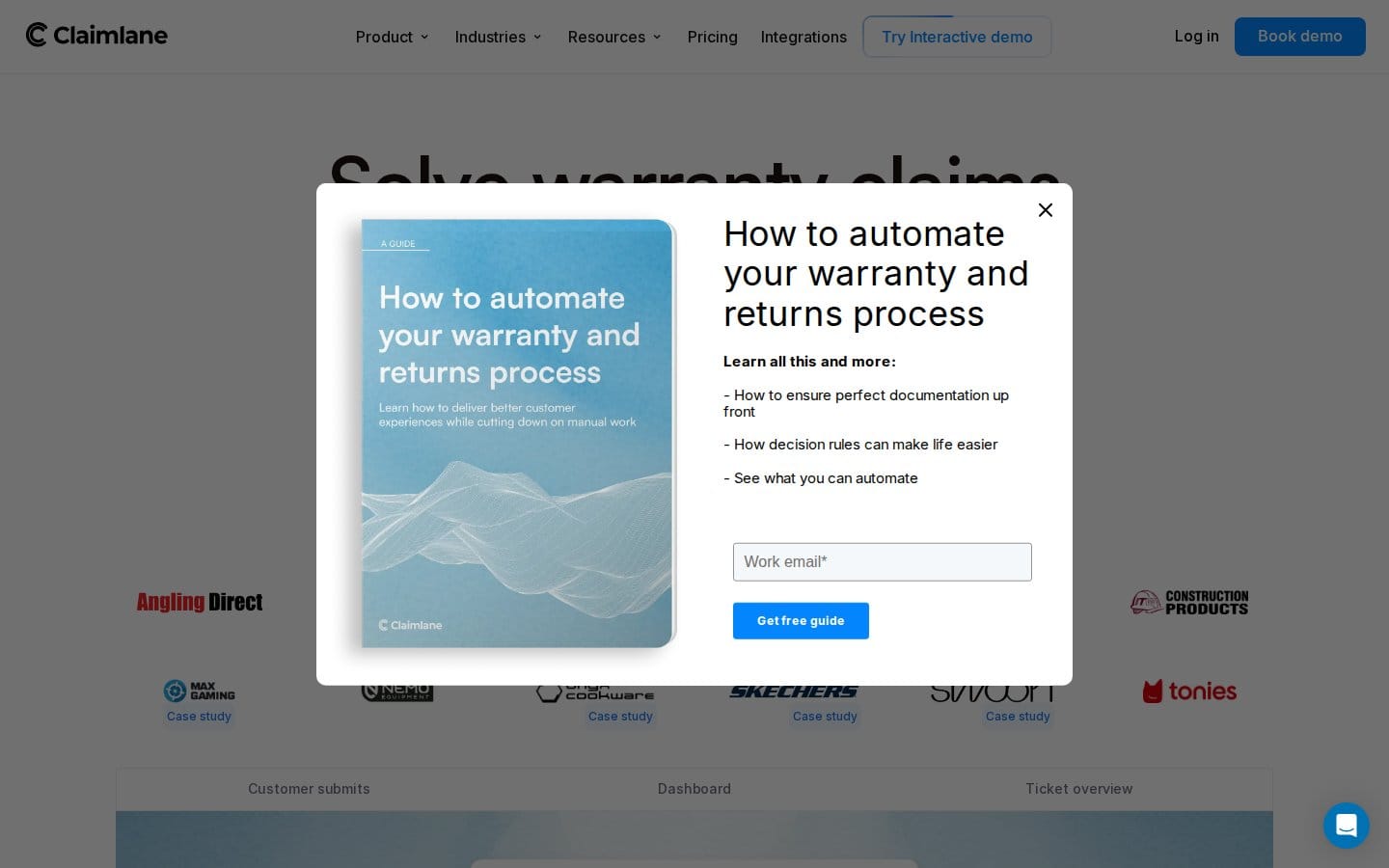
Claimlane centralises returns, warranty claims, and aftersales requests into a single workflow platform with an AI agent for faster, more consistent decisions. It's built for retailers, suppliers, and manufacturers handling both B2B and B2C claim volumes — so if you're also managing supplier claims (defective goods back up the supply chain), it handles both directions.
Strengths
- AI agent makes warranty and return decisions faster and more consistent, reducing per-claim handling time
- Centralised management of returns, warranty claims, and repair requests eliminates the multi-inbox problem
- Extensive integration list covers Shopify, Salesforce, NetSuite, SAP, Zendesk, Gorgias, and more
Best fit
Brands with meaningful B2B or wholesale relationships alongside their DTC operation, or any brand with complex claim types across multiple product categories. The platform is fully responsive on mobile but doesn't have a dedicated mobile app — not a dealbreaker, but worth knowing for field-based teams.
Dyrect
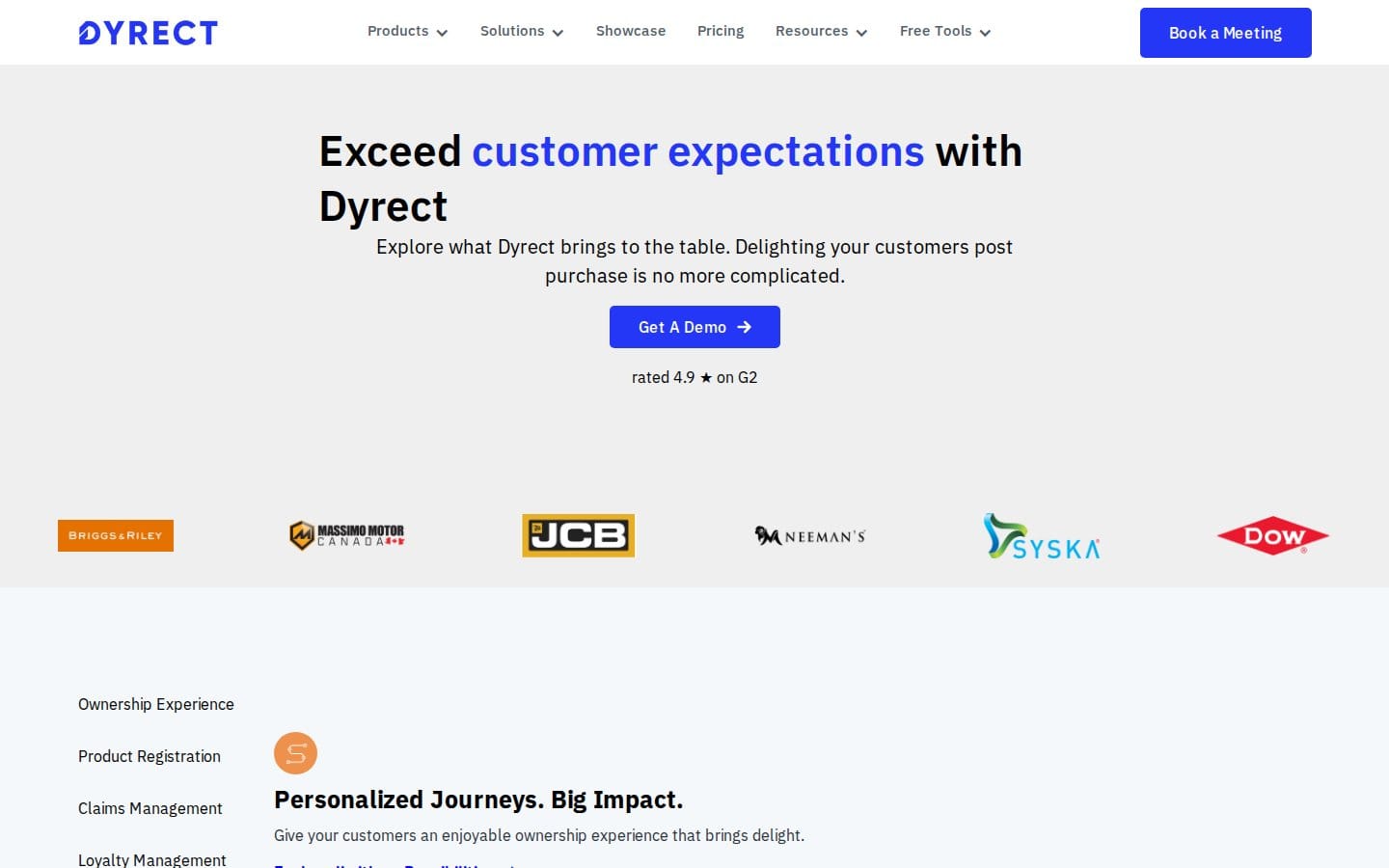
Dyrect focuses on product registration and warranty claims. Customers register products after purchase, which creates a first-party data asset for the brand while enabling structured warranty claim management — a cleaner alternative to manual proof-of-purchase verification.
Strengths
- Drag-and-drop registration form builder means setup doesn't require developer resource
- Integrates with Klaviyo, ActiveCampaign, and Mailchimp, so registered product data flows directly into CRM and retention campaigns
- Customer self-service portal reduces warranty claim handling load on support teams
Best fit
Consumer electronics, appliances, or any brand where product registration is a natural post-purchase behaviour. Lower pricing tiers include "Powered by DYRECT" branding — upgrade if white-labelling matters to your brand experience.
Sustainability and ESG reporting
This layer sits at the intersection of marketing and compliance. For most DTC brands, the immediate priority is being able to make credible sustainability claims at checkout — not filing a full CSRD report. But as EU regulations tighten (France's CITEO reporting requirements being one example), the reporting layer will matter more operationally, not just for brand positioning.

EcoCart
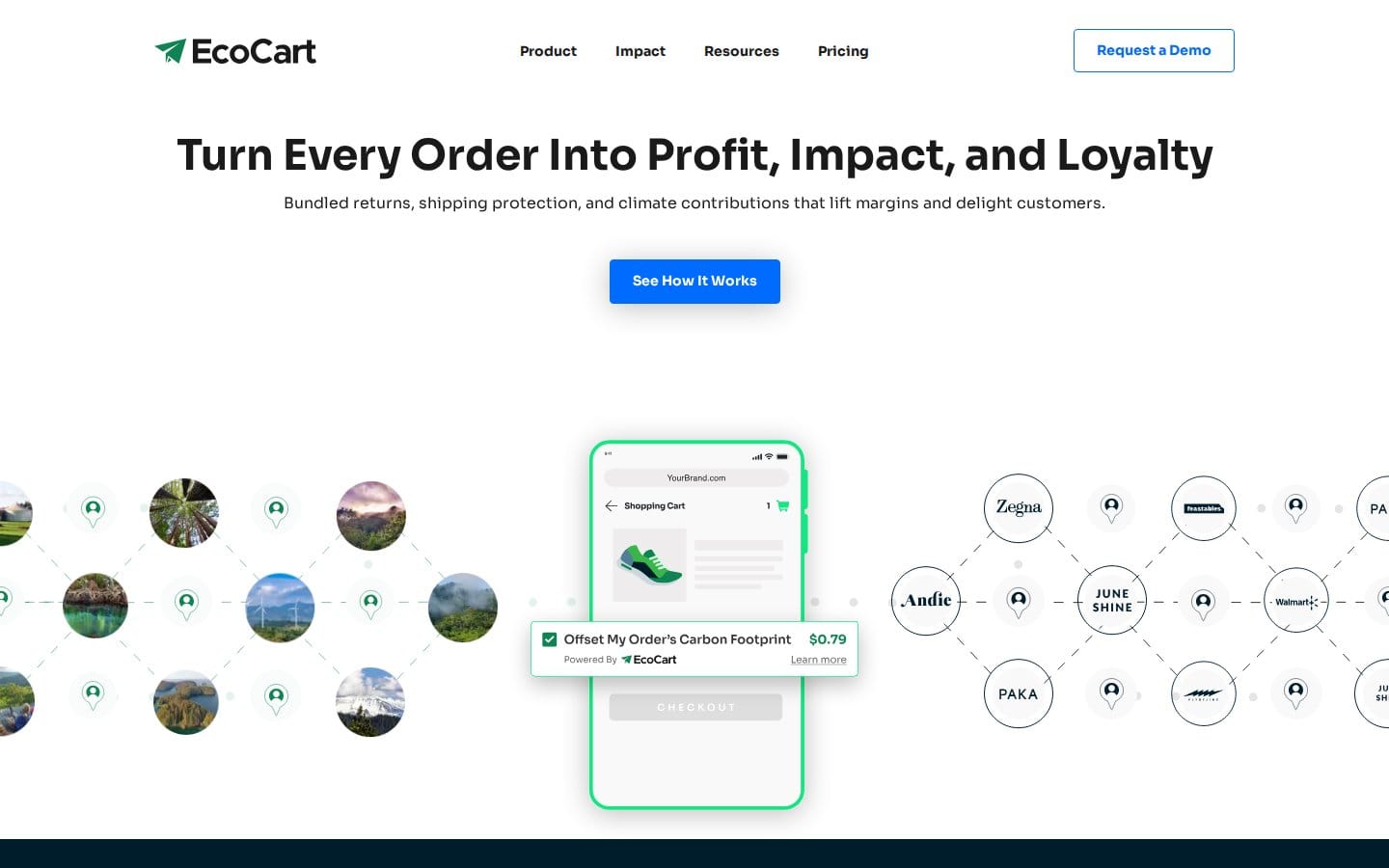
EcoCart adds green shipping protection and live sustainability impact displays to the Shopify checkout — carbon offset contributions, impact counters, cashback loyalty incentives tied to sustainable choices. It's more checkout-experience tooling than backend ESG reporting, but for DTC brands it's the fastest way to make sustainability tangible at the point of purchase.
Strengths
- Green shipping protection at checkout gives customers a visible, actionable sustainability option without friction
- Live impact counters, pop-ups, and branded landing pages make sustainability claims concrete rather than generic
- Merchant portal provides real-time metrics so you can track actual offset volumes and customer engagement
Best fit
Shopify-native DTC brands that want sustainability built into the checkout experience and loyalty mechanics. Note that EcoCart charges may appear separately from your standard Shopify invoice — check billing setup during onboarding.
Product lifecycle management
PLM sits furthest upstream in the circular stack — it's where product design, materials data, and supplier collaboration live. For e-commerce brands, PLM matters increasingly because of the EU's Digital Product Passport requirements. The DPP is mandatory under the Ecodesign for Sustainable Products Regulation (ESPR) and a key action under the Circular Economy Action Plan. The European Commission expects DPP requirements to cover most physical goods sold in the EU by 2030, with batteries first — mandatory from February 2027.
Propel
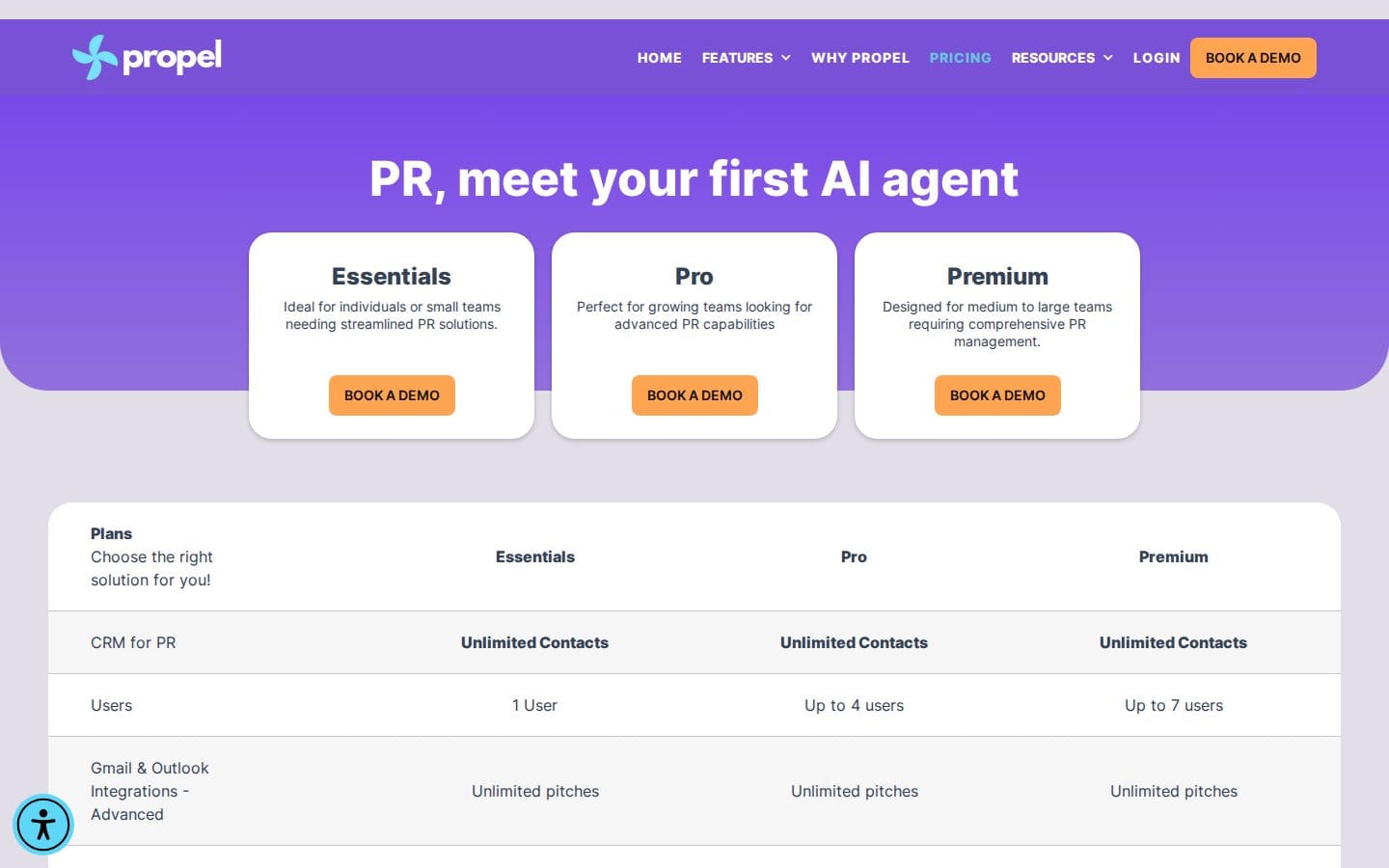
Propel is a PR-focused CRM platform with AI pitch writing, press release generation, and media monitoring. It's genuinely useful for communications teams managing sustainability narratives and ESG announcements. But let's be clear: this is a PR tool, not a product data or DPP compliance tool. If you need PLM in the product-traceability sense, Arena PLM below is the relevant option.
Strengths
- AI Tailored Pitch Writer and AI Press Release Writer speed up sustainability communications without an agency
- Media Contact Database and campaign performance analytics keep PR activity measurable
- Unlimited contacts on all tiers means it scales without per-contact pricing friction
Best fit
Brands with an active PR function managing sustainability storytelling, press coverage, and media outreach. Not a product data or compliance tool — don't buy it expecting DPP functionality. The Essentials tier limits monitoring to 10 alerts, which may be tight if you're tracking multiple sustainability topics.
Arena PLM
Arena PLM (now under PTC) is a cloud-native product lifecycle management platform covering bill of materials management, change management, document control, quality, and supplier collaboration. For e-commerce brands selling physical goods into EU markets, this is the layer where DPP-relevant product data — materials composition, supplier information, disassembly instructions — gets captured and managed.
Strengths
- BOM and Change Management keep product specifications accurate across development and into production — critical for DPP data quality
- Supplier Collaboration tools bring supplier data into the same system rather than leaving it in email chains
- Cloud-native with integrations to CAD, ERP, and CRM systems
Best fit
Brands with genuine product development complexity — multiple SKUs, multiple suppliers, regulatory compliance requirements. Pricing is contract-based with a minimum 12-month subscription. This is an enterprise-tier investment, not something you trial casually.
Inventory and compliance management
Running a circular stack means more SKU states to track — new, returned, graded, refurbished, rented, under warranty. Multi-channel inventory management and compliance reporting sit underneath all of the above, holding the operational picture together.
Ceendesis
Ceendesis combines multi-channel inventory management, EPR compliance reporting, and marketplace-to-accounting synchronisation in a single platform — which matters specifically when your circular operations create more data flows to reconcile. If you're running resale and rental alongside new stock, your inventory layer needs to handle multiple product states across multiple channels, not just standard inbound/outbound. Compliance reporting for packaging and batteries (including the 2027 battery DPP requirements) is built in rather than bolted on.
Strengths
- Combines multi-channel inventory, EPR compliance, and marketplace-to-accounting sync in one platform
- Built for brands selling on Shopify, Amazon, eBay, Walmart, and TikTok Shop
- Native Xero and QuickBooks reconciliation for marketplace payouts — relevant if recommerce revenue needs clean accounting separation. See our guides on reconciling Shopify payouts in Xero and connecting Amazon Seller Central to QuickBooks
Best fit
Brands on 2+ marketplaces — overkill for single-channel Shopify-only stores. Visit ceendesis.com for current pricing.
The stack at a glance
| Category | Tool | Free tier | Best integration |
|---|---|---|---|
| Reverse Logistics | Loop Returns | Yes (Checkout+) | Shopify |
| Reverse Logistics | AfterShip Returns | Yes | Shopify, BigCommerce, WooCommerce |
| Recommerce | Arrive Recommerce | No | Loop Returns, Shopify |
| Recommerce | Treet | No | Shopify, Klaviyo, Loop |
| Rental & Subscription | circuly | Yes | Shopify, Stripe |
| Rental & Subscription | Supercycle | Yes | Shopify, Shopify POS |
| Warranty & Repair | Claimlane | No | Shopify, Salesforce, NetSuite |
| Warranty & Repair | Dyrect | Yes | Shopify, Klaviyo |
| Sustainability & ESG | EcoCart | Yes | Shopify Checkout |
| Product Lifecycle | Propel | No | Gmail, Outlook |
| Product Lifecycle | Arena PLM | Yes (trial) | ERP, CAD systems |
| Inventory & Compliance | Ceendesis | — | Shopify, Amazon, Xero, QuickBooks |
Frequently asked questions
What is a circular economy tech stack?
A circular economy tech stack is the set of software tools a brand uses to extend product life beyond the initial sale — covering returns management, resale, rental, repair, warranty, and sustainability reporting. It's a distinct software category from standard e-commerce ops tooling because it tracks products through multiple lifecycles rather than just inbound procurement and outbound fulfilment. The stack typically spans four to six categories depending on the business model.
How can e-commerce brands implement a circular business model?
Start with the highest-impact, lowest-complexity layer: reverse logistics. Getting an exchange-first return flow in place (Loop or AfterShip) is the fastest way to recover margin from returns. From there, add a recommerce channel (Arrive or Treet) to monetise stock that can't be resold as new. Warranty and repair management comes next if your product category has meaningful post-purchase service needs. Rental and subscription models require more operational infrastructure and are best approached once the returns and resale layers are stable. For brands selling into the EU, compliance tooling for EPR and eventually the Digital Product Passport should be planned in parallel — not left until you get a penalty notice. Our PO workflow automation guide covers how to build cleaner upstream processes that support circular operations.
What software is needed for reverse logistics and recommerce?
Reverse logistics software splits into a few functional layers: self-service return portals, automated disposition workflows (refund, exchange, repair, resale), carrier management, and fraud detection. Brands rarely buy one tool to cover all of it. The more common approach is a return management platform (Loop or AfterShip) feeding into a recommerce platform (Arrive or Treet) for non-new stock disposition. AI is increasingly used to make disposition decisions at intake — routing items to the right channel (refund, repair, resell, recycle) without manual assessment at scale. Inventory management sits underneath all of this to track stock states across channels. If you're weighing options across the returns space, our Shopify returns apps comparison goes deeper on the returns layer specifically.
How does the Digital Product Passport (DPP) enable a circular economy?
The DPP is a data record — stored digitally and typically accessed via a QR code or RFID — that captures a product's materials, origin, repairability, disassembly instructions, and end-of-life options. It gives repair technicians, refurbishers, and recyclers the information they need to actually act on a product rather than landfill it. That's what makes it a genuine circular economy enabler rather than just a compliance exercise. The DPP is mandatory under the ESPR and phases in by product category. Battery products face the first hard deadline — February 2027 for industrial and EV batteries above 2 kWh — with most other physical goods expected to be in scope by 2030. For brands selling battery-containing products, this isn't a distant planning exercise. Our EU Battery DPP guide covers what compliance looks like in practice for e-commerce sellers.
Where to start — and what to defer
If you're an early-stage DTC brand doing under £2 million in revenue, the essential tier is simple: a returns management platform and basic inventory tracking. That's it. Everything else is noise until your return volume justifies the tooling overhead.
At the £2–10 million stage, add a recommerce channel. Even routing 15–20% of returns into a graded resale stream materially changes your unit economics on returned goods. A warranty and product registration tool also starts paying back at this stage — both in reduced refund rates and in first-party customer data.
Rental, subscription, and full PLM are mid-to-large brand territory. They need genuine operational capacity to run well. Arena PLM in particular is a significant procurement decision — don't evaluate it until DPP compliance is an active regulatory priority for your product category.
And throughout all of it, make sure your inventory layer can actually track what's happening. Multi-channel brands running resale alongside new stock need an IMS that handles multiple SKU states — not a spreadsheet with a returns tab bolted on. For a broader look at building operations infrastructure that scales, see the full EU expansion stack and our shipping software guide for the outbound logistics side of the picture.
Screenshots are from each tool's public pricing or features page, captured June 2026. We are not affiliated with any third-party tool listed unless explicitly noted.