
The 7-Figure DTC Operations Stack

Last verified: May 2026
Key takeaways
- A 7-figure DTC operation typically runs 6–8 specialist tools in parallel — each doing one job well rather than one platform doing everything poorly.
- Klaviyo, Gorgias, and Triple Whale are the closest things to universal anchors in a growth-stage DTC stack — most brands at this level already have them.
- Inventory and compliance are the two categories most likely to create expensive bottlenecks as you scale into new channels and markets. Don't treat them as afterthoughts.
- Free tiers exist across most of these tools, but almost every one has real limitations — know what you're giving up before you commit.
- If you're on 2+ marketplaces, a single platform that unifies inventory, compliance, and accounting sync will save you more time than optimising any single marketing tool.
There's a point in most DTC brands' lives where the spreadsheets stop working. Orders are coming in from Shopify and Amazon at the same time. Customer emails are piling up in a shared Gmail inbox. You're manually copying payout figures into Xero every month. You know you need a proper tech stack — you're just not sure which tools actually belong in it at your stage.
This article is for brands doing serious volume: typically £1M+ in annual revenue, selling on at least two channels, with a small ops team (or a founder still handling a lot of the ops themselves). We're not going to tell you to buy everything on this list. What we will do is give you an honest breakdown of what each category does, which tools are worth evaluating, and where the real trade-offs are. For the operational backbone — inventory, warehouse workflows, and compliance — also read our guide on ecommerce workflow automation for 2026.
One honest framing before we start: the right stack depends entirely on your channels, your margins, and how fast you're growing. A brand doing £1M on Shopify-only has different needs than one doing £3M across Shopify, Amazon, and wholesale. Keep that in mind as you read.
Email & SMS marketing
At 7 figures, email and SMS aren't optional extras — they're often your highest-ROI channel, full stop. The tools in this category turn one-time buyers into repeat customers, recover abandoned carts, and run retention campaigns that don't require you to keep paying Meta for every single touchpoint.
Klaviyo
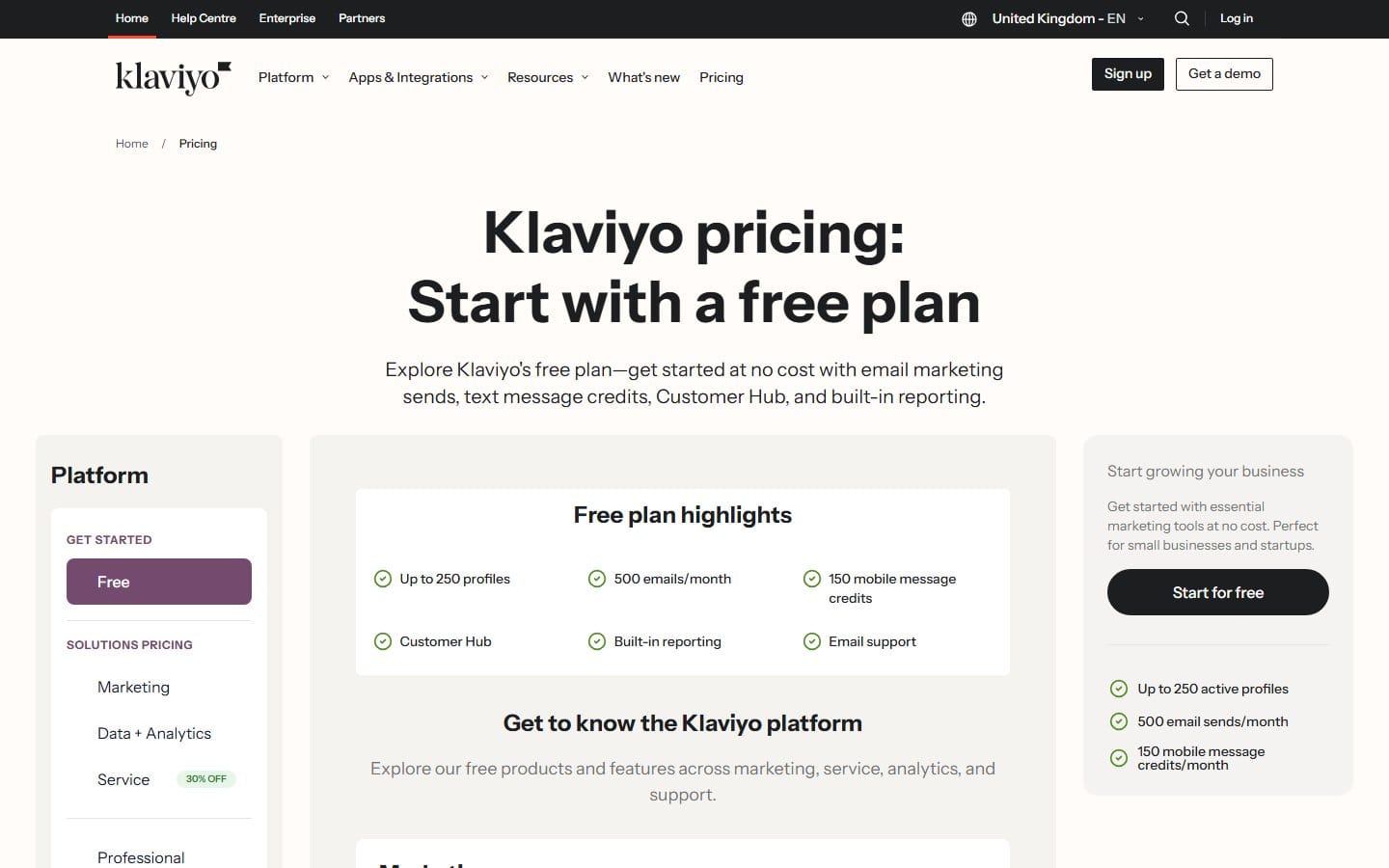
Klaviyo has become the default choice for serious DTC brands, and for good reason. It's built specifically for e-commerce, with customer profiles that pull in purchase history, browse behaviour, and predictive lifetime value data — not just email opens.
Strengths
- AI-powered customer profiles with predictive analytics — including predicted next order date and churn risk — so you can trigger flows at exactly the right moment.
- Automated flows for email, SMS, and push notifications, with a visual builder that most mid-size teams can manage without developer support.
- Advanced audience segmentation that syncs directly to Meta Ads and Google Ads, so your paid and owned channels share the same customer data.
Best fit
A strong choice for any B2C brand with a meaningful customer database that wants to move beyond batch-and-blast email. Worth noting: SMS, WhatsApp, Reviews, and Analytics modules are charged separately on top of the base email plan, so model the full cost before committing.
Customer support
At scale, customer support becomes an operational cost centre — unless you build it right, in which case it becomes a retention tool. The difference between a good and bad support stack at 7 figures can easily be 15–20 hours of team time per week, and measurable differences in repeat purchase rates.
Gorgias
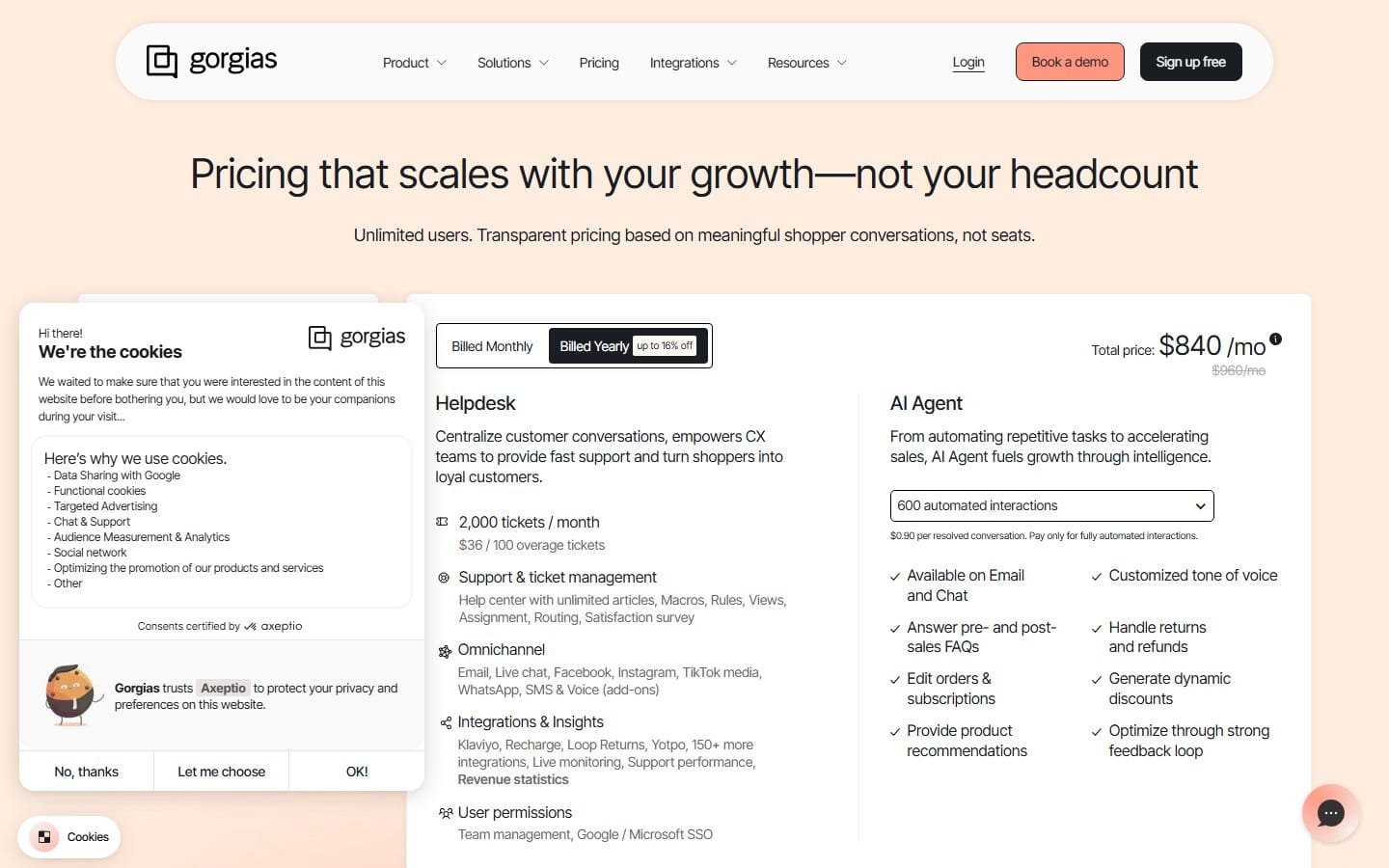
Gorgias is purpose-built for e-commerce, which sounds like marketing copy until you actually use it. The deep Shopify integration means your support agents can see order history, issue refunds, and edit subscriptions directly inside a support ticket — without switching tabs.
Strengths
- Omnichannel support covering live chat, email, social media, and SMS from a single inbox — no more juggling five browser tabs.
- AI Agent handles a meaningful volume of repetitive queries (order status, return policy, tracking) automatically, which at 7 figures can absorb a large chunk of incoming volume.
- Native integrations with Klaviyo, Yotpo, Recharge, and Loop Returns — so your support team sees the full customer picture without logging into four separate tools.
Best fit
The obvious choice for Shopify-centric brands with moderate-to-high support volume. Voice and SMS channels are available as paid add-ons, so factor that in if those channels matter to your customer base.
Zendesk
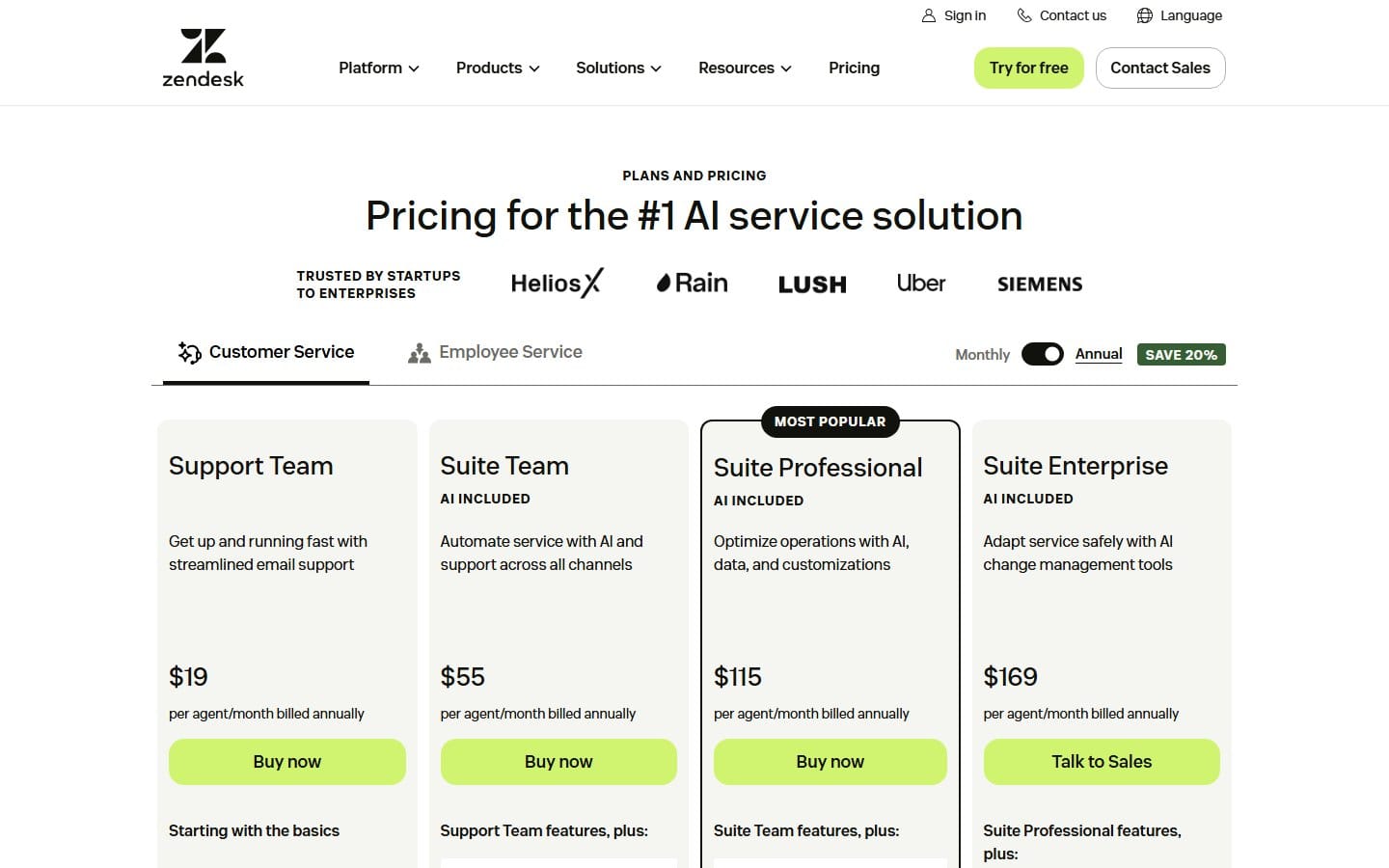
Zendesk is the more enterprise-grade option — broader feature set, better suited to teams with complex internal routing needs, and more established in B2B and omnichannel retail contexts.
Strengths
- Mature ticketing system with sophisticated routing, escalation rules, and SLA management — better for brands with specialist support teams rather than generalist agents.
- Self-service knowledge base builder that, at scale, can deflect a significant share of inbound tickets before they reach a human.
- Broad integrations across enterprise tools — Jira, Salesforce, Slack, HubSpot — making it a good fit if you're operating with a larger cross-functional team.
Best fit
Better suited to brands with more complex support operations or non-Shopify platforms. Be aware that Zendesk Sell (the CRM module) is scheduled for shutdown on 31 August 2027 — if you're using it for sales pipeline management, plan a migration.
Analytics
You can't grow what you can't measure. At 7 figures, "analytics" usually means two separate things: baseline site and funnel data (what's happening on your store) and attribution (which marketing channels are actually driving revenue). Most brands need both.
Google Analytics
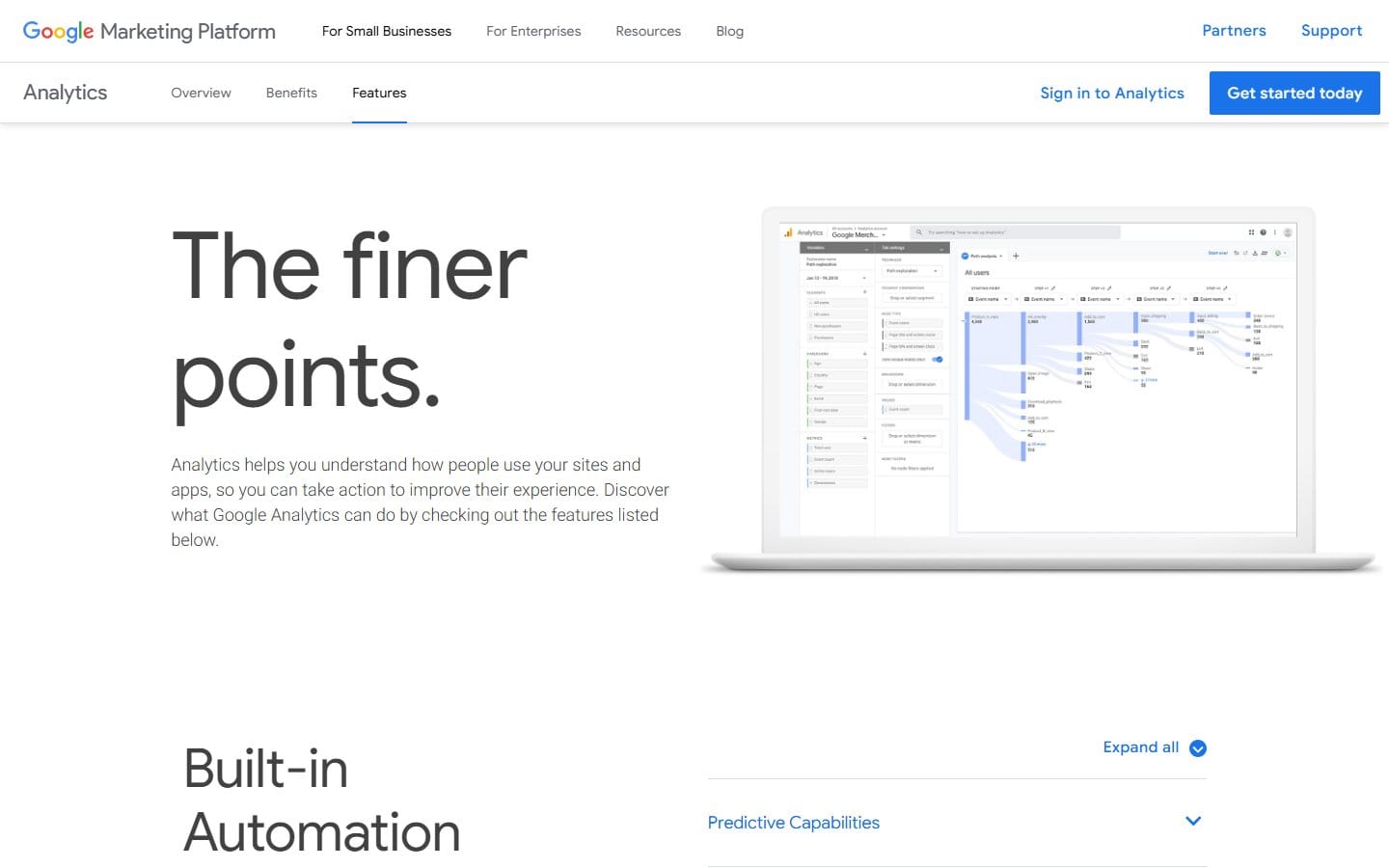
Google Analytics 4 is still the foundation — free, widely supported, and deeply integrated with Google Ads and BigQuery for brands that want to push data into dashboards or data warehouses.
Strengths
- Free-Form Exploration and Funnel Exploration reports let you build ad-hoc analyses without a data analyst — genuinely useful for diagnosing conversion drop-offs.
- Machine learning-powered insights surface anomalies and predictions (including churn probability and purchase likelihood) that would otherwise require custom modelling.
- Native integration with Google Ads, BigQuery, and Google Sheets means your marketing data has a clear path into reporting without third-party connectors.
Best fit
Foundational for any brand with a web presence — there's no good reason not to have it. That said, the free tier applies statistical sampling when data volume exceeds certain thresholds, which can distort reports at higher traffic levels. That's one reason many 7-figure brands layer a dedicated attribution tool on top.
Triple Whale
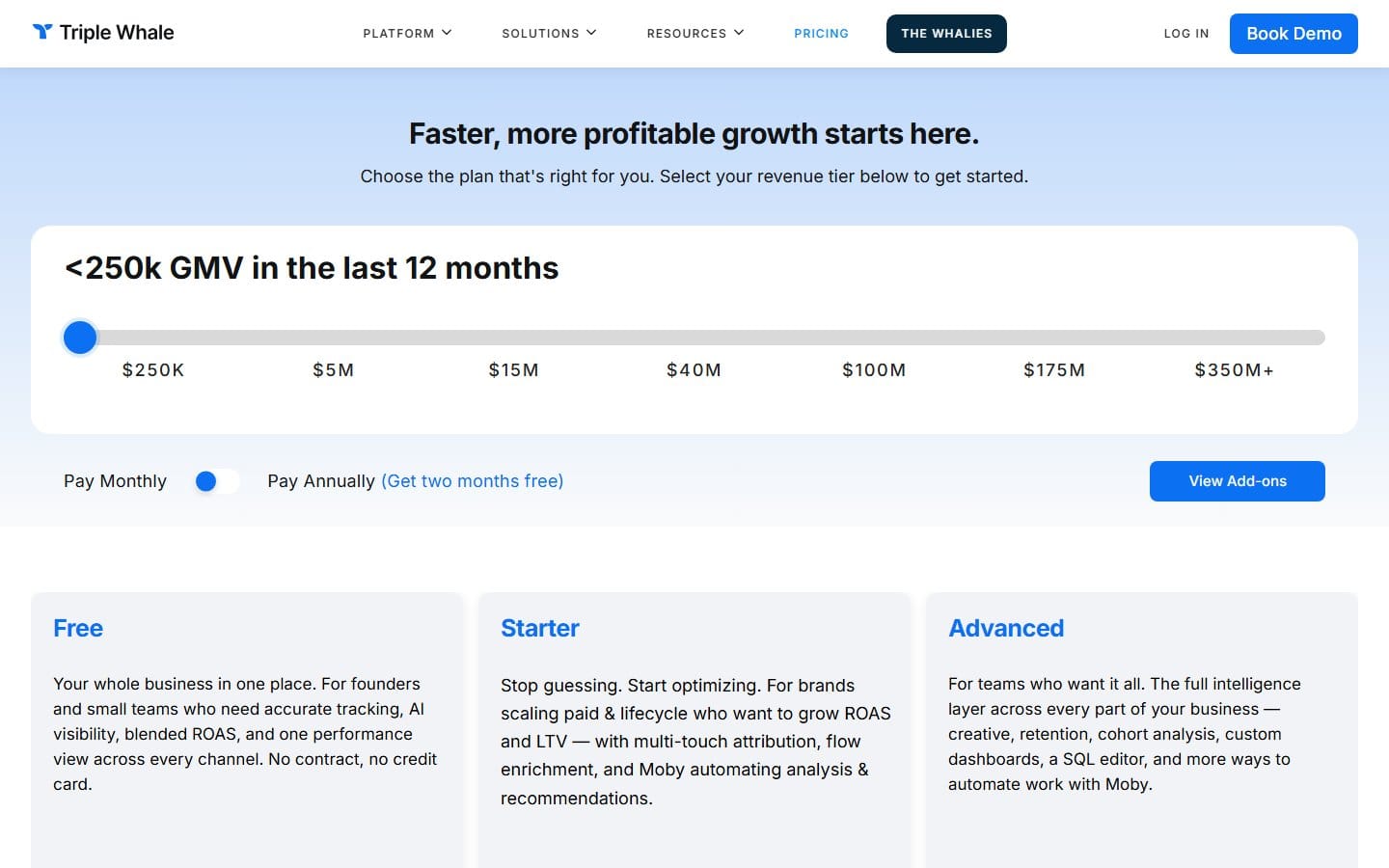
Triple Whale has become genuinely popular among performance-focused DTC brands — particularly those spending heavily on Meta and TikTok, where platform-reported attribution is notoriously unreliable.
Strengths
- Triple Pixel provides cross-device, cross-platform tracking and multi-touch attribution — giving you a cleaner picture of which channels are actually driving first purchase versus assisted conversions.
- Moby AI surfaces automated anomaly detection and actionable recommendations — useful for catching performance drops before they compound.
- Unified Dashboard centralises Shopify revenue, ad spend across platforms, and customer metrics in one view — cutting the time your media buyer spends assembling weekly reports.
Best fit
Built for performance marketers and e-commerce brands running paid social at meaningful scale. The free tier is capped at 10 users and a 12-month lookback window — fine for early testing, but growing brands will likely need a paid plan quickly.
Subscriptions
If your brand sells consumables, supplements, pet food, or anything with a natural repurchase cycle, subscription revenue is the most reliable line on your P&L. The tools in this category handle the billing, the customer portal, and — critically — the churn prevention logic that keeps that revenue intact.
Recharge
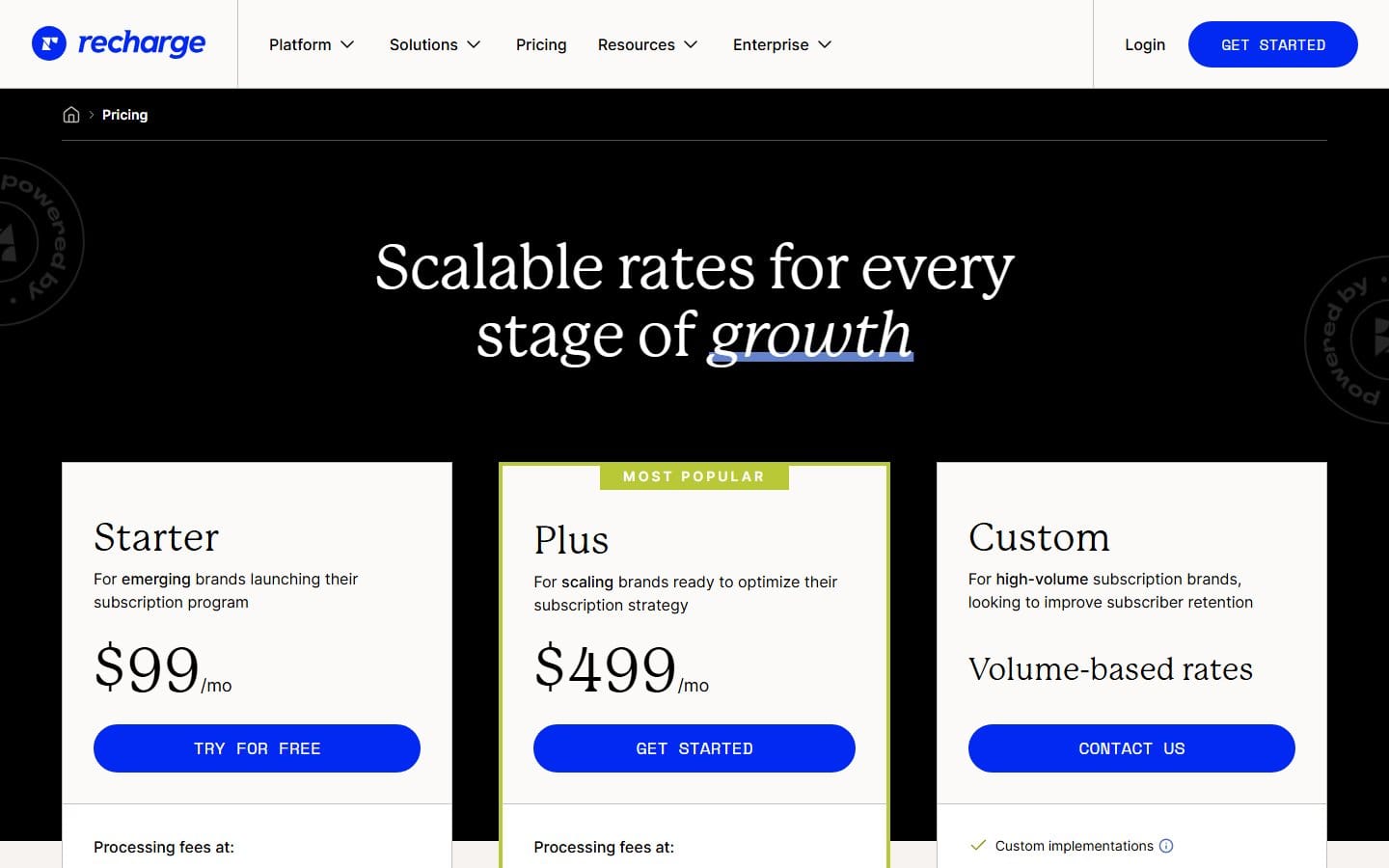
Recharge is the most established subscription platform in the Shopify ecosystem, handling everything from initial sign-up through recurring billing, customer-managed portals, and cancellation flows.
Strengths
- Predictive churn analytics and cancellation prevention flows — Recharge can trigger retention offers (discount, pause, swap product) before a customer cancels, which at scale makes a material difference to monthly recurring revenue.
- Customisable customer portal that lets subscribers manage their own frequency, skip orders, swap variants, and update payment methods without contacting support — cutting ticket volume significantly.
- Robust API and SDK for brands that need custom subscription logic beyond what the out-of-the-box flows support.
Best fit
The default choice for Shopify and BigCommerce subscription brands. If you're on a different e-commerce platform, you'll need to integrate via custom code or your storefront's API — worth checking feasibility before committing.
Loyalty & reviews
At 7 figures, customer acquisition costs are almost certainly your biggest variable expense. Loyalty and reviews tools attack that problem from both sides — reviews reduce the cost of converting new visitors, while loyalty programmes increase the lifetime value of existing customers. Together, they improve the unit economics of growth.

Yotpo
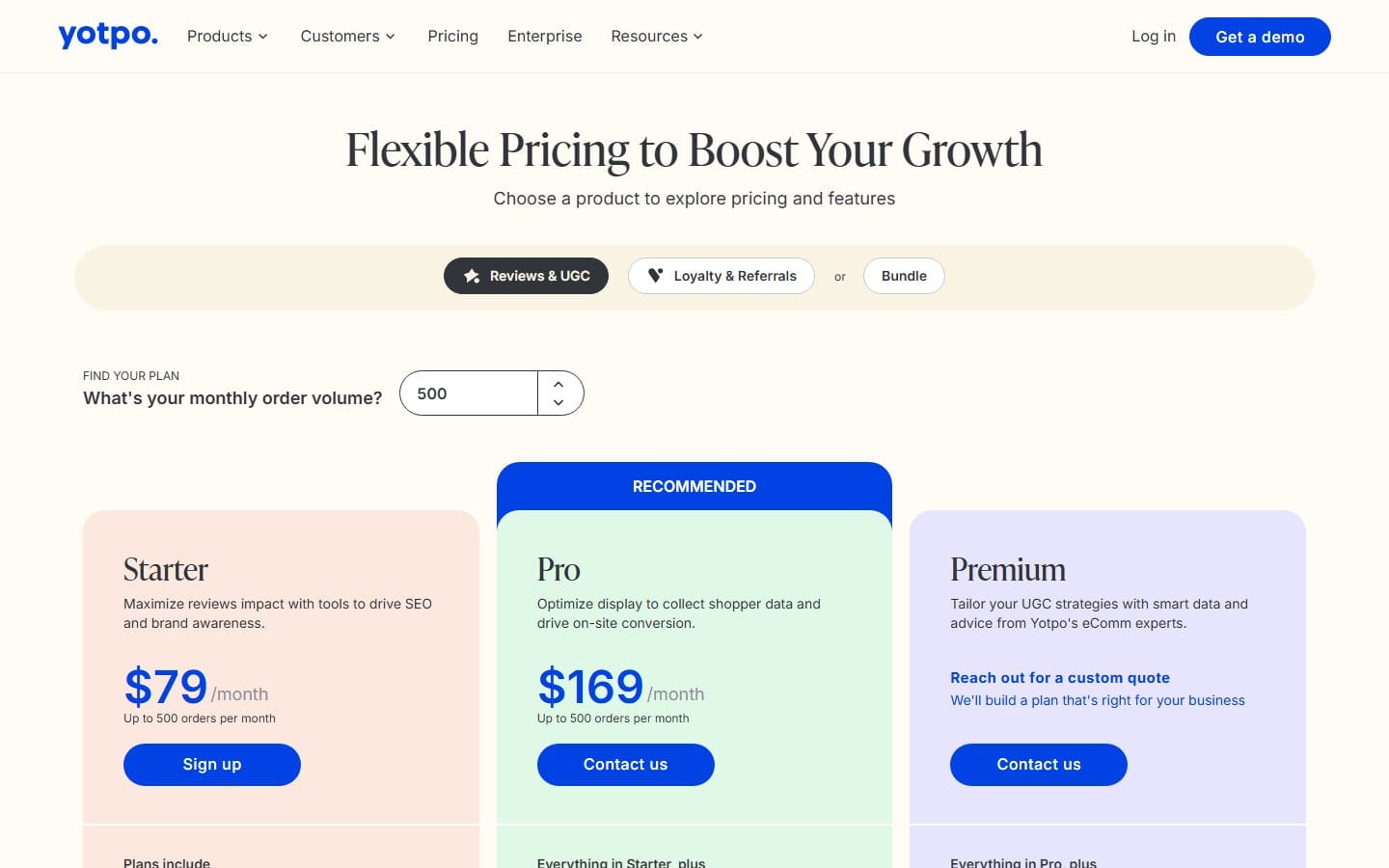
Yotpo combines reviews and UGC collection, loyalty programmes, and SMS marketing under one roof — which is genuinely convenient if you want to reduce the number of tools in your stack.
Strengths
- Reviews and UGC collection with photo and video display — authentic customer content that improves conversion rates on product pages without requiring a separate tool.
- Loyalty and referral programmes with points, VIP tiers, and referral campaigns, all manageable from the same dashboard as your reviews.
- SMS and email marketing for targeted campaigns — particularly useful for loyalty-triggered messages like point balance reminders and reward expiry nudges.
Best fit
A strong all-in-one choice for brands that want reviews and loyalty in a single platform. Note that Yotpo's SMS marketing feature integrates only with Shopify — if you're on a different platform, that module won't be available to you.
LoyaltyLion
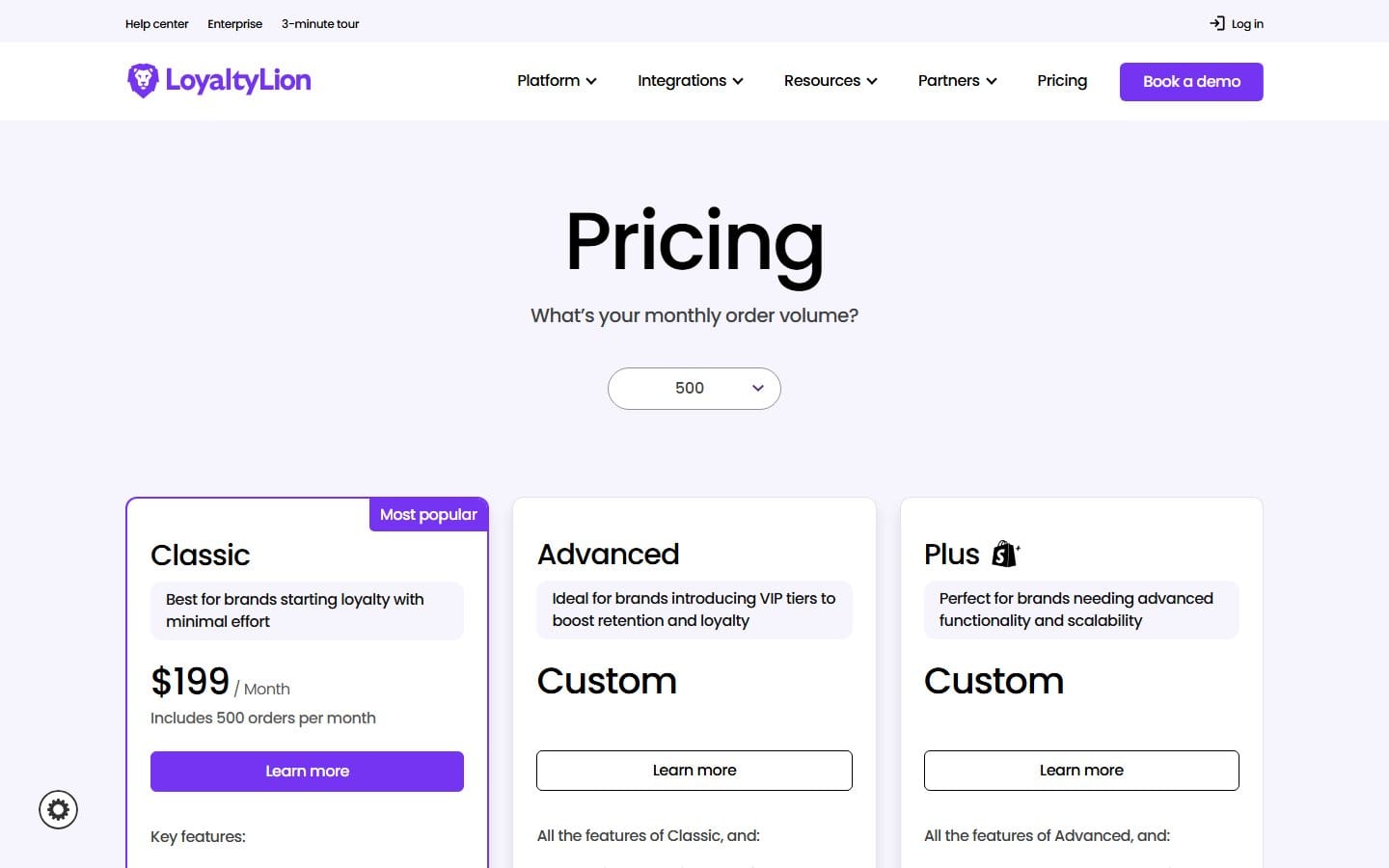
LoyaltyLion is a dedicated loyalty platform — it doesn't do reviews, but it goes deeper on the loyalty mechanics than most combined tools. If building genuine repeat-purchase behaviour is a strategic priority, it's worth evaluating alongside Yotpo.
Strengths
- Flexible rewards covering purchases, reviews, referrals, birthdays, and custom actions — plus tiered VIP programmes with exclusive perks that can genuinely differentiate your loyalty offering.
- AI-powered campaigns and personalised recommendations that adapt to individual customer behaviour rather than applying blanket rewards rules.
- Broad integrations including Klaviyo, Gorgias, Recharge, Yotpo, and Shopify POS — making it straightforward to wire loyalty data into the rest of your stack.
Best fit
Well suited to mid-market and enterprise brands where loyalty programme sophistication is a genuine retention lever. Notifications Analytics are part of the Plus Plan and aren't included in the Advanced Plan — review the tier breakdown carefully if reporting on notification performance matters to you.
Inventory, compliance & accounting
This is the category most DTC brands underinvest in until they're forced to. Inventory accuracy problems show up as oversells, stockouts, and write-offs. Compliance gaps — particularly EPR obligations across the UK, EU, and US — show up as fines and blocked marketplace listings. And accounting reconciliation problems show up as month-end chaos. At 7 figures across multiple channels, you need a single source of truth for all three. For operational workflows like ASN receiving and batch picking, that source of truth matters more than most brands realise — until something goes wrong.
Ceendesis
Ceendesis combines multi-channel inventory management, EPR compliance, and marketplace-to-accounting sync in one platform — built for brands that are tired of duct-taping three separate tools together. If you're selling across Shopify, Amazon, and other channels at the same time, the inventory sync alone is worth a look. We've written specifically about syncing Shopify inventory to Amazon FBA and the failure modes that come from doing it manually.
Strengths
- Combines multi-channel inventory, EPR compliance (UK PPT, Germany LUCID, France CITEO, and more), and marketplace-to-accounting sync in one platform — cutting a significant amount of manual data movement between tools.
- Built for brands selling on Shopify, Amazon, eBay, Walmart, and TikTok Shop — handles the channel complexity that causes the most operational pain at scale.
- Native Xero and QuickBooks reconciliation for marketplace payouts — if you've ever manually reconciled an Amazon statement, you'll understand why this matters.
Best fit
Built for brands on 2+ marketplaces — overkill for single-channel Shopify-only stores. If you're expanding into EU markets and need to understand packaging or textile compliance obligations, the Ceendesis compliance modules are particularly relevant alongside resources like our multi-country EPR packaging guide and our 2026 EPR compliance overview.
CRM
At the DTC level, "CRM" means different things to different brands. For some, it's a contact database that feeds marketing automation. For others, it's a full sales pipeline tool. Know which problem you're actually solving before picking a platform — most brands at 7 figures don't need the full enterprise CRM suite, and paying for capabilities you won't use is a real cost.
HubSpot
HubSpot is the most accessible full-stack CRM for scaling e-commerce brands — particularly those with a wholesale, B2B, or influencer partnership component alongside their DTC channel.
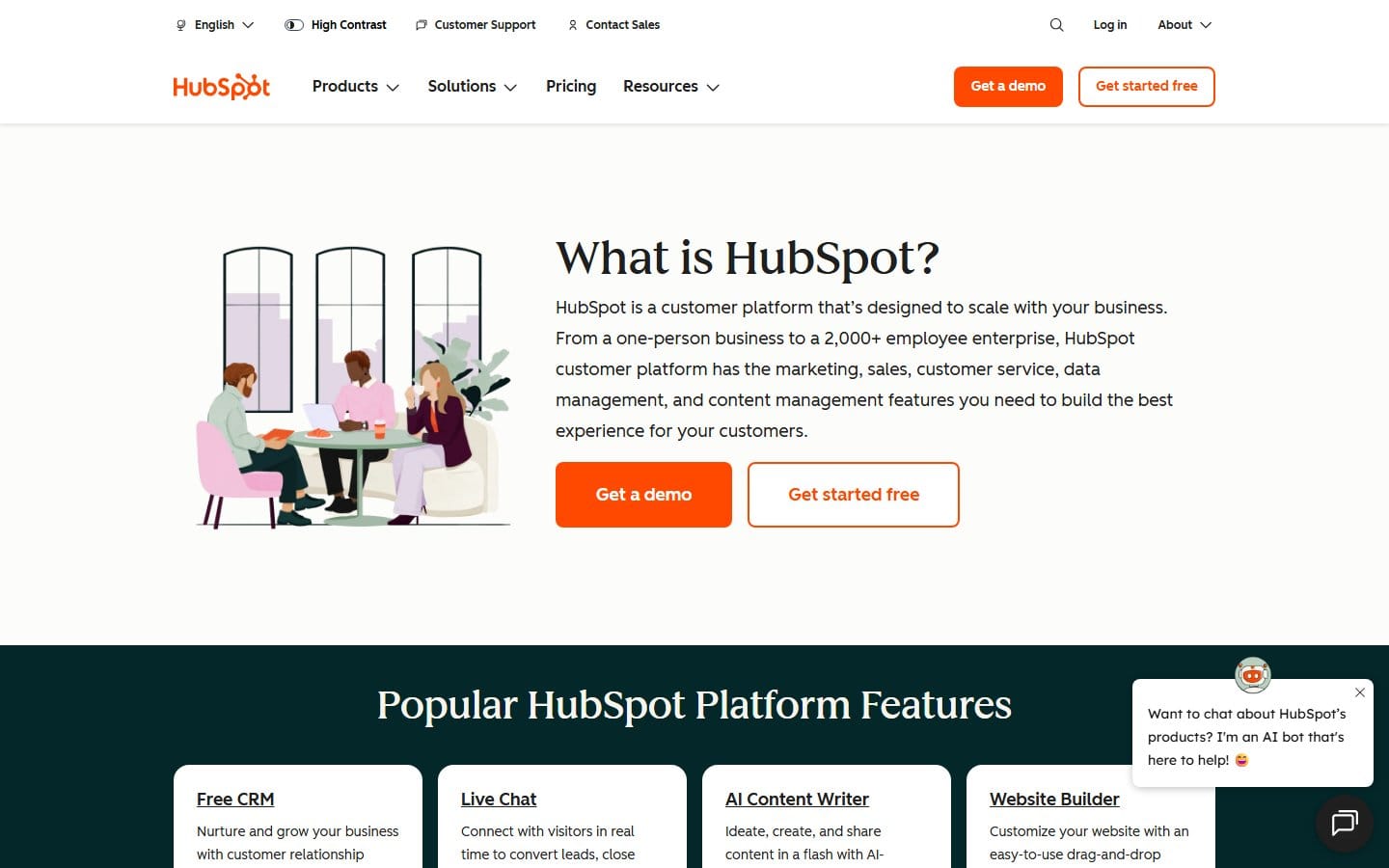
Strengths
- Contact and deal management with task tracking, pipeline views, and meeting scheduling baked in — a genuinely useful sales tool for brands managing wholesale accounts or brand partnerships alongside DTC.
- Marketing automation with email, landing pages, social media management, and SEO tools that can supplement (not replace) a dedicated tool like Klaviyo if your marketing team needs a CMS-side solution.
- Free tier is substantial enough to evaluate properly — though free accounts carry HubSpot branding on emails, landing pages, and chat widgets, which most brands will want to remove at scale.
Best fit
Strong for brands with a mixed DTC and B2B or wholesale model, or those that want a single platform for CRM and content. A pure DTC-only brand with Klaviyo already in place may find significant feature overlap between the two tools.
Salesforce
Salesforce is the enterprise end of the CRM spectrum — considerably more powerful, considerably more complex, and considerably more expensive to implement and maintain than HubSpot.
Strengths
- Contact, account, and opportunity management at a level of sophistication that supports very large, complex sales operations — including multi-territory, multi-currency, and multi-business-unit structures.
- AI-powered insights and automation via Einstein that go well beyond basic workflow rules — useful for brands with large customer bases and complex segmentation needs.
- Reporting and dashboard tools with a depth that's hard to match in more accessible platforms.
Best fit
Honest assessment: Salesforce is almost certainly more than most 7-figure DTC brands need, and the implementation cost is real. It makes sense if you have enterprise retail partnerships or a significant B2B component. The free tier is limited to 2 users and doesn't include advanced automation or AppExchange integrations — it's really just a trial.
The stack at a glance
| Category | Tool | Free tier | Best integration |
|---|---|---|---|
| Email & SMS Marketing | Klaviyo | Yes | Shopify, Meta Ads |
| Customer Support | Gorgias | Yes | Shopify, Klaviyo |
| Customer Support | Zendesk | No | Salesforce, Slack |
| Analytics | Google Analytics | Yes | Google Ads, BigQuery |
| Analytics | Triple Whale | Yes | Shopify, Meta Ads |
| Subscriptions | Recharge | Yes | Shopify, Klaviyo |
| Loyalty & Reviews | Yotpo | Yes | Shopify, Klaviyo |
| Loyalty & Reviews | LoyaltyLion | Yes | Shopify, Klaviyo |
| Inventory, Compliance & Accounting | Ceendesis | — | Shopify, Amazon, Xero |
| CRM | HubSpot | Yes | Salesforce, Stripe |
| CRM | Salesforce | Yes (2 users) | Slack, Google Workspace |
Frequently asked questions
What software do I need to scale my ecommerce business?
The honest answer is: it depends on where your current bottlenecks are. That said, most brands hitting 7 figures find they need at minimum an email and SMS marketing platform (Klaviyo is the most common choice), a dedicated customer support tool, something beyond GA4 for attribution, and an inventory management system that handles multi-channel sync without breaking. Subscriptions, loyalty, and CRM tools become worth the investment when you start actively optimising retention rather than just acquiring. Don't buy everything at once — work out which operational pain is costing you the most time or money right now, and start there. Our guide on ecommerce workflow automation covers how to sequence these investments sensibly.
What is a DTC tech stack?
A DTC (direct-to-consumer) tech stack is the combination of software tools your brand uses to run its operations — from storefront to fulfilment, marketing, customer support, analytics, and finance. Unlike a retailer that relies on a third-party platform to handle most of this, a DTC brand owns the customer relationship end-to-end, which means you also own the operational complexity. A well-designed stack means each tool talks to the others (via native integrations or APIs), data flows without manual intervention, and your team spends time making decisions rather than copying information between systems. The stack in this article covers the six most common functional areas where 7-figure brands need specialist tooling.
How do I automate my DTC operations?
Automation in DTC operations usually falls into a few buckets: marketing automation (flows in Klaviyo, AI responses in Gorgias), order and inventory automation (auto-routing, reorder triggers, channel sync), and financial automation (marketplace-to-accounting reconciliation). The highest-ROI automations are almost always the ones that eliminate the most repetitive manual tasks — which at 7 figures typically means inventory sync across channels, customer support triage, and post-purchase email sequences. Start by auditing where your team spends the most time on tasks that follow predictable rules — those are your best automation candidates. We've covered specific workflow patterns in our 2026 automation guide and the purchase order automation workflow guide.
What is the difference between an IMS and a WMS for a growing brand?
An Inventory Management System (IMS) is your central source of truth for stock levels, purchase orders, sales data, and channel sync — it answers "how much do I have and where is it?" across your entire business. A Warehouse Management System (WMS) focuses on the physical logistics inside a specific warehouse: pick paths, bin locations, receiving workflows, packing processes. At 7 figures, most brands need an IMS before they need a WMS. You need accurate stock visibility across all your channels before you start optimising the physical movements inside a single warehouse. If you're running your own fulfilment and starting to feel the pain of picking errors and receiving bottlenecks, our guides on batch picking and ASN receiving are worth reading alongside your IMS evaluation.
What's essential vs nice-to-have at different stages
If you're approaching 7 figures and building your stack from scratch, treat Klaviyo, Google Analytics, and an inventory management system as non-negotiable. Add Gorgias (or Zendesk if your support needs are more complex) once ticket volume justifies it — which for most brands is earlier than you think. Triple Whale becomes worth the investment when you're spending meaningfully on paid social and need attribution you can actually trust. Recharge is essential if you have any subscription revenue at all — the manual alternative doesn't scale.
Loyalty and CRM tools (LoyaltyLion, Yotpo, HubSpot, Salesforce) are genuine multipliers on the foundation — but they deliver diminishing returns if your acquisition and retention fundamentals aren't already solid.
And if you're selling into EU markets, don't defer compliance. The cost of being caught without EPR registrations in Germany, France, or the UK is real — and it compounds the longer you leave it.
That's the stack. Not everything you need on day one — but everything you'll need to run a genuinely efficient 7-figure operation.
Screenshots are from each tool's public pricing or features page, captured May 2026. We are not affiliated with any third-party tool listed unless explicitly noted.