
The Kitting-Focused Subscription Box Operations Stack

Last verified: July 2026
Key takeaways
- Subscription box kitting and fulfilment needs a tightly integrated stack — billing, IMS, email automation, and support all have to talk to each other.
- Recharge handles recurring billing on Shopify; Recurly suits mid-market brands with more complex billing needs.
- Klaviyo and Omnisend both have free tiers useful for early-stage brands, but their real value is in post-purchase retention flows.
- For support, Gorgias wins on Shopify-native depth; Zendesk wins on scale and ticket volume.
- Once you're shipping more than a few hundred boxes per month, outsourcing kitting to a 3PL and connecting your IMS is the most important operational decision you'll make.
Running a subscription box business looks deceptively simple from the outside. Customers subscribe, you ship a box, they're happy. But behind that box is a genuinely complex operations problem: you're managing component SKUs with their own lead times, building kits on a fixed schedule, and trying to keep churn low enough that the whole thing stays profitable. The right tech stack for subscription box brands looks different from a standard e-commerce stack — and the kitting side especially trips people up.
At 50 subscribers, assembling boxes by hand is fine. At 500, a single delayed component throws off the entire batch. At 5,000, you need systems — not just people. With subscription growth slowing across the board and retention becoming the primary lever for profitability, operational excellence in fulfilment is no longer optional.
This article covers the specific tools that support subscription box kitting and fulfilment — from recurring billing and email flows through to returns handling and analytics. It's aimed at operations managers and founders who already have a product and some subscribers, and want to build a stack that can grow without constantly breaking. We've structured it by category so you can swap in tools that fit your current stage.
Subscriptions
Your subscription management platform is the engine of the whole operation. It handles recurring billing, manages subscriber state (active, paused, cancelled), and — critically for kitting — determines which products go into which box on which date. If this layer isn't reliable, everything downstream breaks: the wrong SKUs get kitted, churn spikes, and your support team drowns. Automating order management on Shopify starts here.
Recharge
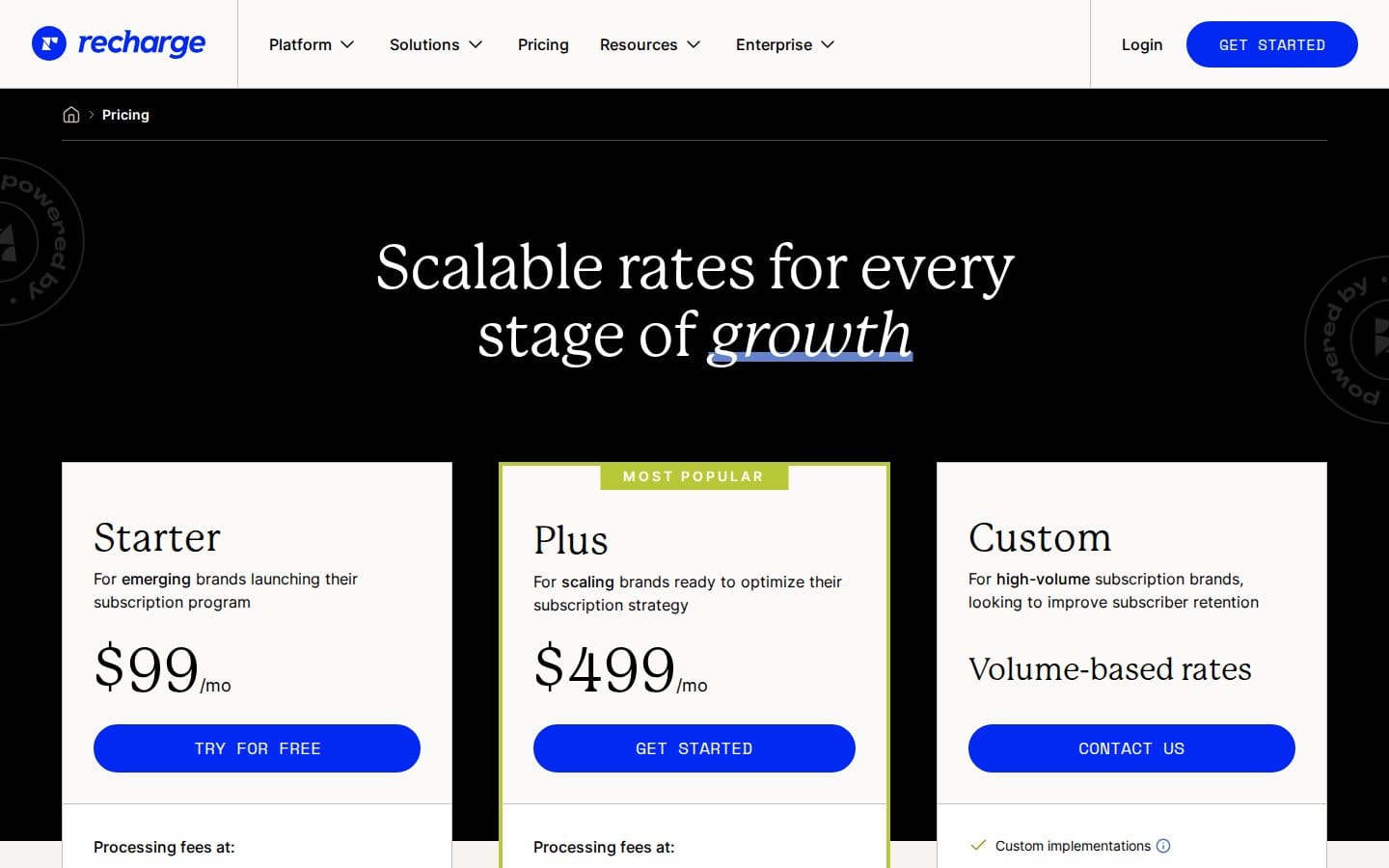
Recharge is one of the most widely deployed subscription billing platforms for Shopify and BigCommerce. It was built specifically for recurring commerce — not adapted from a SaaS billing tool.
Strengths
- A customisable customer portal with self-service options — skip, reschedule, product swap, payment updates — that cuts support volume significantly.
- Cancellation prevention and win-back campaigns that trigger based on subscriber behaviour.
- Failed payment recovery and automated dunning workflows that run without manual intervention.
Best fit
A strong choice for Shopify-first subscription brands that want a purpose-built recurring billing layer with solid Klaviyo and Gorgias integrations. Worth noting: all bundle functionality — relevant if you're offering curated or customisable boxes — requires the Plus plan or higher.
Recurly
Recurly is a subscription management platform built for mid-market and enterprise businesses, focused on billing automation, payment orchestration, and dunning management across multiple payment processors.
Strengths
- Automated invoicing and billing with built-in dunning management to recover failed payments.
- Payment orchestration across multiple gateways — Stripe, PayPal, and others — reducing single-processor dependency.
- Reporting on subscription metrics like MRR, churn, and LTV.
Best fit
Better suited to brands with complex billing models, or those not on Shopify, where Recharge's native integration advantage doesn't apply. Per Recurly's own documentation, there are noted limitations with highly complex or non-standard pricing configurations.
Email marketing
Email is how you keep subscribers engaged between boxes — and how you reduce churn before it happens. For subscription boxes specifically, the flows that matter most are the pre-shipment build-up (what's in this month's box), the post-delivery experience check, and the win-back sequence for cancelled subscribers. Done well, email is one of the lowest-cost retention levers you have. See our broader piece on retention-focused post-purchase operations for how email fits into the wider picture.
Klaviyo
Klaviyo is an email and SMS marketing platform built specifically for e-commerce, with deep integrations across Shopify, Recharge, and most major subscription tools in this stack.
Strengths
- Unified customer profiles that pull in subscription status, purchase history, and behaviour data — enabling highly specific segmentation (e.g. "subscribers who've skipped twice in 90 days").
- Automated flows with predictive analytics to time sends based on when individual subscribers are most likely to engage or churn.
- Native Recharge integration, so subscriber lifecycle events (renewal, skip, cancellation) trigger email flows automatically.
Best fit
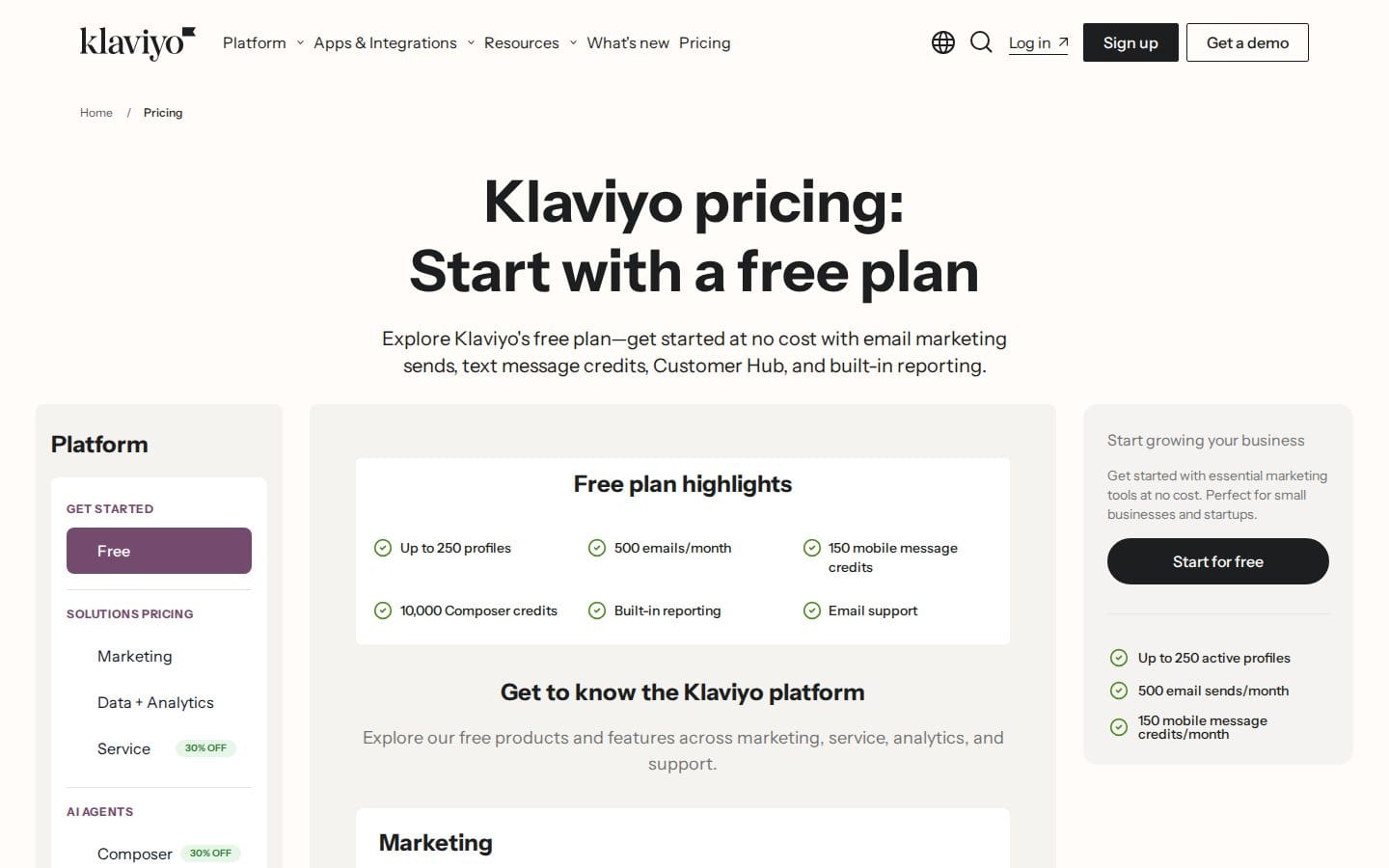
The go-to email tool for Shopify subscription brands that want deep subscriber segmentation and tight platform integrations. The free plan is limited to 250 active profiles and 500 email sends per month — enough to validate early flows, not enough to run a real subscriber base.
Omnisend
Omnisend is an all-in-one marketing platform for e-commerce brands, offering email, SMS, and web push notifications with a drag-and-drop builder and pre-built automation workflows.
Strengths
- Marketing automation workflows — abandoned cart, welcome sequences, browse abandonment — with an e-commerce-first setup that doesn't need heavy configuration.
- AI tools for email copy, subject lines, and product recommendations built directly into the campaign builder.
- Audience segmentation based on shopping behaviour, usable for targeting subscribers by product preferences or box tier.
Best fit
A solid alternative to Klaviyo for brands that want email, SMS, and push in one tool at a lower entry cost. Worth knowing: all outgoing emails on the free plan carry Omnisend branding, which isn't ideal if you're trying to present a premium unboxing brand.
Customer support
Subscription box support has a specific character. The same questions come in thousands of times — "when does my box ship?", "can I swap a product?", "I want to pause my subscription." That makes it a strong automation candidate. But subscribers also have higher expectations than one-time buyers; they've made a commitment, and they want to feel like the brand has too. The right support tool needs to handle both the volume and the relationship.
Gorgias
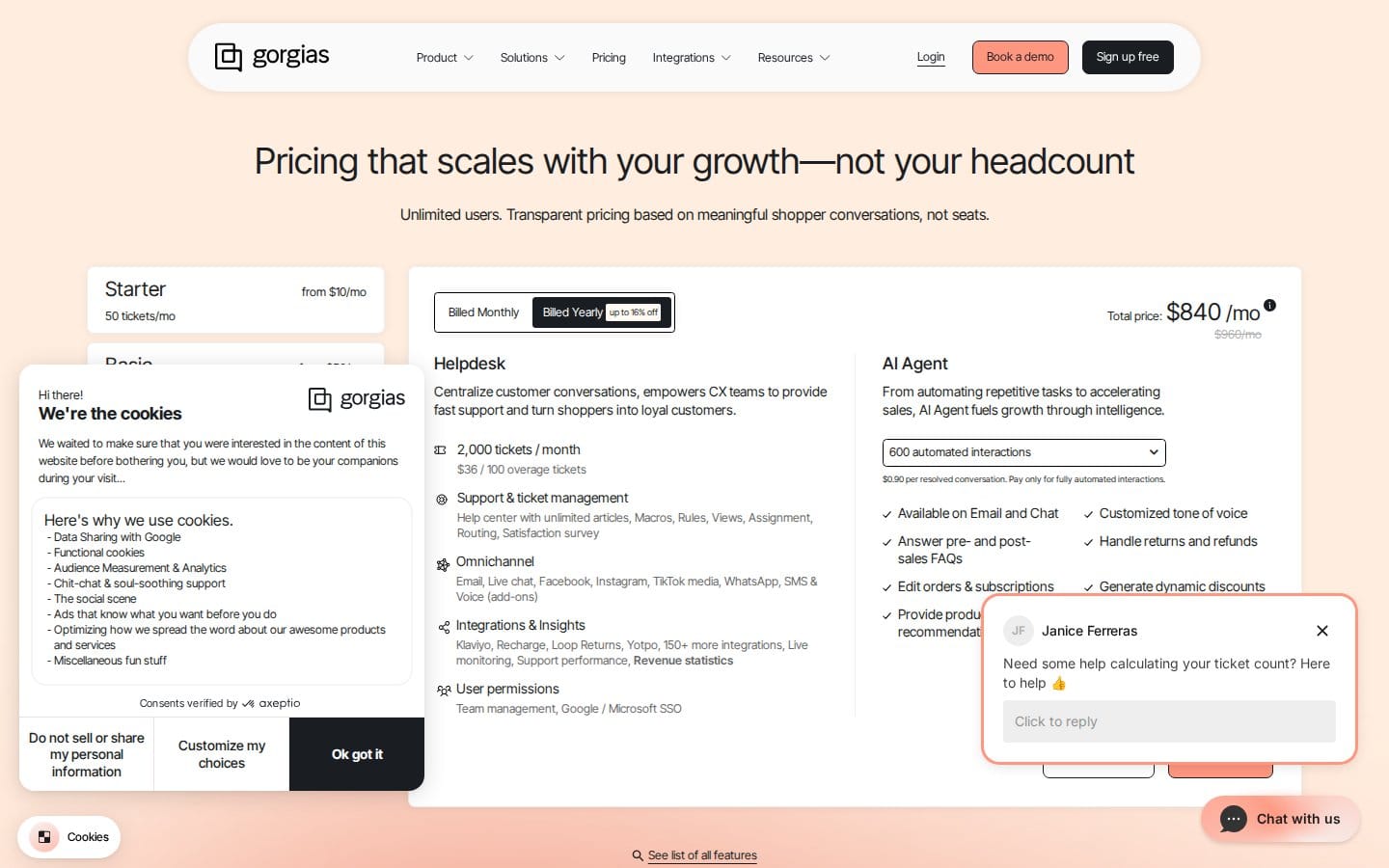
Gorgias is a helpdesk built specifically for e-commerce, with native Shopify and Recharge integrations that let support agents see and act on subscription data directly within a ticket — no tab-switching required.
Strengths
- One omnichannel inbox covering email, chat, SMS, WhatsApp, Instagram, and Facebook.
- Native Shopify integration enabling in-conversation actions: cancel orders, issue discounts, edit orders, process refunds — all without leaving the ticket.
- Revenue attribution reporting that connects support interactions to conversions, useful for understanding the ROI of human versus automated support.
Best fit
The strongest choice for Shopify subscription brands that want to handle subscriber management without agent context-switching. Note that AI Agent capabilities are an add-on, billed separately at $0.90–$1.00 per resolved conversation on top of your base ticket fee — model that into your unit economics before enabling it at scale.
Zendesk
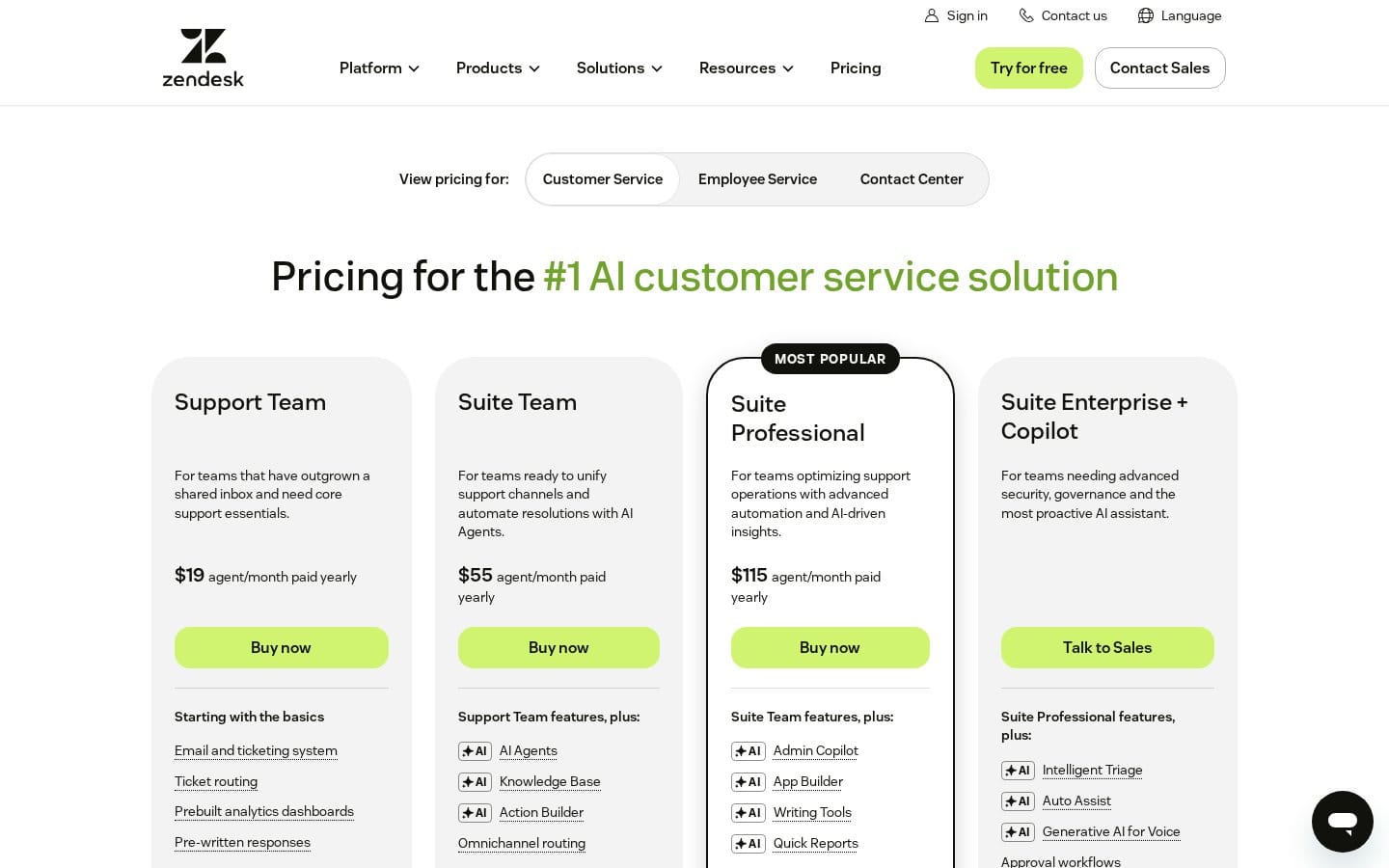
Zendesk is an enterprise-grade support platform for high ticket volumes across large organisations, with omnichannel ticketing, a self-service knowledge base, and workforce management tools.
Strengths
- Omnichannel ticketing covering email, chat, phone, social, and messaging apps in a single inbox.
- A self-service Help Centre that reduces inbound ticket volume for common subscriber questions.
- AI-powered automation — AI agents, copilot, generative replies — for faster resolution at scale.
Best fit
Better suited to larger subscription operations with dedicated support teams and complex routing requirements. Advanced AI features and several add-ons are locked behind higher tiers or carry additional costs, so what looks affordable at entry level can grow quickly.
Analytics
For subscription box operations, analytics serves two distinct purposes: understanding subscriber behaviour (churn signals, cohort performance, product preferences) and understanding operational performance (fulfilment accuracy, return rates, component stockouts). Most teams start with web analytics and bolt on product analytics later — but getting the setup right early saves a painful data migration down the line.
Google Analytics
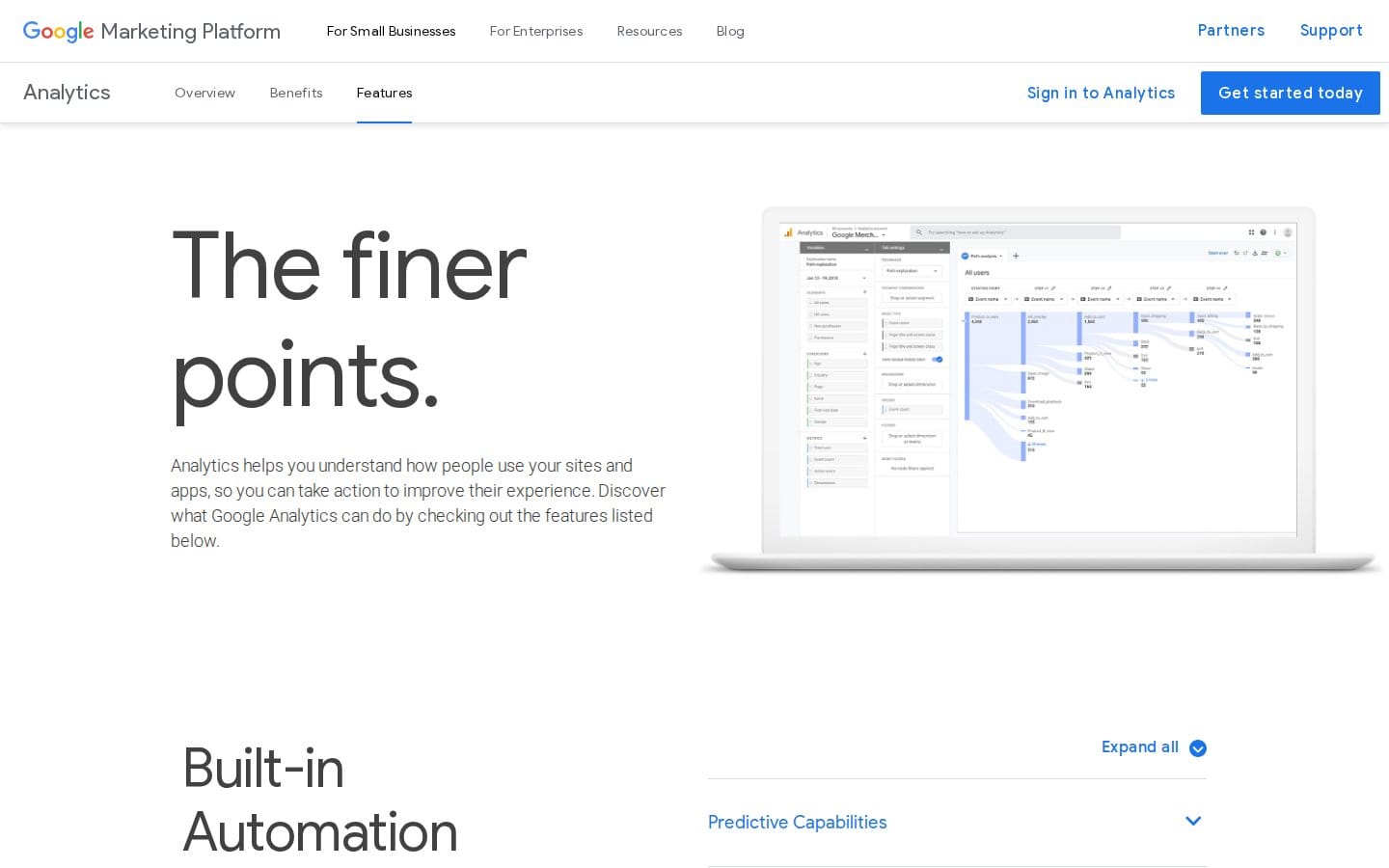
Google Analytics 4 is the standard free web analytics platform, with real-time activity monitoring, audience insights, e-commerce conversion tracking, and AI-powered anomaly detection across websites and apps.
Strengths
- E-commerce analytics with conversion tracking and funnel exploration — useful for measuring subscription sign-up drop-off by step.
- Predictive metrics and anomaly detection that flag unusual changes in traffic or conversion without manual querying.
- Native integration with Google Ads, Tag Manager, and BigQuery for brands that want to push raw event data into a warehouse for custom analysis.
Best fit
The default starting point for any brand — it's free and good enough for top-of-funnel and acquisition analysis. The free GA4 plan limits data retention to 14 months and applies data sampling at high traffic volumes, which matters if you're doing long-term cohort analysis on subscriber behaviour.
Mixpanel
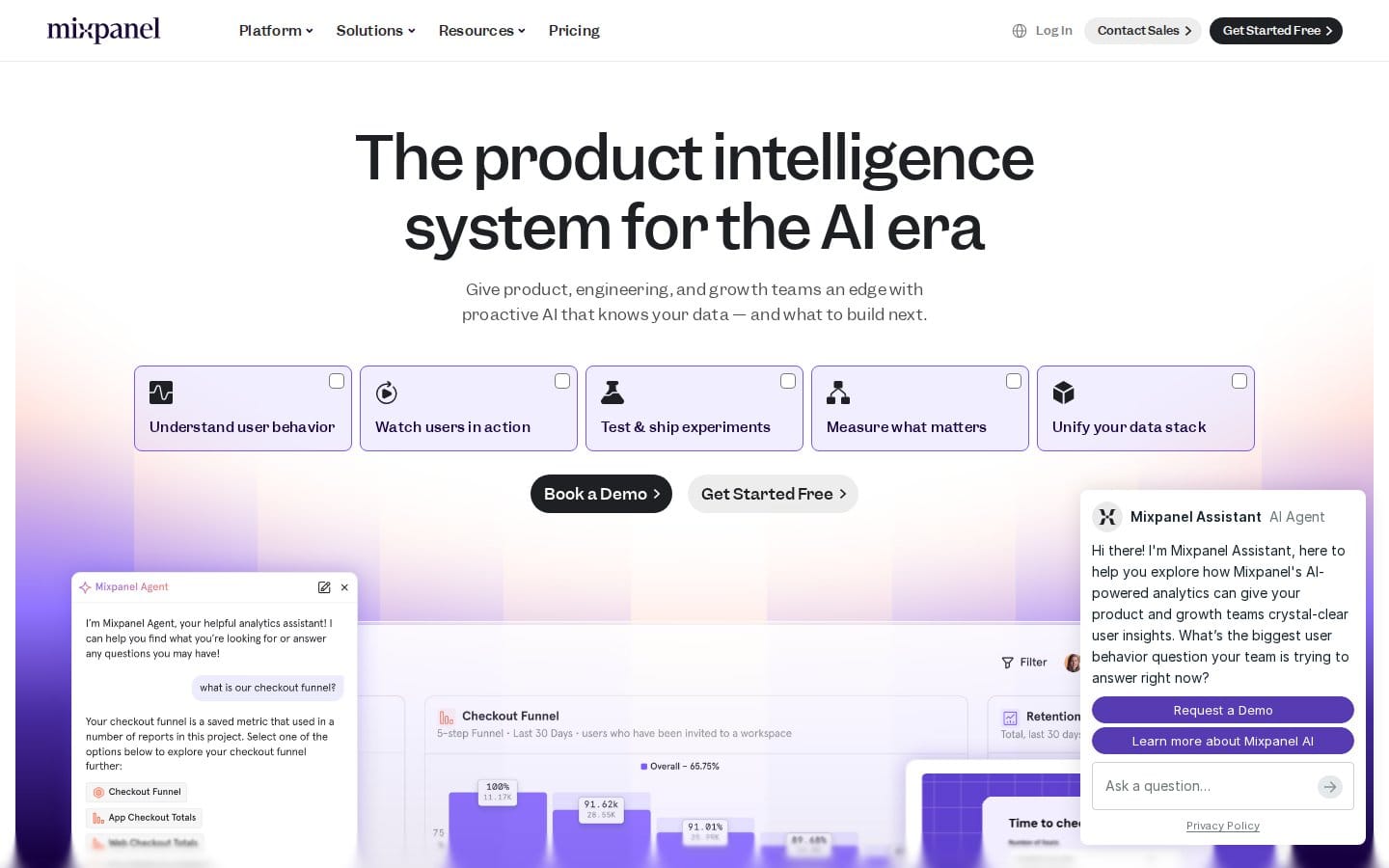
Mixpanel is a product analytics platform for tracking user behaviour, measuring conversion funnels, and analysing retention cohorts at the event level.
Strengths
- Funnel analysis that shows exactly where subscriber sign-ups drop off across multi-step flows.
- Cohort analysis for tracking subscriber retention over time — which months see the highest churn, which acquisition cohorts retain best.
- Session replay and heatmaps for diagnosing UX issues in the subscriber portal or checkout flow.
Best fit
More useful than GA4 for subscription-specific behavioural analysis, particularly cohort retention. The free tier is limited to 5 saved reports and 10,000 monthly session replays — which limits how much ongoing analysis you can automate without upgrading.
Returns
Returns are less central to subscription boxes than to standard e-commerce — you're rarely dealing with sizing issues or buyer's remorse on individual items. But they matter in two specific scenarios: a damaged or incorrect box that needs a replacement or refund, and individual item returns if you sell those products separately through your main storefront. Getting post-purchase logistics right is part of a broader retention-focused operations approach.

Loop Returns
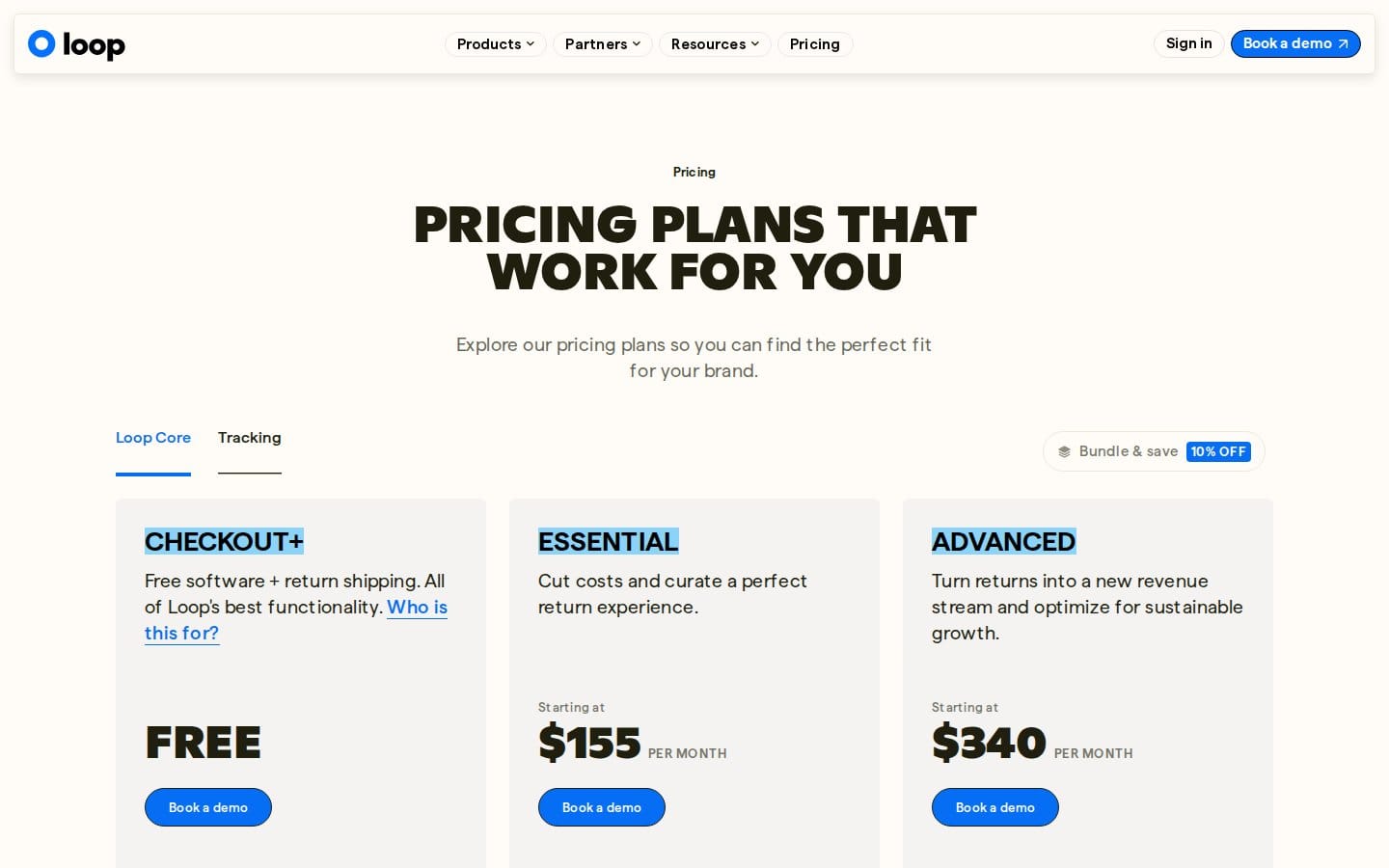
Loop Returns is a post-purchase platform for Shopify brands built around an exchange-first return flow — the idea being to retain revenue rather than issue refunds.
Strengths
- Exchange-first return flow with Shop Now and Instant Exchanges, letting customers swap a returned item for a different product or variant before the return is even processed.
- Self-service returns portal with automated policy enforcement and fraud detection.
- Integrations with Shopify, Gorgias, Klaviyo, and major 3PLs — covering the full loop from return request through to warehouse receipt and restock.
Best fit
A strong fit for subscription brands that also run a direct-to-consumer storefront and handle meaningful individual product return volumes. Pricing is based on plan tier and monthly shipment volume, with additional per-shipment fees beyond your monthly estimate — worth modelling at your expected volume before committing.
AfterShip
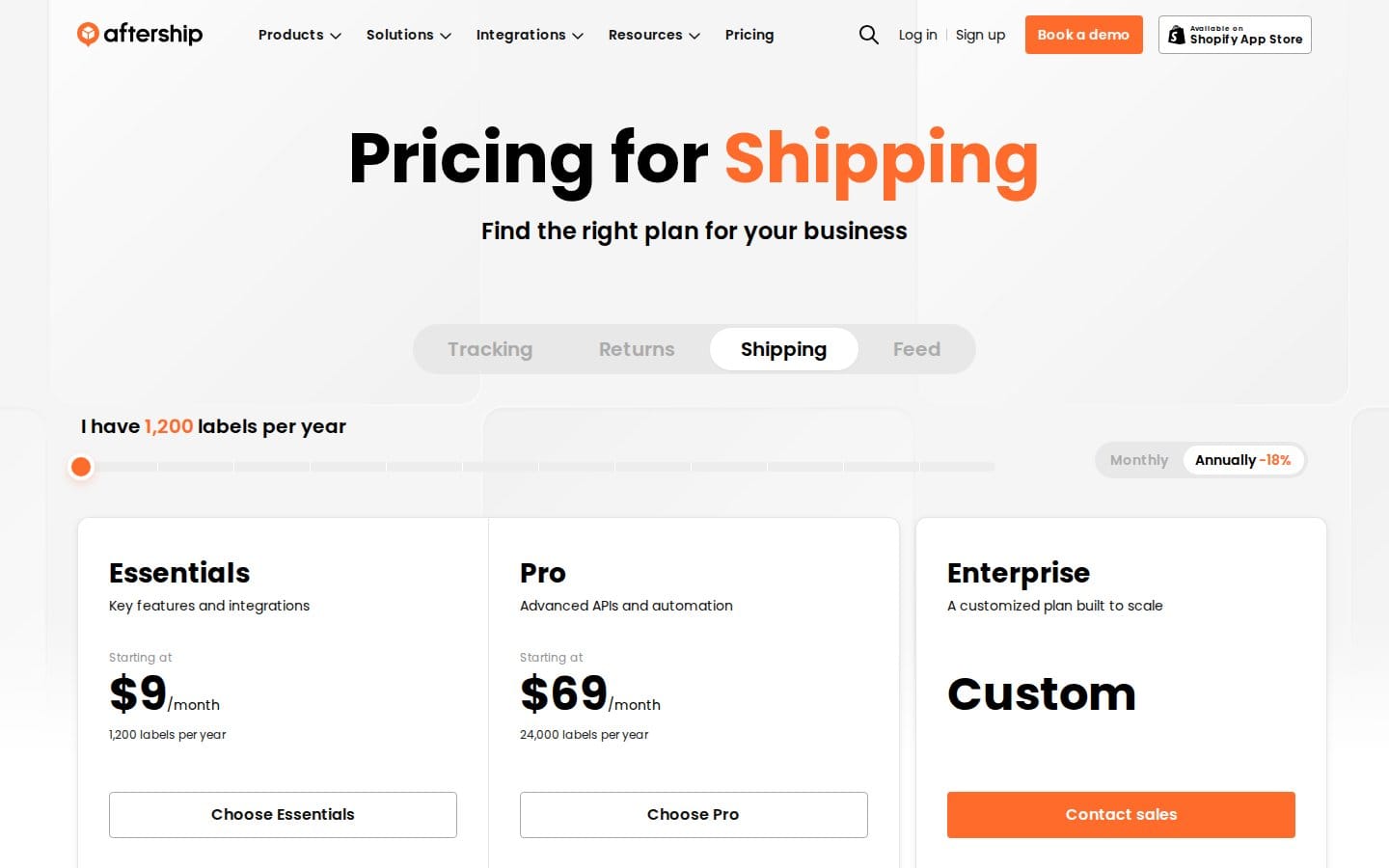
AfterShip is a post-purchase platform covering shipment tracking across more than 1,200 carriers, branded tracking pages, automated returns management, and AI-powered estimated delivery dates.
Strengths
- Shipment tracking across a wide carrier network — relevant for subscription boxes using multiple regional carriers.
- Branded tracking pages with personalised product recommendations, turning the post-ship wait into a revenue opportunity.
- Automated email and SMS delivery notifications that reduce "where's my box?" support tickets.
Best fit
Better suited to brands where proactive shipment visibility is the primary need, rather than complex return workflows. The AfterShip Shipping free plan is limited to 10 labels per month — fine for testing, not for production.
Page builders
Your storefront is the subscriber's first impression — and the portal through which they manage their subscription. For kitting-focused subscription boxes, it also needs to handle SKU complexity: component products, bundle listings, and potentially customisation options within a box. Getting the platform right here affects everything from SEO to checkout conversion to how cleanly your subscription tool integrates.
Shopify
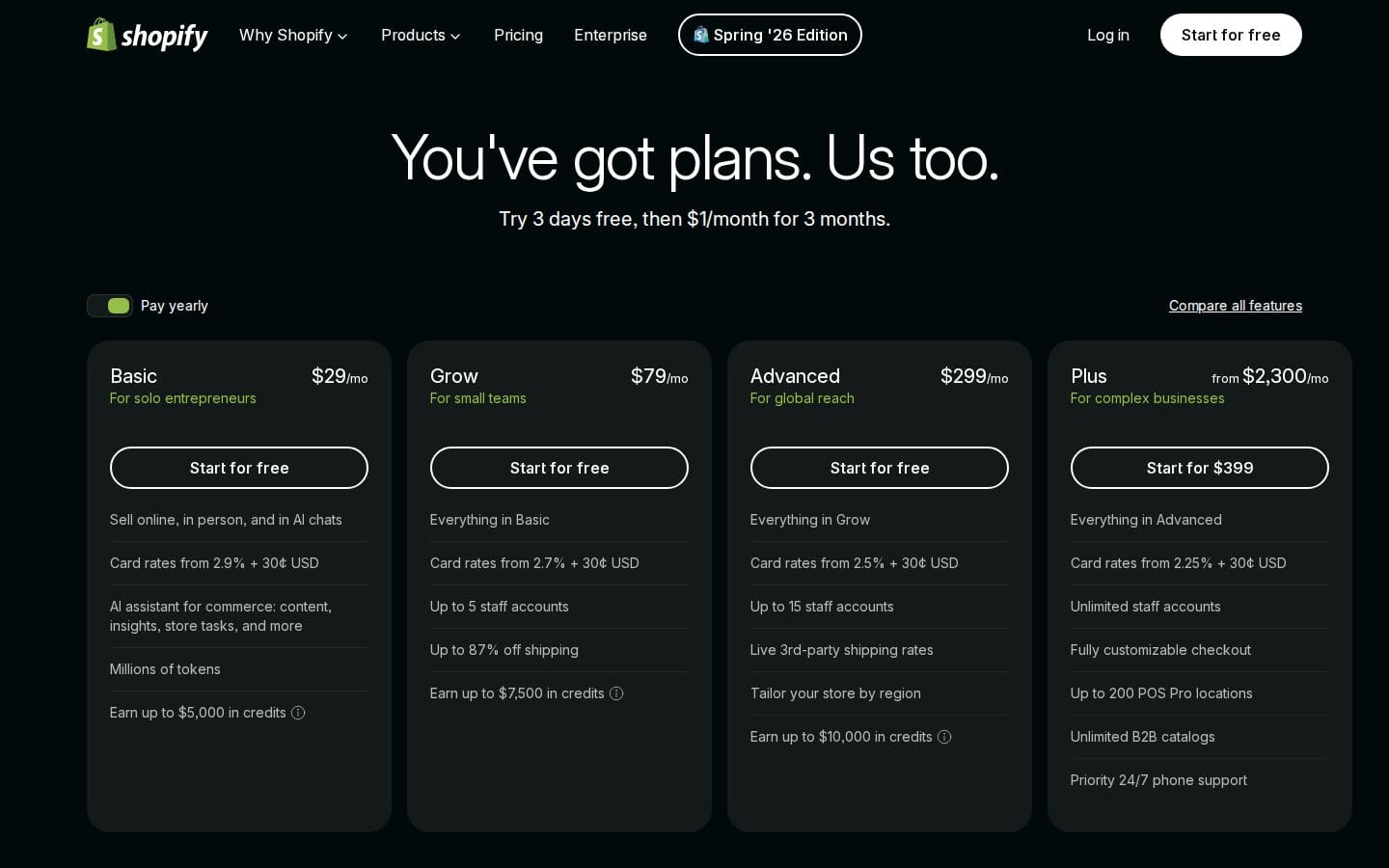
Shopify is the dominant e-commerce platform for subscription box brands, with a vast app ecosystem, native checkout, and the deepest integrations with subscription billing tools like Recharge.
Strengths
- A drag-and-drop store builder with themes, plus automated shipping, tax calculation, and abandoned cart recovery out of the box.
- Multi-currency and multilingual support via Shopify Markets — useful for subscription boxes expanding into European or North American markets.
- Access to 8,000+ apps in the Shopify App Store, including the entire stack described in this article.
Best fit
The default platform choice for subscription box brands, and the one most of this stack is built around. Higher-tier plans are required to unlock detailed reporting — sales by channel, product, staff, location, and customer cohort analysis — which matters once you're trying to understand your subscription economics properly.
WooCommerce
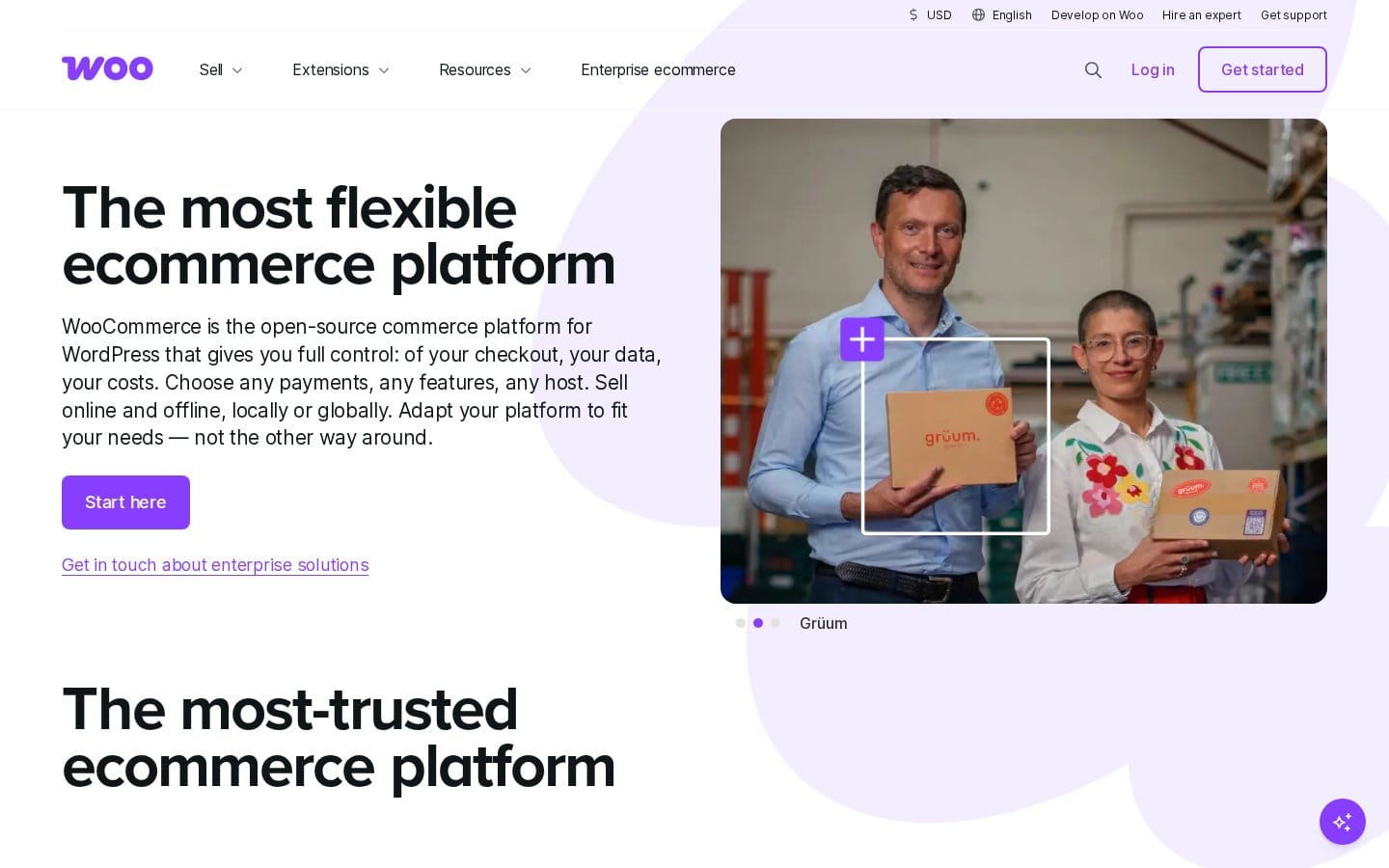
WooCommerce is an open-source e-commerce plugin for WordPress, offering full control over store design, product management, and checkout flow for brands that need deep customisation.
Strengths
- Full customisation of store design and functionality — no platform constraints on how you structure your subscription product or kit options.
- Comprehensive product and catalogue management supporting physical goods, digital products, and subscriptions with appropriate plugins.
- Open-source core with integrations to major payment gateways, shipping solutions, and CRM tools.
Best fit
A strong option for brands with developer resource and specific requirements Shopify's app ecosystem can't meet. But be clear-eyed about the trade-off: the free core plugin requires separate hosting and a domain, and most production setups need additional paid plugins — total cost of ownership is rarely as low as it first appears.
Inventory and compliance
Subscription box kitting creates a specific inventory problem that generic IMS tools handle badly. You're not just tracking finished SKUs — you're tracking component SKUs that get consumed during assembly, forecasting demand for those components separately, and managing a build schedule tied to your billing cycle. A dedicated inventory management system that understands kitting logic is the piece most subscription box operations add too late. Accurate inventory management for D2C brands means tracking the right things, not just more things.
Ceendesis
Ceendesis combines multi-channel inventory management, EPR compliance, and marketplace-to-accounting sync in one platform — designed for brands that have outgrown spreadsheets and single-tool approaches to operations.
Strengths
- Multi-channel inventory, EPR compliance, and marketplace-to-accounting sync in one platform — avoiding the data fragmentation that comes from running separate tools for each function.
- Built for brands selling on Shopify, Amazon, eBay, Walmart, and TikTok Shop — covering the multi-channel reality most subscription box brands face as they expand beyond their owned storefront.
- Native Xero and QuickBooks reconciliation for marketplace payouts — relevant if you're trying to get clean financials across subscription billing and direct marketplace sales. See also our guide to consolidated multi-channel bookkeeping.
Best fit
Built for brands on two or more marketplaces — overkill for single-channel Shopify-only stores. If you're also dealing with EPR packaging obligations as your boxes ship into EU markets, the compliance layer matters — check our overview of EPR compliance deadlines and obligations for e-commerce brands.
The stack at a glance
| Category | Tool | Free tier | Best integration |
|---|---|---|---|
| Subscriptions | Recharge | No | Shopify, Klaviyo, Gorgias |
| Subscriptions | Recurly | Yes | Shopify, Stripe, QuickBooks Online |
| Email marketing | Klaviyo | Yes | Shopify, Recharge |
| Email marketing | Omnisend | Yes | Shopify, WooCommerce |
| Customer support | Gorgias | No | Shopify, Recharge, Klaviyo |
| Customer support | Zendesk | No | Shopify, Salesforce, Slack |
| Analytics | Google Analytics | Yes | Google Ads, BigQuery, Shopify |
| Analytics | Mixpanel | Yes | Segment, Snowflake, BigQuery |
| Returns | Loop Returns | Yes | Shopify, Gorgias, Klaviyo |
| Returns | AfterShip | Yes | Shopify, Klaviyo, Gorgias |
| Page builders | Shopify | Yes (trial) | Recharge, Klaviyo, Gorgias |
| Page builders | WooCommerce | Yes | Stripe, PayPal, Mailchimp |
| Inventory and compliance | Ceendesis | No | Shopify, Amazon, Xero, QuickBooks |
Frequently asked questions
How do you manage inventory for a subscription box?
Subscription box inventory management is fundamentally different from standard e-commerce. You're not just tracking finished product SKUs — you're tracking component SKUs that get consumed during kitting, each with their own lead times, supplier MOQs, and storage requirements. Best practice means using a dedicated IMS that understands kit bills of materials, forecasting demand for each component individually based on your subscriber count and expected renewal rate, and building a procurement schedule that aligns with your monthly assembly window. A useful rule of thumb: order component stock to cover your expected subscriber count plus a buffer for growth and damaged-goods replacement. The mistake most brands make early on is treating the finished box as the inventory unit. By the time you realise a component is short, it's too late to reorder before your ship date. Our guide to inventory management for D2C brands covers the broader principles.
What is kitting and assembly in a warehouse?
Kitting is the process of grouping individual items together to form a single package, which is then treated and shipped as a single SKU. In a subscription box context, that means pulling a set of component products — say, a skincare brand's monthly box containing a serum, a moisturiser, a sample sachet, and a branded card — and assembling them into a finished box ready for dispatch. Assembly goes a step further when personalisation is involved: different subscribers might receive different product variants based on their preferences, which means the warehouse team needs individualised packing instructions for each box. When personalisation data doesn't flow reliably from your subscription platform to the warehouse, you get fulfilment errors — subscribers in one tier receiving another tier's products. That's a churn event disguised as a logistics problem.
How do I scale my subscription box fulfilment?
In stages, honestly. Early on, in-house kitting makes sense — you control quality and it's fast to iterate. But once you're shipping more than 500 boxes per month, the fully-loaded cost of in-house fulfilment (including your own labour) typically exceeds what a subscription-specialist 3PL charges for the same output. Scaling fulfilment means optimising inventory, streamlining your build process, and eventually outsourcing kitting to a 3PL with relevant subscription experience. When evaluating 3PLs, check whether they charge per-pick, per-pack, or by the hour for assembly — kitting is typically priced on a per-hour or per-unit basis. Also confirm their WMS can receive a data feed from your subscription platform. Without that integration, personalisation breaks down at the warehouse floor.
What software do I need for a subscription box business?
The core stack has three non-negotiable layers: a subscription billing platform (Recharge or Recurly), a storefront (Shopify or WooCommerce), and an email marketing tool (Klaviyo or Omnisend). Everything else — support, returns, analytics, inventory — can be added as you grow. Most early-stage brands underinvest in analytics and inventory management, which is fine at low volume but becomes painful once you're trying to understand cohort churn or diagnose why a component keeps going out of stock. Our full breakdown of the essential tech stack for subscription box brands covers how these layers interact. One thing worth planning for from day one: your accounting setup. Subscription billing creates revenue recognition complexity that standard e-commerce bookkeeping tools struggle with — see our notes on cash vs accrual accounting for e-commerce sellers and what to include in your COGS calculation for the fundamentals.
Which parts of this stack are essential, and which can wait?
At launch — say, under 200 subscribers — you need a subscription billing platform, a storefront, and basic email flows. That's it. Klaviyo's free tier handles early retention comms; Shopify handles the storefront and order management; Recharge handles billing. Everything else is overhead you don't need yet.
From 200 to 1,000 subscribers, customer support becomes the pressure point. Gorgias is worth the investment once your support volume gets repetitive — macro-driven responses alone will save hours per week. This is also the stage to start taking analytics seriously: GA4 for acquisition, Mixpanel for cohort retention. And if you're selling on more than one channel — say, Shopify and Amazon — an IMS that understands kitting logic becomes genuinely necessary rather than nice-to-have. Getting your COGS method right and keeping your Shopify bookkeeping clean matters more at this stage than most founders expect.
Screenshots are from each tool's public pricing or features page, captured July 2026. We are not affiliated with any third-party tool listed unless explicitly noted.