
The Sustainable Operations Stack for Fashion Brands

Last verified: May 2026
Key takeaways
- A sustainable fashion operations stack covers six distinct layers: supply chain traceability, ESG reporting, carbon accounting, digital sampling, circular commerce, and packaging.
- The EU Digital Product Passport (DPP) is expected to be mandatory for textiles from approximately mid-2028 — brands building their data infrastructure now will be well ahead of the curve.
- 3D design tools like CLO 3D and Browzwear cut physical sampling rounds, which directly reduces waste, cost, and time-to-market.
- Circular commerce platforms are no longer optional: the recommerce market is growing at roughly 9.5% annually, and branded resale is becoming a revenue line in its own right.
- Not every tool here is right for every stage — the closing section breaks down what's essential vs. what can wait.
Sustainability used to be a marketing talking point. In 2026, it's an operational requirement. France's Refashion eco-modulation scheme, the incoming EU Digital Product Passport, and Extended Producer Responsibility obligations across multiple markets mean fashion brands can't just bolt a "conscious collection" onto their website and call it done. The data infrastructure has to be real.
At the same time, consumer demand for transparency has pushed brands to actually show their work — where a product was made, what it's made from, and what happens to it at end of life. That's a hard ask if your supply chain visibility stops at your tier-one manufacturer. Building a stack that handles all of this without collapsing under its own complexity is the actual challenge. If you're also selling on multiple channels, keeping inventory accurate across all of them adds another layer — and that's where tools like Ceendesis become relevant alongside the sustainability-specific tools in this stack.
This article covers the full sustainable fashion operations stack — from fibre-to-retail traceability through to the box your product ships in. It's built for brands at roughly the £2m–£20m revenue stage: past the spreadsheet phase, not yet at the point where enterprise procurement runs every software decision. If you're also thinking about broader DTC operations, our 7-figure DTC operations stack guide covers the commercial side in more depth.
Supply chain traceability
You can't report what you can't see. Supply chain traceability software maps your supplier network — tier one through tier four — and tracks materials as they move through it. This layer feeds your Digital Product Passport, your Refashion compliance data, and ultimately your green claims. Without it, everything downstream is guesswork. For context on how EPR obligations fit into this picture, our global EPR requirements overview is a useful starting point.
TrusTrace
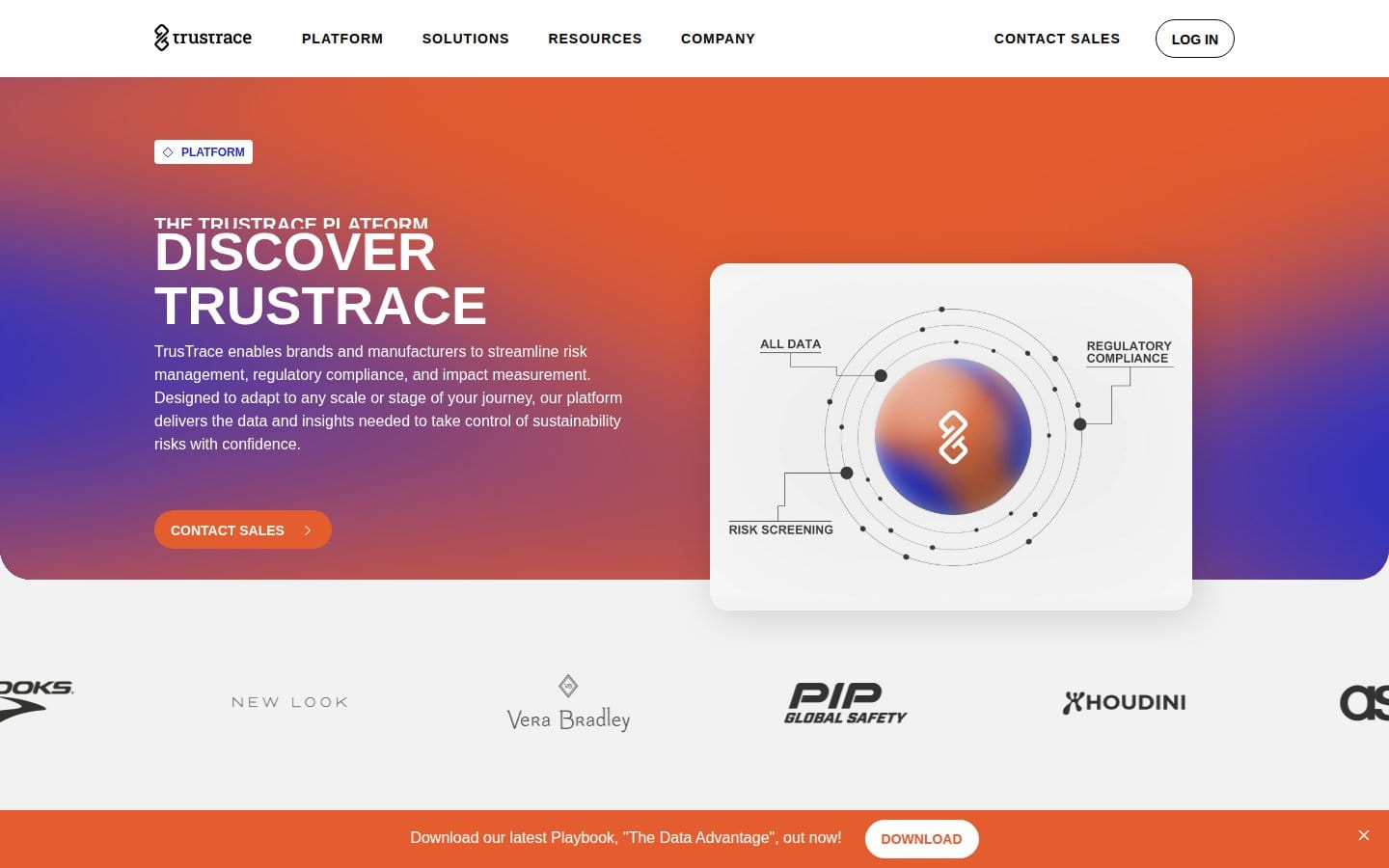
TrusTrace is a supply chain traceability and compliance platform built specifically for fashion, footwear, and textile brands. It maps your supplier network, tracks materials and products through that network, and layers compliance management and forced labour risk tools on top.
Strengths
- AI-powered risk management that flags supply chain vulnerabilities before they become compliance failures
- Open API integrations with platforms like Higg, Open Apparel Registry, and circular.fashion — so it fits into a broader compliance ecosystem rather than demanding you rip out existing tools
- Dedicated forced labour prevention module, increasingly important as supply chain due diligence legislation expands across the EU and UK
Best fit
A strong choice for mid-to-enterprise fashion brands that need end-to-end supply chain visibility and have multiple compliance obligations to manage at once. TrusTrace does not publish pricing; you'll need to book a demo to get numbers.
TextileGenesis
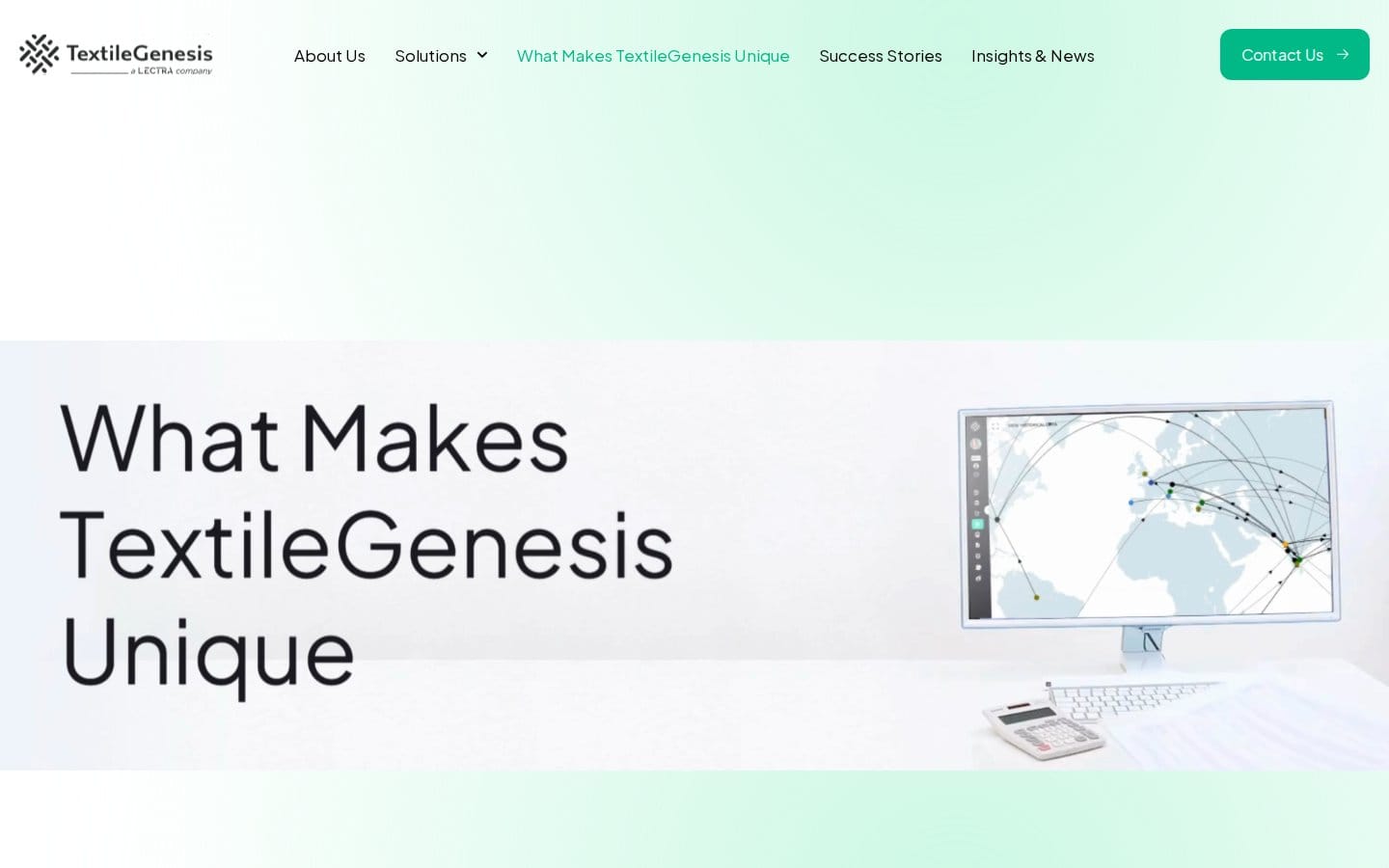
TextileGenesis takes a different angle. It tracks materials from fibre to retail using its proprietary Fibrecoin™ token technology, creating an immutable chain of custody that's particularly useful for certified sustainable materials like organic cotton, recycled polyester, or responsibly sourced cashmere.
Strengths
- Integration with over 90% of major sustainable material certification standards — including Better Cotton, OEKO-TEX®, FSC®, and the Good Cashmere Standard — so certified claims are verifiable, not just asserted
- Supply chain mapping and discovery module that gives brands a visual picture of their full supplier network
- Native integration with EON for Digital Product Passports, which matters given the DPP timeline for textiles
Best fit
Best suited to brands selling certified sustainable materials who need that certification chain to be auditable and consumer-facing. For full-scale rollouts, the API is the preferred method, but customised API processes have historically required significant resource investment from both the brand and TextileGenesis.
ESG & sustainability platforms
Carbon accounting tells you your footprint. An ESG platform tells the whole story — across governance, reporting frameworks, Digital Product Passport obligations, and lifecycle assessment. For fashion brands with CSRD exposure or investors asking sustainability questions, this layer translates operational data into structured disclosures.
GreenStitch
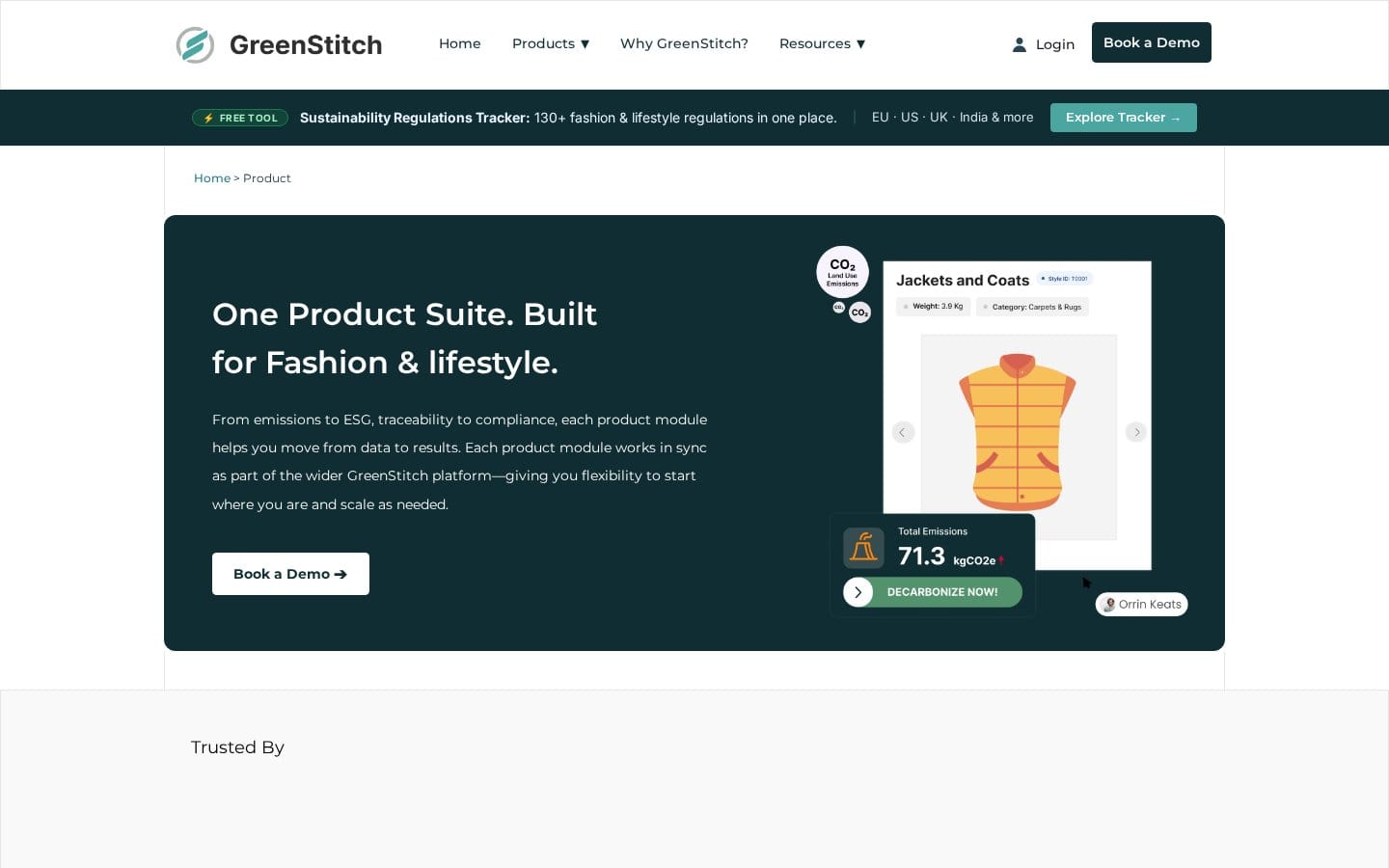
GreenStitch is a textile-specific ESG and sustainability platform that handles carbon accounting, Digital Product Passports, lifecycle assessment, and structured ESG reporting under GRI, ISSB, CDP, TCFD, CSRD, and BRSR frameworks.
Strengths
- Product lifecycle assessment across 16 PEF (Product Environmental Footprint) categories — unusually granular for a mid-market tool
- Digital Product Passport functionality aligned with EU circularity mandates, with built-in auditability — important as DPP implementation rolls out staggered across product categories
- Free tier available, so brands can start measuring before committing to enterprise tooling
Best fit
A strong choice for fashion and textile companies that want a single platform for both regulatory compliance and investor-grade ESG disclosures. It's highly specialised for fashion and textiles — if you run a mixed-category business, a more general ESG tool may cover more ground.
Carbon accounting
Scope 3 emissions — the upstream and downstream carbon in your supply chain — are where most of a fashion brand's footprint lives. Generic carbon accounting tools don't understand the nuances of textile manufacturing; the tools in this category are built around how the industry actually works. France's Refashion scheme uses eco-modulation that rewards lower-impact products, which means your carbon data directly affects your Refashion fee calculations.
Carbonfact
Carbonfact is a carbon measurement and reporting platform built exclusively for apparel, footwear, textile, leather, and luxury. It ingests data from PLM systems, ERPs, and even Excel files, runs product-level lifecycle assessments, and produces GHG Protocol-compliant reports across Scope 1, 2, and 3.
Strengths
- Product-level LCA engine — not just brand-level carbon totals, but per-SKU footprint data that can feed Digital Product Passports and eco-modulation calculations
- Scenario modelling and eco-design tools that let you simulate the carbon impact of material swaps before you commit to them
- Integrations with major PLM systems (Centric, Lectra, PTC) and ERPs (SAP, Oracle, Microsoft Dynamics), plus data warehouses like Snowflake and BigQuery
Best fit
Purpose-built for brands that need granular product-level carbon data for regulatory filings and eco-design decisions. It's tailored exclusively for apparel and footwear — if your business spans categories outside fashion, you'll need a second tool for the rest.
Watershed
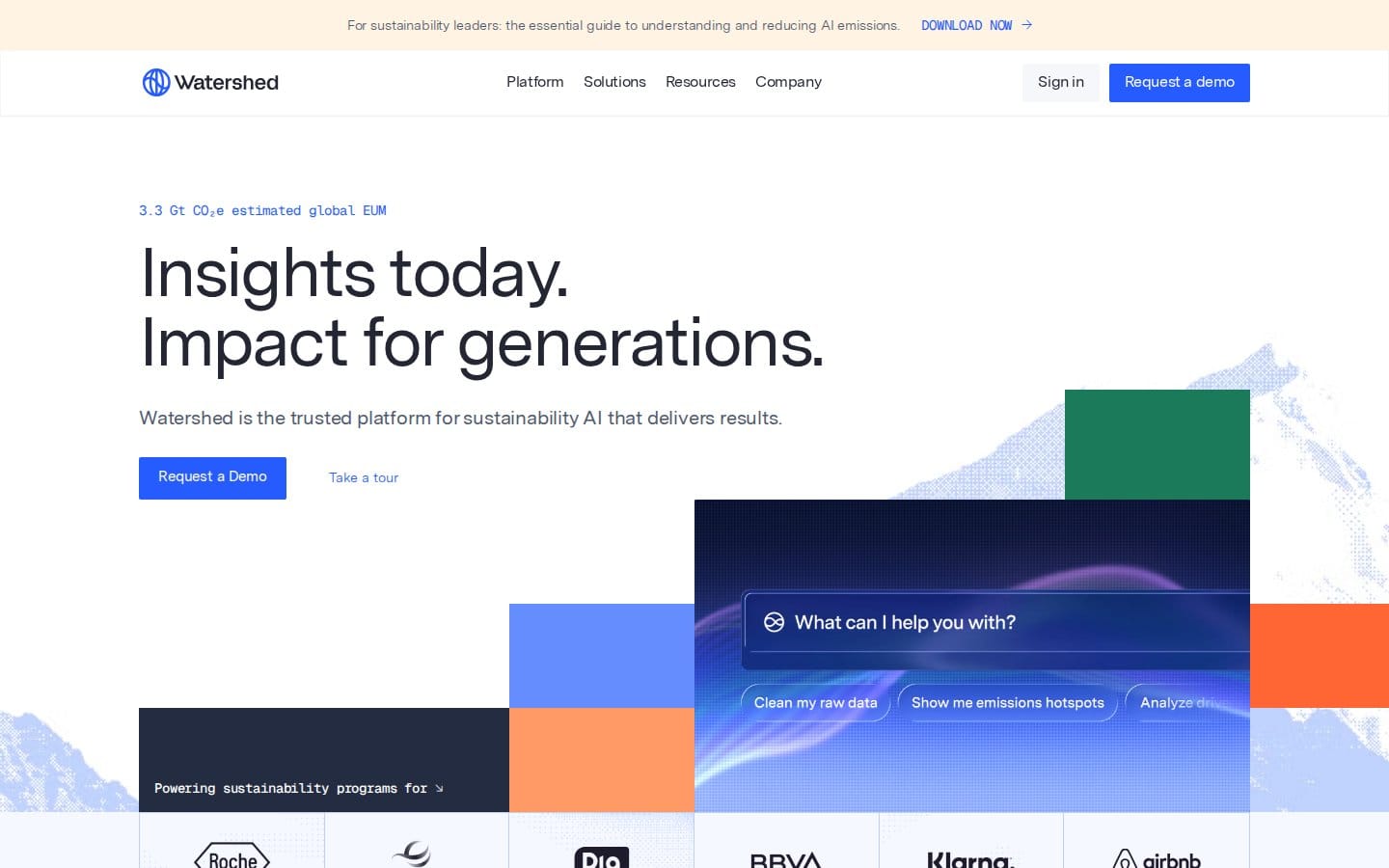
Watershed is an enterprise carbon management platform covering Scope 1–3 measurement, CSRD and TCFD disclosure automation, and decarbonisation pathway analysis. It's used across industries, not just fashion.
Strengths
- Comprehensive Scope 1–3 measurement with AI-powered data collection and standardisation — useful when your supply chain spans dozens of suppliers with inconsistent data quality
- Automated ESG reporting and disclosure aligned to CSRD and TCFD, cutting the manual burden of annual sustainability reports
- Strong decarbonisation forecasting tools for brands with formal net-zero commitments
Best fit
Best suited to larger brands with formal net-zero targets, institutional investors, or CSRD reporting obligations. Pricing is custom-quoted and enterprise-tier; growing fashion brands at the SME end will likely find Carbonfact or GreenStitch more proportionate.
3D design & sampling
Physical sampling is one of the most wasteful parts of fashion product development — and one of the most overlooked. A small brand's development cycle might involve four or five rounds of physical samples per style, with real material and shipping waste at each iteration. 3D design tools compress that process considerably. They won't eliminate physical sampling entirely for most brands, but cutting three rounds down to one is a realistic target. And that has a direct carbon impact, not just a cost one.
CLO 3D
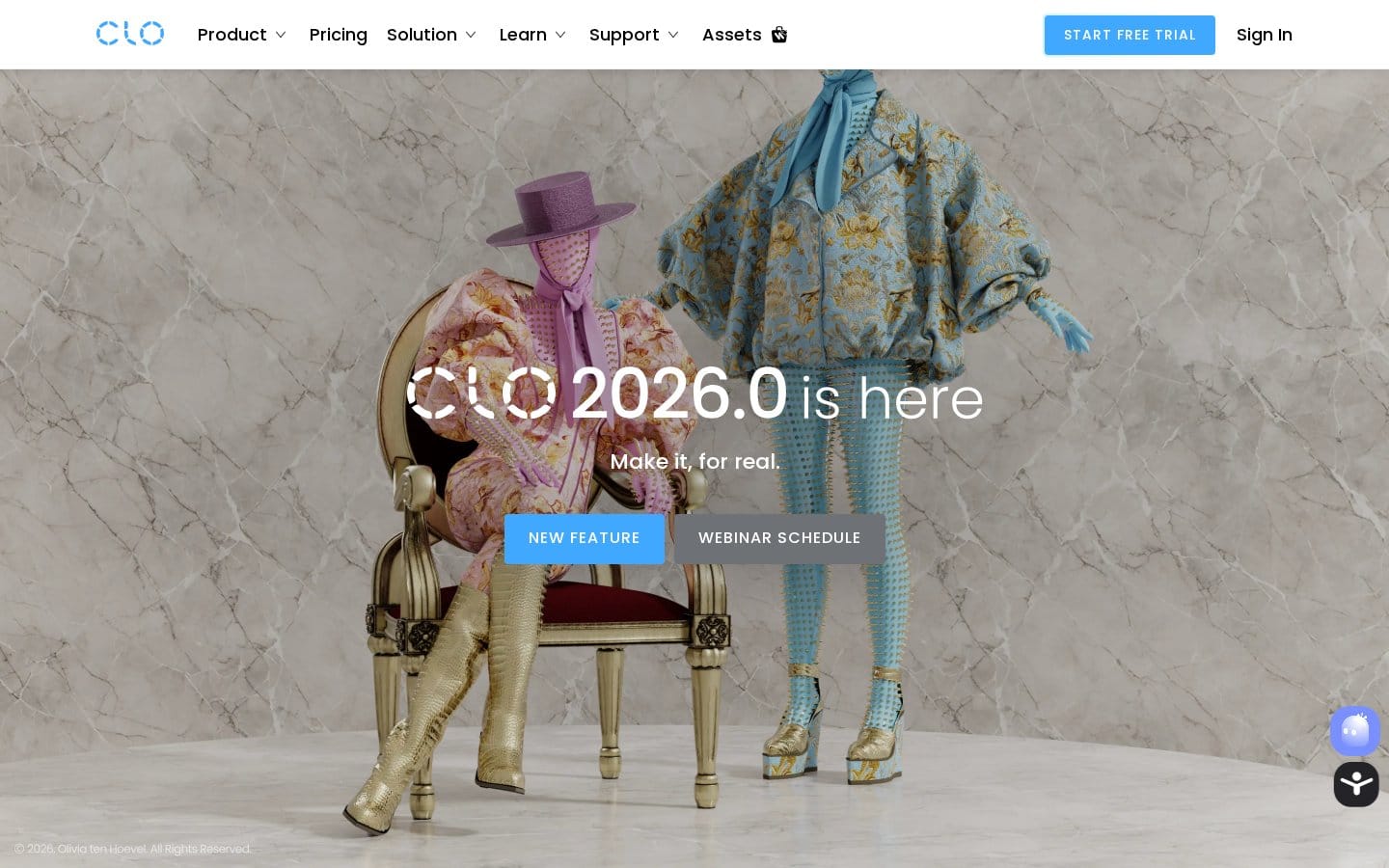
CLO 3D is a 3D garment simulation and design platform that lets fashion designers build, visualise, and iterate on digital garments in a realistic virtual environment — including fabric behaviour, drape, and fit.
Strengths
- Realistic fabric simulation using the CLO zFab Kit for material digitisation, so digital samples behave the way the actual fabric would
- AI-powered design capabilities via CLO AI Studio, accelerating the ideation phase
- Free tier available, along with integrations with Adobe Substance 3D and Epic Games for brands that want to push assets into marketing or virtual retail contexts
Best fit
Well-suited to fashion designers and apparel companies looking to cut physical sample rounds and speed up development timelines. Pattern precision issues do persist — distorted armholes and manual grading limitations for custom avatars often mean relying on separate software for accuracy.
Browzwear
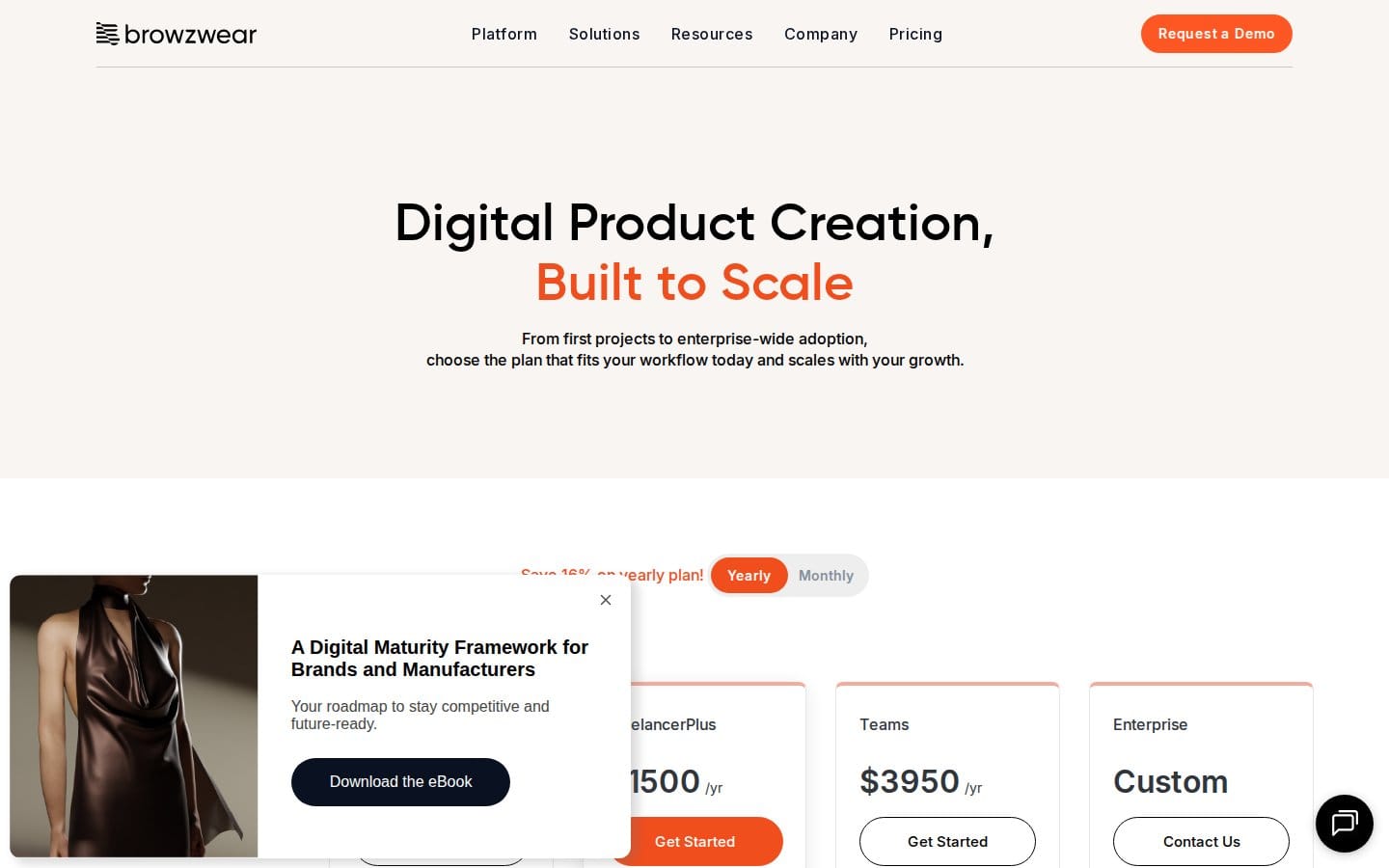
Browzwear is a 3D fashion design platform built around its VStitcher tool for AI-powered garment design and fit validation, alongside Stylezone for collaborative review and a Fabric Analyzer for physical fabric digitisation.
Strengths
- Open platform with APIs for integration with PLM and ERP systems, so it embeds into an existing product development workflow rather than running in parallel
- Collaborative 3D review via Stylezone, which cuts the back-and-forth between designers, developers, and buyers that typically drives extra sample rounds
- Free tier available for teams that want to test before committing
Best fit
A strong fit for apparel brands and manufacturers looking to digitally transform their product development workflow end-to-end. The software has a real learning curve — factor in training time when planning rollout.
Circular commerce platforms
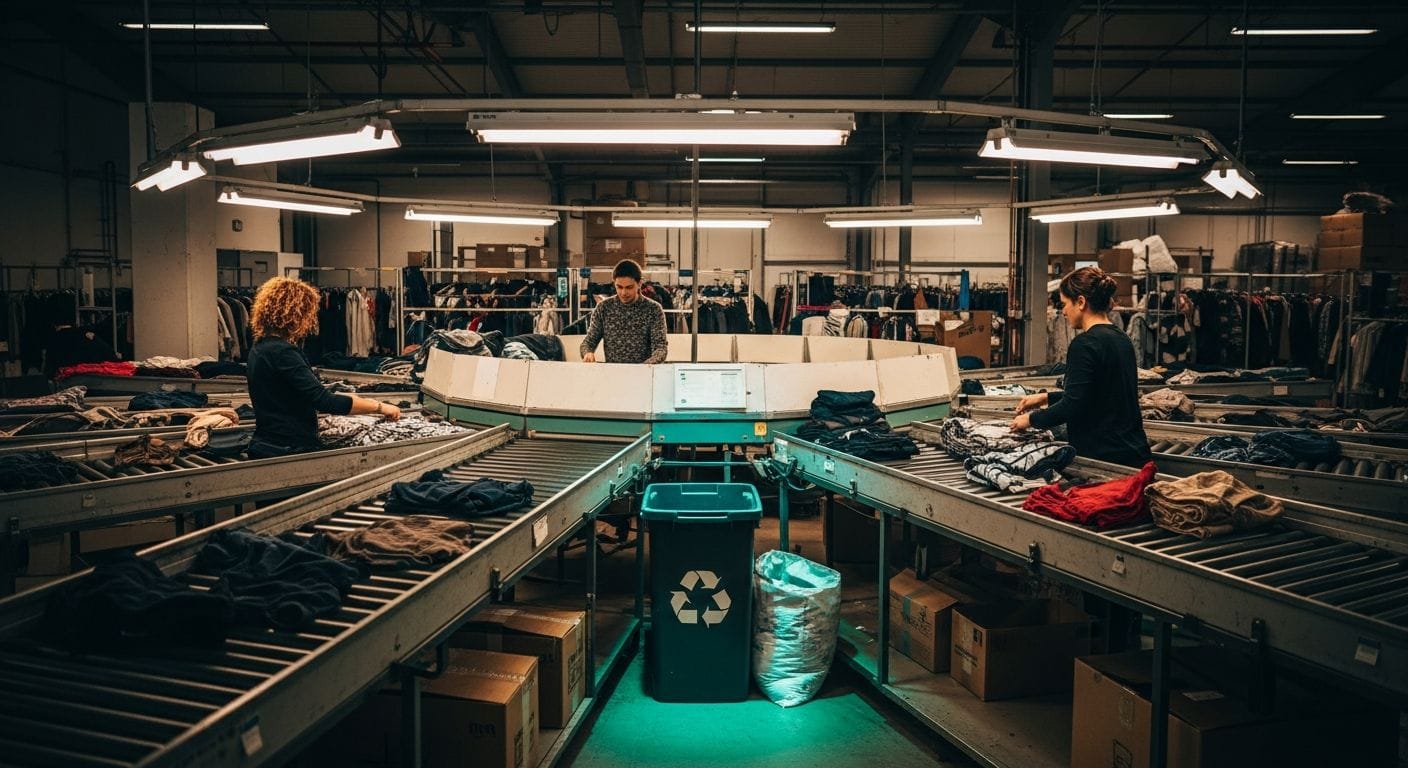
The recommerce market is growing at roughly 9.5% annually, and branded resale has shifted from a sustainability story to a genuine revenue channel. This layer of the stack handles the operational complexity of returns, trade-ins, condition grading, and resale — either through a full recommerce operating system or a peer-to-peer marketplace. For brands also managing returns on Shopify, our guide to the best Shopify returns apps covers the commercial returns side in parallel.
Trove
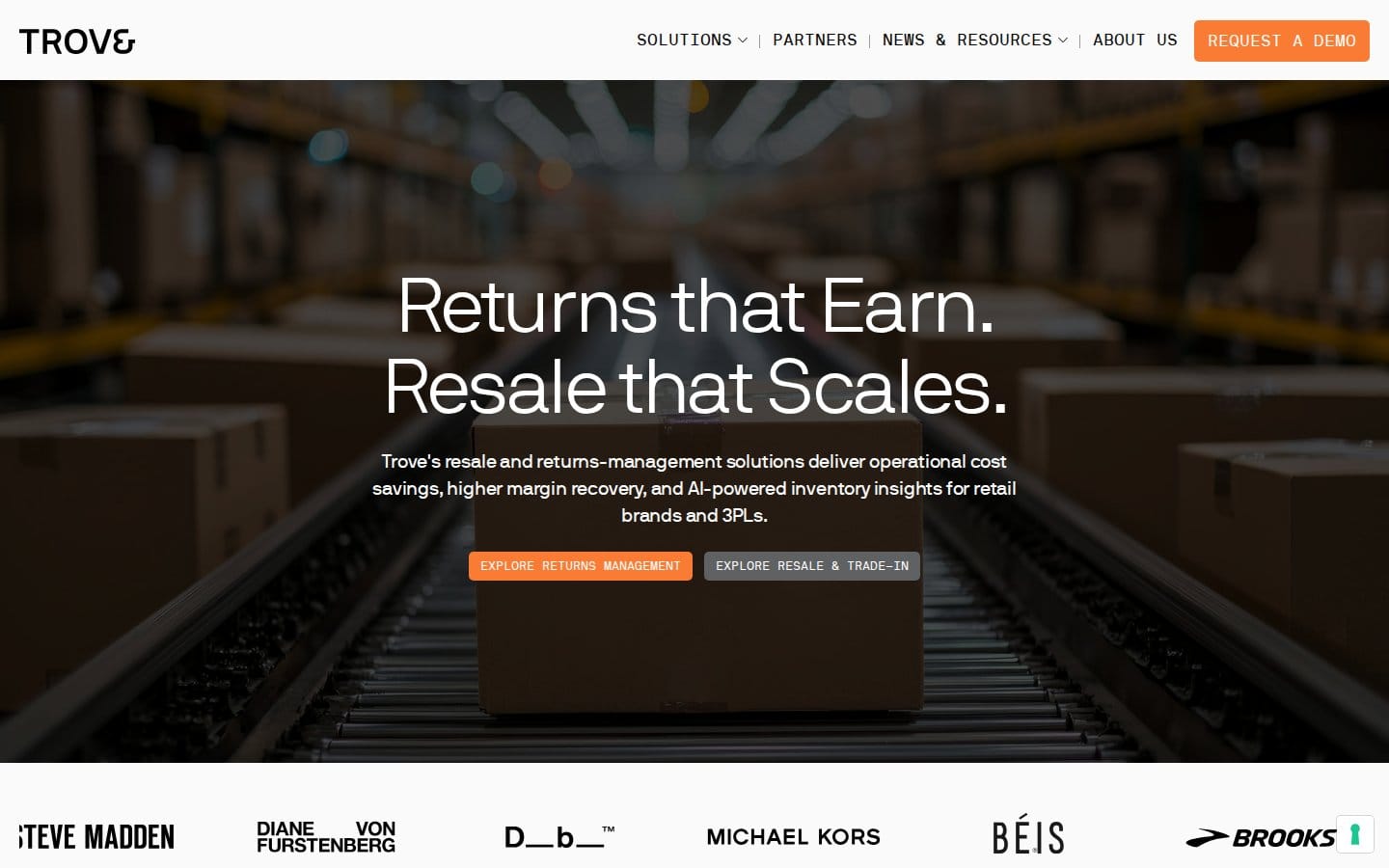
Trove is a white-label recommerce operating system. It handles trade-in programmes, reverse logistics, AI-powered condition grading, and resale channel management for retail brands that want branded resale rather than sending customers to third-party marketplaces.
Strengths
- AI-powered inventory processing using computer vision, automated condition grading, and predictive analytics — cutting the manual labour cost of handling returned and traded-in items
- ML-powered active pricing models for resale items, so you're not leaving money on the table with static price points
- Integrations with Shopify, Salesforce Commerce Cloud, BigCommerce, and existing OMS, WMS, ERP, and CRM platforms
Best fit
Best suited to retail brands at meaningful scale that want to run a profitable branded resale programme rather than a basic returns process. Available in North America, UK, and EU.
Depop
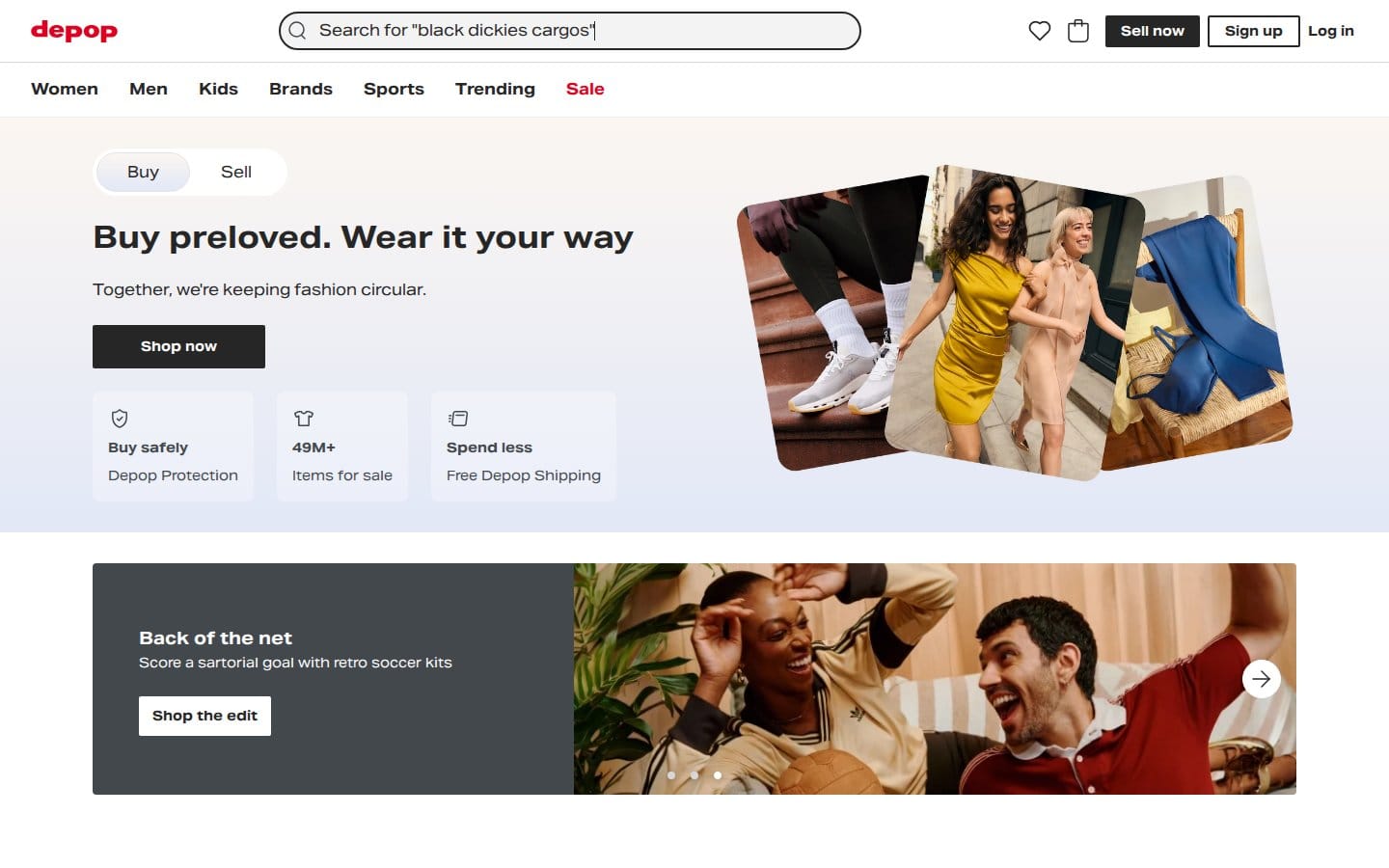
Depop is a social peer-to-peer marketplace for buying and selling secondhand, vintage, and trend-driven fashion — with a free tier and a community-first model that skews younger than most resale platforms.
Strengths
- AI-powered listing generation from images, with in-app photo editing tools including background removal — lowering the barrier for small sellers to list consistently
- Free to list and sell in the UK and US, with prepaid shipping labels included, so the acquisition cost for the channel is essentially zero for qualifying sellers
- Shop stats dashboard for tracking performance across listings, useful for brands testing secondhand as a channel before investing in a full recommerce platform like Trove
Best fit
A natural starting point for small brands or individuals wanting to test secondhand commerce with minimal setup. Sellers outside the UK or US pay a Depop selling fee — factor that into your margin calculations if you're operating from other markets.
Sustainable packaging
Sustainable packaging isn't just an ethical choice anymore — it's an EPR compliance consideration. Whether you're registered under the UK packaging EPR scheme (large producers handle over 50 tonnes annually with turnover above £2 million), reporting under Germany's VerpackG, or working through France's CITEO obligations, what you put your products in now carries a regulatory cost. Our multi-country EPR packaging compliance guide covers the reporting mechanics in detail, and our EPR packaging obligations calculator helps you work out what you actually owe.
EcoEnclose
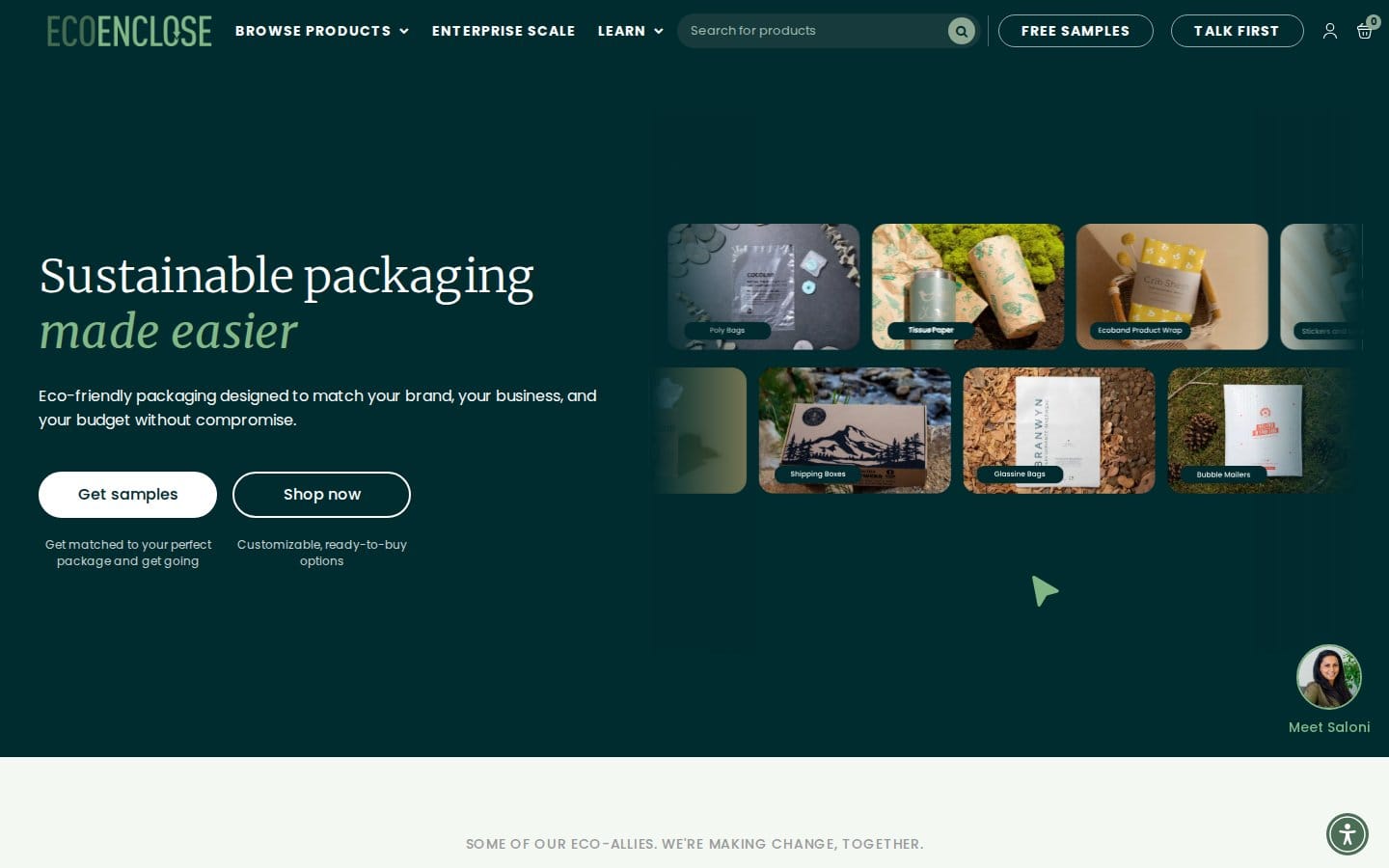
EcoEnclose is a sustainable packaging supplier offering recycled, recyclable, and compostable solutions across mailers, boxes, tissue, and void fill — with custom branding using eco-friendly inks including their proprietary Algae Ink™.
Strengths
- Wide materials range across 100% recycled, recyclable, and compostable options — covering most fashion e-commerce packaging scenarios from polybags to shipper boxes
- Custom branding with Algae Ink™ and other eco-friendly inks, so sustainable packaging doesn't mean plain brown boxes
- Climate Neutral Certified, with a free sample pack available to test before ordering at volume
Best fit
A solid first choice for e-commerce fashion brands in North America looking to clean up their outbound packaging without a complex procurement process. Customisable packaging dimensions may have varying minimum order quantities by SKU — check specific MOQs before locking in a design.
Bolt Boxes
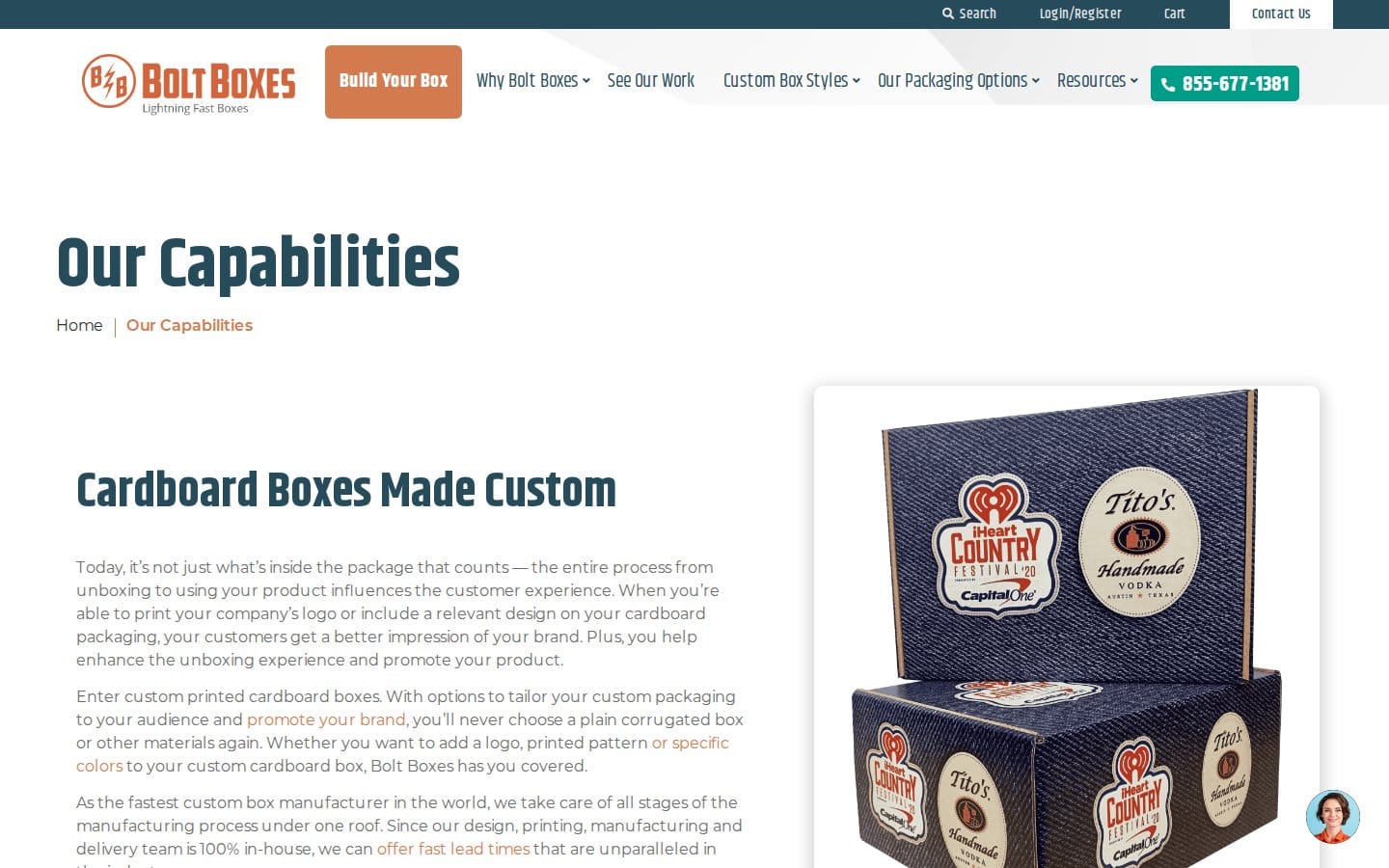
Bolt Boxes is a UK-based custom packaging manufacturer offering branded corrugated boxes made from 60–95% post-consumer waste, with digital, litho, and flexo printing across a range of box styles.
Strengths
- Multiple box styles — RSCs, mailer boxes, tray and cover, half slotted containers — plus three material strength grades (Standard, Strong, Extra Strong) to match different product weights and transit requirements
- In-house design, printing, manufacturing, and delivery, which keeps lead times fast compared to suppliers that outsource any part of that chain
- 100% recyclable kraft board from high post-consumer waste content, making the sustainability credentials straightforward to report against EPR packaging schemes
Best fit
Well-suited to UK and EU-based fashion brands wanting custom branded packaging with genuine sustainable credentials. For projects with printing, all spot colours are converted to 4CP for digital production — worth knowing if your brand uses specific Pantone colours.
Inventory & compliance operations
Running a sustainable fashion brand across multiple sales channels creates real operational complexity. Inventory sync, marketplace payout reconciliation, and EPR compliance reporting all need to work together. This is where an operations platform earns its place in the stack.
Ceendesis
Ceendesis is a multi-channel operations platform that combines inventory management, EPR compliance (including Textile Compliance for Refashion, Netherlands UPV, REACH, and the EU Digital Product Passport), and marketplace-to-accounting reconciliation in a single platform.
Strengths
- Combines multi-channel inventory, EPR compliance, and marketplace-to-accounting sync in one place — cutting the number of point solutions needed for brands selling across Shopify, Amazon, eBay, Walmart, and TikTok Shop
- Native Xero and QuickBooks reconciliation for marketplace payouts, which matters when your accountant needs clean numbers from five different channels
- Built for brands that need to manage textile EPR obligations (Refashion, Netherlands UPV, EU labelling, REACH, DPP, Green Claims) alongside their commercial operations, without running two separate systems
Best fit
Built for brands on 2+ marketplaces — overkill for single-channel Shopify-only stores. If you're selling into France and need to understand your Refashion obligations, our Refashion eco-modulation guide explains how the fee structure works.
The stack at a glance
| Category | Tool | Free tier | Best integration |
|---|---|---|---|
| Supply Chain Traceability | TrusTrace | No | Higg, Open Apparel Registry, circular.fashion |
| Supply Chain Traceability | TextileGenesis | No | EON (Digital Product Passports), Textile Exchange |
| ESG & Sustainability | GreenStitch | Yes | ERP, PLM, supplier platforms |
| Carbon Accounting | Carbonfact | No | SAP, Oracle, Centric PLM, Snowflake |
| Carbon Accounting | Watershed | No | Watershed API, external data sources |
| 3D Design & Sampling | CLO 3D | Yes | Adobe Substance 3D, CLO-SET |
| 3D Design & Sampling | Browzwear | Yes | PLM, ERP, Unreal Engine |
| Circular Commerce | Trove | No | Shopify, Salesforce Commerce Cloud |
| Circular Commerce | Depop | Yes | Depop Payments (Stripe), PhotoRoom |
| Sustainable Packaging | EcoEnclose | Yes (sample pack) | Depop |
| Sustainable Packaging | Bolt Boxes | No | Direct (in-house production) |
| Inventory & Compliance | Ceendesis | No | Shopify, Amazon, Xero, QuickBooks |
Frequently asked questions
What software do sustainable fashion brands use?
There's no single answer. Sustainable fashion operations typically span several categories of tool. For supply chain visibility, brands use platforms like TrusTrace or TextileGenesis. Carbon footprinting is handled by tools like Carbonfact (fashion-specific) or Watershed (enterprise-grade). ESG reporting and Digital Product Passport preparation sits in platforms like GreenStitch. On the commercial side, 3D design tools like CLO 3D and Browzwear cut physical sample waste, while circular commerce platforms like Trove enable branded resale. Multi-channel brands also need inventory management and compliance automation — Ceendesis covers inventory, EPR textile compliance, and accounting sync together. The right combination depends on your scale, your markets, and which regulations you're currently exposed to.
How do you build a transparent supply chain for apparel?
Start by mapping what you actually know versus what you're assuming. Most brands have good visibility to tier one (cut-and-sew) but limited visibility to tier two (fabric mills) and almost none beyond that. Tools like TrusTrace and TextileGenesis provide the structure to request, collect, and verify data from each supplier tier. The practical starting point is usually a supplier onboarding questionnaire — then software to systematise data collection rather than manage it in spreadsheets. Material certification standards (Better Cotton, OEKO-TEX®, GRS) give you third-party verification at specific points in the chain. And if you're selling into the EU, start preparing for the Digital Product Passport requirements now — the textile delegated act is expected between late 2026 and early 2027, with an 18-month compliance window after adoption.
What is a circular fashion business model?
A circular fashion business model keeps products and materials in use for as long as possible, rather than following the linear take-make-dispose pattern. In practice, that means designing for durability and repairability, running trade-in or resale programmes (like a Trove-powered branded resale channel), offering repair services, and ensuring end-of-life recyclability. It can also mean using recycled or certified sustainable inputs at the production stage. The commercial case is increasingly strong — the recommerce market is growing at around 9.5% annually, and brands running resale programmes generate revenue from stock that would otherwise generate a cost (returns, waste). France's AGEC Law and the EU's Ecodesign for Sustainable Products Regulation (ESPR) are also pushing circularity from a regulatory direction, so it's not just a positioning choice.
How do I prepare for the EU Digital Product Passport?
The EU Digital Product Passport is a digital record that must travel with a product across its lifecycle, covering materials, sustainability attributes, repairability, and recycling instructions. For textiles, the DPP is expected to become mandatory from approximately mid-2028 — the textile-specific delegated act is expected between late 2026 and early 2027, after which there's an 18-month window. The preparation steps now are: build your supply chain data infrastructure (TrusTrace or TextileGenesis are both relevant here), start collecting product-level carbon and material data (Carbonfact or GreenStitch), and make sure your product data is structured and exportable rather than locked in PDFs and email threads. If you also need to understand the compliance tracking side, Ceendesis Textile Compliance covers DPP obligations alongside Refashion, REACH, Netherlands UPV, and EU labelling requirements. Our Refashion eco-modulation guide is a good companion read.
What's essential now vs. what can wait
If you're under £2m revenue and selling primarily on Shopify, the full stack above is overkill. Start with one 3D design tool to cut sample rounds (CLO 3D has a free tier), sort your packaging (EcoEnclose or Bolt Boxes), and use GreenStitch's free tier to start measuring your footprint. That's a meaningful stack without significant spend.
At the £2m–£10m stage, add a traceability layer. If your product uses certified sustainable materials, TextileGenesis is the more targeted choice. If you need broader supply chain due diligence coverage across multiple supplier tiers, TrusTrace is worth the investment. And if you're selling into France, you need to be registered with Refashion — our eco-modulation guide explains how those fees are calculated.
Multi-channel brands above £5m selling on Amazon and Shopify simultaneously and handling EPR compliance in multiple markets should add Ceendesis for the operational layer — inventory sync, EPR compliance automation, and accounting reconciliation together. And if branded resale is a real conversation at your scale, Trove is the platform that makes it commercially viable rather than operationally painful.
Watershed and Carbonfact are enterprise considerations — the right tools, but the investment is proportionate to scale. For most growing brands, GreenStitch covers enough of the carbon and ESG reporting ground until you have formal net-zero targets or CSRD obligations in play. Build the data infrastructure now. The regulatory window for DPP preparation is shorter than it looks.
Screenshots are from each tool's public pricing or features page, captured May 2026. We are not affiliated with any third-party tool listed unless explicitly noted.