
The E-commerce Operations Stack for EU Expansion

Last verified: May 2026
Key takeaways
- Expanding into the EU requires a purpose-built tech stack — the tools that work for domestic US or UK operations often break under VAT obligations, EPR requirements, and fragmented payment preferences.
- From July 2026, the EU's €150 customs duty exemption is gone. Every shipment from outside the EU now needs duty calculated at origin, which changes how you price and fulfil.
- EPR compliance (packaging, textiles, batteries) is a hard market-access requirement in most EU countries, not a nice-to-have. Sellers without an EU establishment need an Authorised Representative in each country by August 12, 2026.
- Localisation and multi-language customer support aren't just conversion boosters — in some EU markets they're table stakes for customer trust.
- The right stack doesn't have to be enormous. Three or four well-integrated tools cover most of what a growing brand needs to operate compliantly and profitably across EU markets.
Selling into Europe isn't just "shipping to more postcodes." The EU is a collection of overlapping regulatory frameworks, each with its own compliance calendar, language requirements, and payment culture. A brand that's nailed its UK or US operations can still run into serious trouble at the German customs portal or the French CITEO registration page.
This stack is for e-commerce brands — most likely running on Shopify and Amazon — that are either preparing for EU expansion or already selling into Europe and feeling the operational strain. We've built it around the categories that actually break: payments, VAT, compliance, customer support, returns, analytics, and localisation. If you're looking for the broader DTC picture, our 7-figure DTC operations stack covers the full foundation.
One honest caveat upfront: the EU is not a single market in any operational sense. As the European Parliament acknowledged in early 2026, administrative fragmentation remains a genuine barrier for cross-border sellers. No software stack eliminates that entirely — but the right tools reduce it from a crisis to a manageable process.
Payment gateways
Europe's payment landscape is fragmented by design. Cards dominate in some markets, local schemes in others — iDEAL in the Netherlands, Bancontact in Belgium, SOFORT across German-speaking markets. Payment preferences genuinely vary by country. A gateway that only handles Visa and Mastercard will quietly kill your conversion rate in markets where those aren't the default. You need a processor that either natively supports local methods or lets you bolt them on.
Stripe
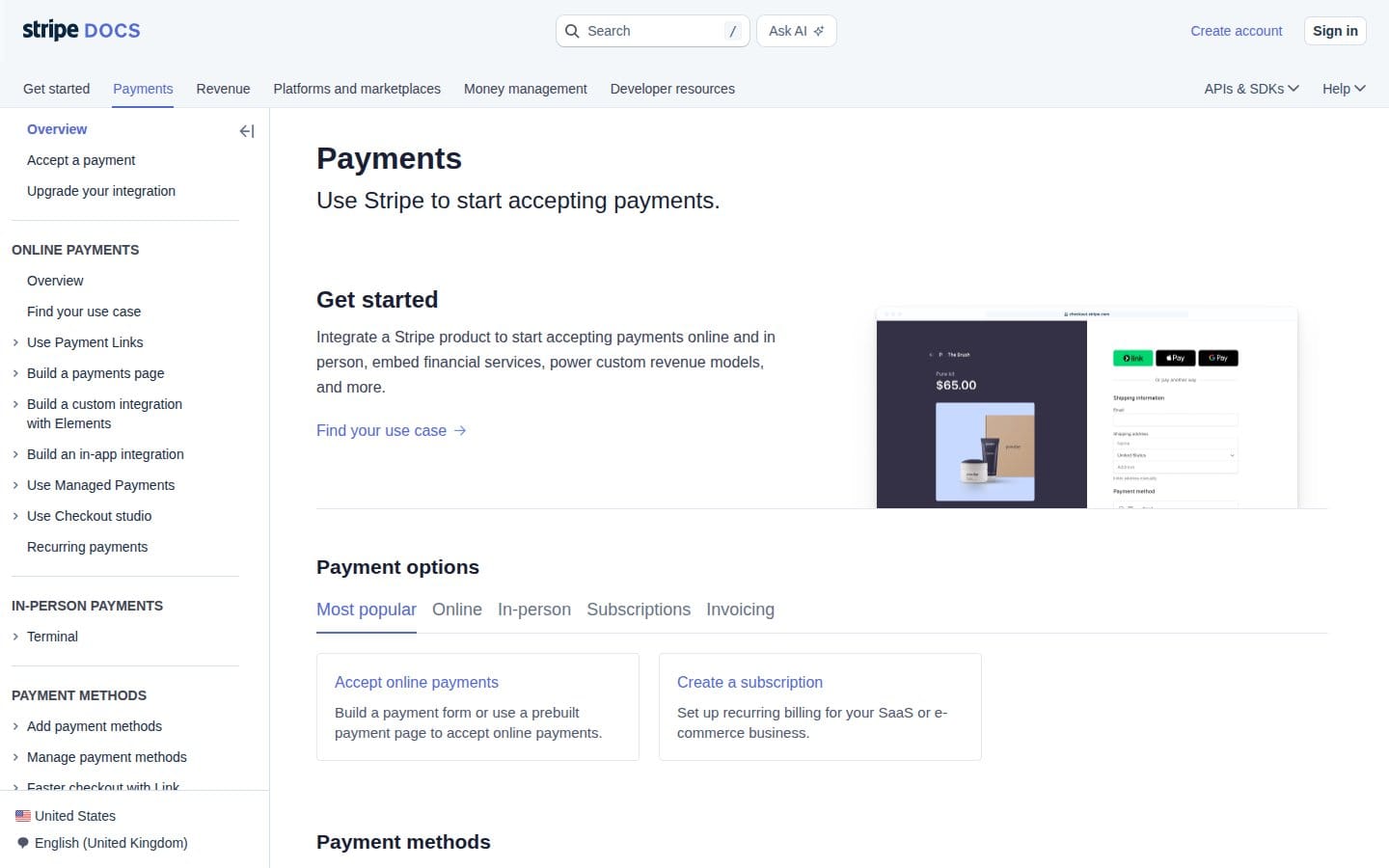
Stripe is the default choice for most Shopify-based brands entering Europe — developer-friendly, well-documented, and capable of handling the payment complexity EU expansion creates without a separate integration for every new market.
Strengths
- Automated VAT and GST calculation via Stripe Tax, which cuts the manual overhead of collecting the right rate across multiple EU jurisdictions
- Stripe Radar provides fraud detection that's particularly useful when you're accepting orders from unfamiliar geographies
- Supports recurring billing — useful if you're running any kind of subscription or pre-order model alongside your EU launch
Best fit
Businesses of all sizes looking to accept payments, build flexible billing models, and move money across borders. Bear in mind that Stripe's core payment processing incurs per-transaction fees, so model your margins at volume before committing.
Adyen
Adyen is the enterprise-tier option — a single platform for online, in-store, and in-app payments with genuine global acquiring capability and multi-currency settlement built in from the start.
Strengths
- Unified commerce across online, in-store, and in-app channels — relevant if your EU expansion includes any wholesale or pop-up retail component
- RevenueProtect fraud tooling is more configurable than most mid-market solutions, which matters when you're dealing with unfamiliar shipping addresses and new customer cohorts
- Native integrations with Shopify, Magento, BigCommerce, and Salesforce Commerce Cloud mean less custom engineering to get live
Best fit
Scaling businesses with high transaction volumes and genuine multi-channel operations. Adyen typically requires a minimum monthly invoice, so it's not the right call for brands still testing EU demand at low volumes.
Tax & VAT compliance
VAT is where EU expansion gets expensive fast if you don't automate it early. The EU-wide €10,000 threshold for distance sales means most brands exceed it quickly, triggering multi-country VAT registration obligations. The One-Stop Shop (OSS) system simplifies filing somewhat, but it doesn't remove the need to track distance selling thresholds, monitor which countries you've triggered, or handle Import One-Stop Shop (IOSS) for sub-€150 imports. For a detailed breakdown of multi-country compliance obligations beyond VAT, our packaging EPR guide covers the adjacent territory.
Sovos
Sovos is a comprehensive global tax compliance platform covering sales tax, VAT, excise, and e-invoicing — built for businesses with complex, multi-jurisdiction tax obligations and significant transaction volumes.
Strengths
- Global tax determination across sales, use, VAT, and excise — covers the full EU spectrum, including countries with real-time e-invoicing mandates
- Automated filing and remittance removes the manual calendar-watching that causes most VAT penalties
- Sovi® AI provides guided tax automation — useful for compliance teams handling edge cases across multiple EU markets at the same time
Best fit
Large global businesses across retail, manufacturing, and financial services that need to manage complex tax compliance and regulatory reporting worldwide. The modular design means the complete solution may require multiple modules for full functionality — factor that into your evaluation.
Taxually
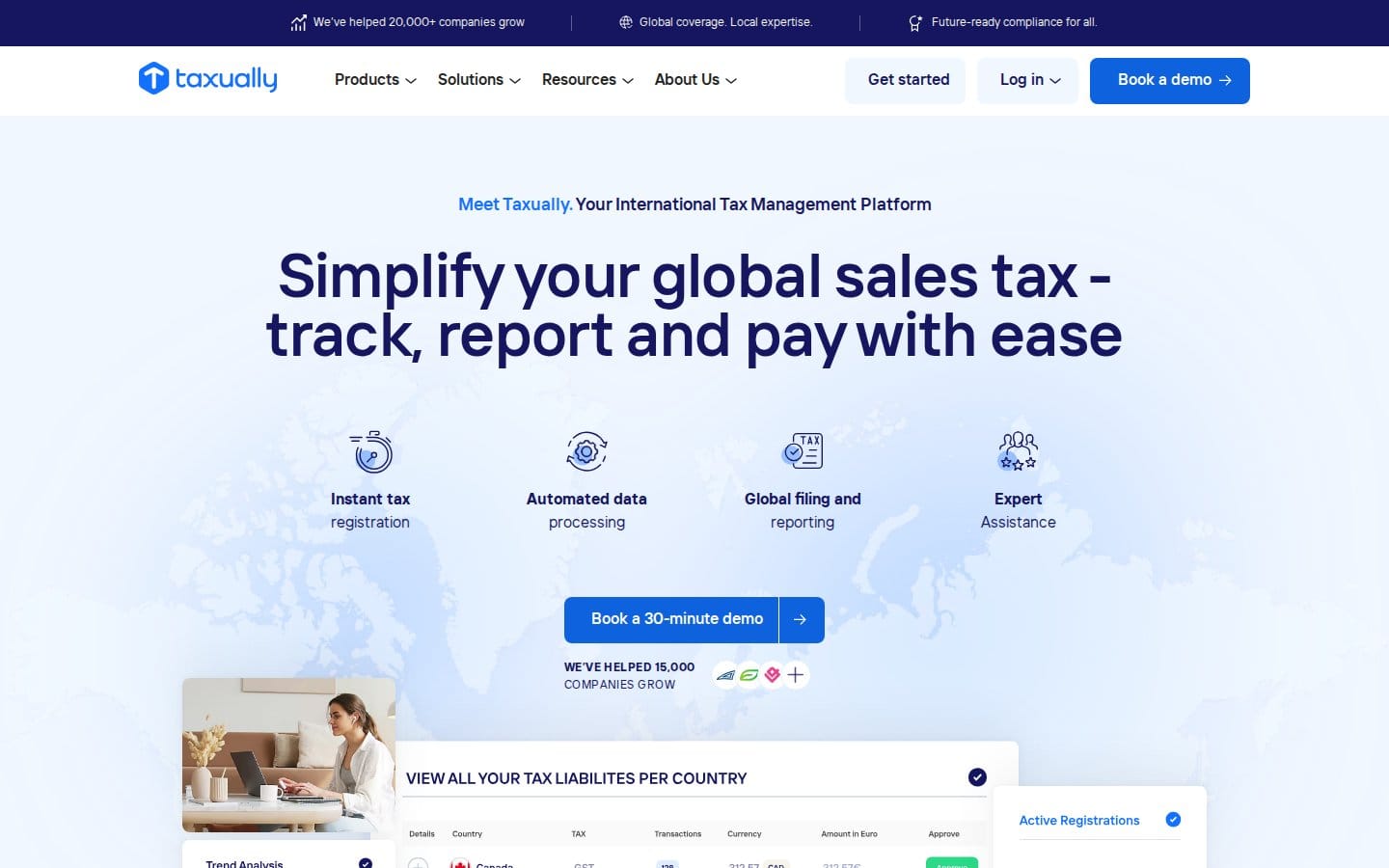
Taxually is an automated VAT and sales tax platform with a sharp focus on e-commerce, including native integrations with the marketplaces and platforms that growing brands actually use.
Strengths
- Instant VAT registration and deregistration — critical when you're moving fast across new EU markets and need to stay compliant without a six-week delay
- Distance selling threshold monitoring, so you know exactly when you've triggered an obligation in a new country before the filing deadline hits
- EcoTax module handles environmental tax compliance — useful if your products carry EPR obligations alongside standard VAT requirements
Best fit
E-commerce businesses, accounting providers, and enterprises automating global VAT and US sales tax compliance. No public pricing is listed on the Taxually website, so you'll need to contact them for a quote.
Inventory & compliance
Multi-channel inventory is the operational backbone of any EU expansion. Selling into Germany, France, and the Netherlands at the same time — across Amazon EU, your own Shopify store, and potentially a marketplace like Bol — means stock visibility needs to be real-time and accurate. Beyond inventory, EPR compliance is now a hard market-access requirement in most EU countries. From 2026 onward, any business placing packaging on the EU market must systematically record quantities and material types. And if you don't have a physical EU presence, you'll need an Authorised Representative in each country you sell into by August 12, 2026. Our EPR packaging obligations calculator is a good starting point if you're not sure what you owe.
Ceendesis
Ceendesis combines multi-channel inventory management, EPR compliance (packaging, textiles, and batteries), and marketplace-to-accounting sync in a single platform — built specifically for brands operating across multiple sales channels and EU markets.
Strengths
- Inventory, EPR compliance, and marketplace-to-accounting sync in one platform — no need for three separate integrations to cover what EU expansion demands
- Built for brands selling on Shopify, Amazon, eBay, Walmart, and TikTok Shop — covers the channel mix most growing brands are actually running
- Native Xero and QuickBooks reconciliation for marketplace payouts, which keeps your EU revenue clean in your accounting system without manual CSV imports
Best fit
Built for brands on 2+ marketplaces — overkill for single-channel Shopify-only stores. If you're selling into the EU across Amazon and Shopify at the same time and need EPR compliance handled alongside inventory, this is where the platform earns its keep. Fashion brands should also see our sustainable operations stack for fashion brands for the full textile compliance picture.
Customer support
EU customers expect support in their own language. That's not a generalisation — it's a consistent finding from brands that launched in Germany or France and tried to get away with English-only support. Beyond language, EU consumer protection rules give customers strong return and refund rights, which means your support team will handle more policy-driven queries than you're used to. The tooling needs to handle volume, multilingual macros, and Shopify order actions without agents switching between five tabs.
Gorgias
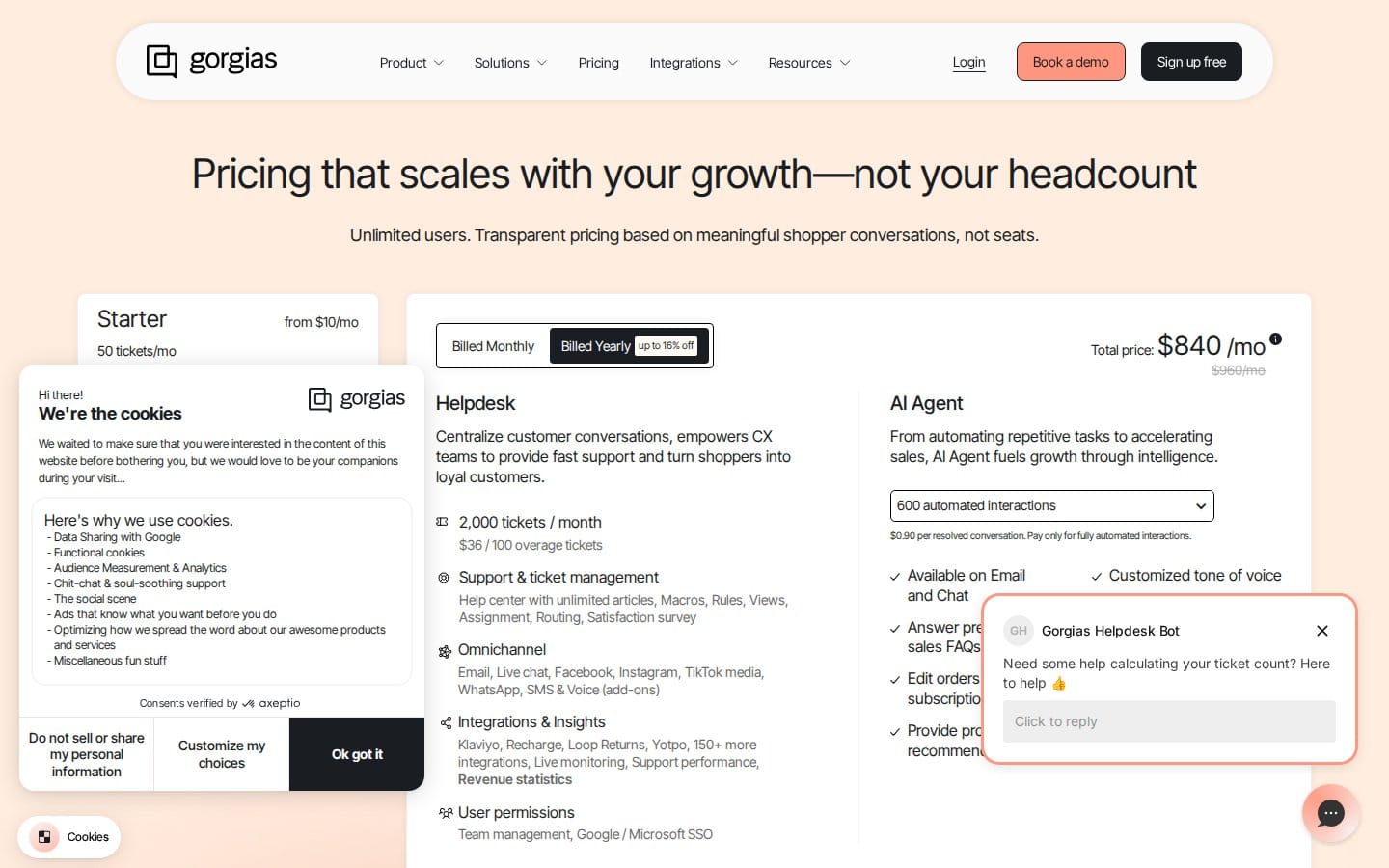
Gorgias is the most Shopify-native helpdesk on the market — built specifically for e-commerce, with the ability to cancel, refund, discount, and edit orders directly from the support thread without leaving the tool.
Strengths
- One omnichannel inbox covering email, chat, SMS, WhatsApp, Instagram, and Facebook — EU customers use a wider range of contact channels than most US brands expect
- AI Agent handles automated ticket resolution, which matters when your support volume spikes post-EU launch and you're not yet staffed for it
- Revenue attribution reporting ties support interactions to conversion — useful for proving the ROI of localised support investment to your finance team
Best fit
E-commerce businesses looking to automate customer support, centralise communications, and drive sales through personalised interactions. Note that the AI Agent is an add-on billed separately per resolved conversation, on top of the standard helpdesk fee — worth modelling before you enable it at scale. For more on returns-related support workflows, see our roundup of the best Shopify returns apps.
Zendesk
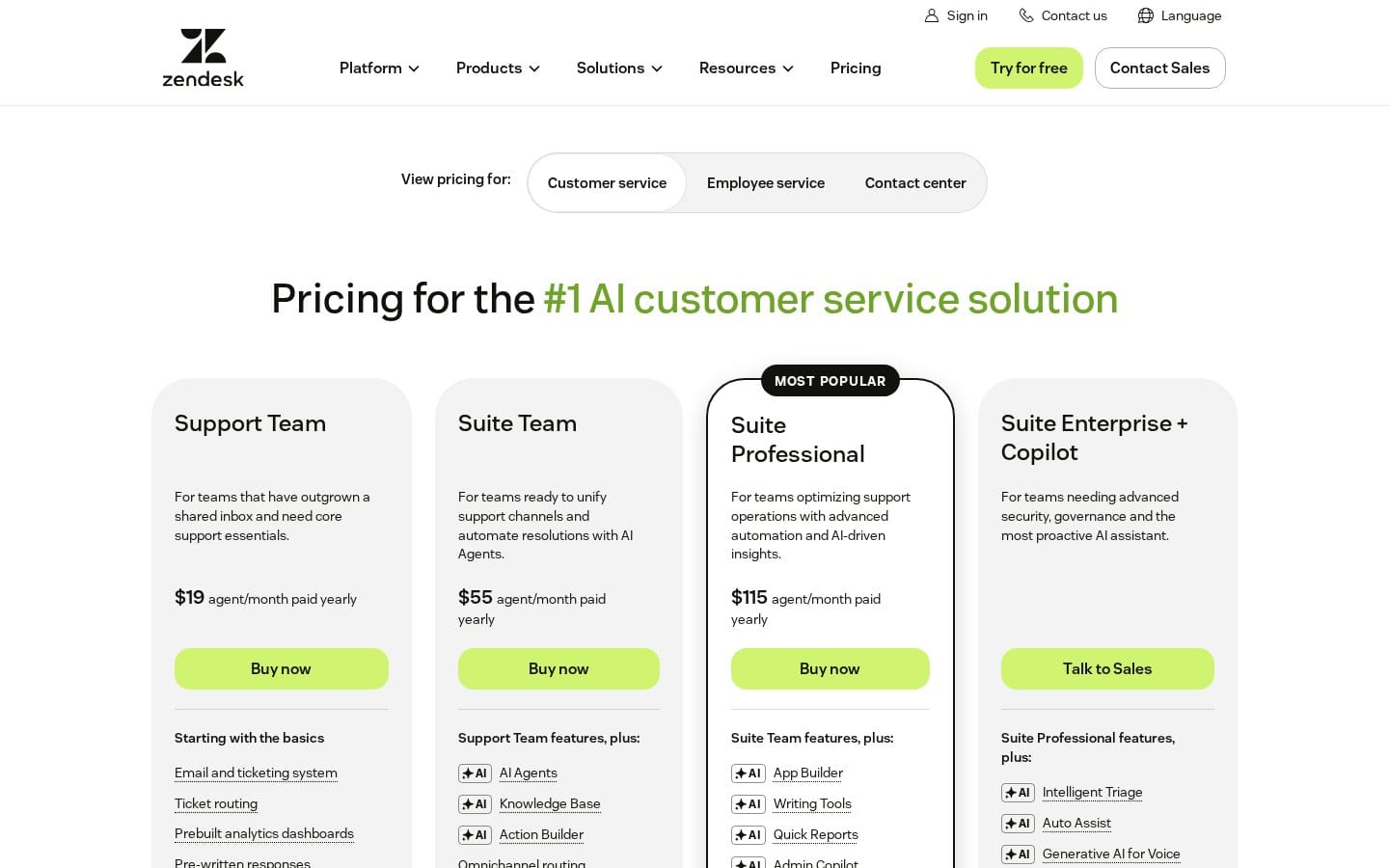
Zendesk is the enterprise-standard support platform — broader, more configurable, and better suited to teams handling high ticket volumes across large organisations with dedicated support functions.
Strengths
- Omnichannel ticketing across email, chat, phone, social, and messaging apps — covers the full contact surface for EU markets including platforms like WhatsApp that are standard in Southern Europe
- Self-service knowledge base and Help Centre with multilingual support on higher tiers — lets you build out localised FAQs per market without duplicating your support team
- Zendesk Explore provides detailed reporting and analytics, which matters when you're trying to understand which markets generate the most support load post-expansion
Best fit
Support teams handling high ticket volumes across large organisations. Advanced AI features and certain add-ons are often locked behind higher tiers or incur additional costs — check the current tier structure before committing.
Returns management
EU consumer law gives buyers strong return rights — in most cases, 14 days minimum with no reason required for distance purchases. That's not negotiable. What you can control is how efficiently your returns process runs and how often you convert a return into an exchange rather than a refund. For brands shipping from outside the EU, the removal of the €150 duty-free threshold from July 2026 also changes the economics of returned goods — factor that into your reverse logistics planning.

Loop Returns
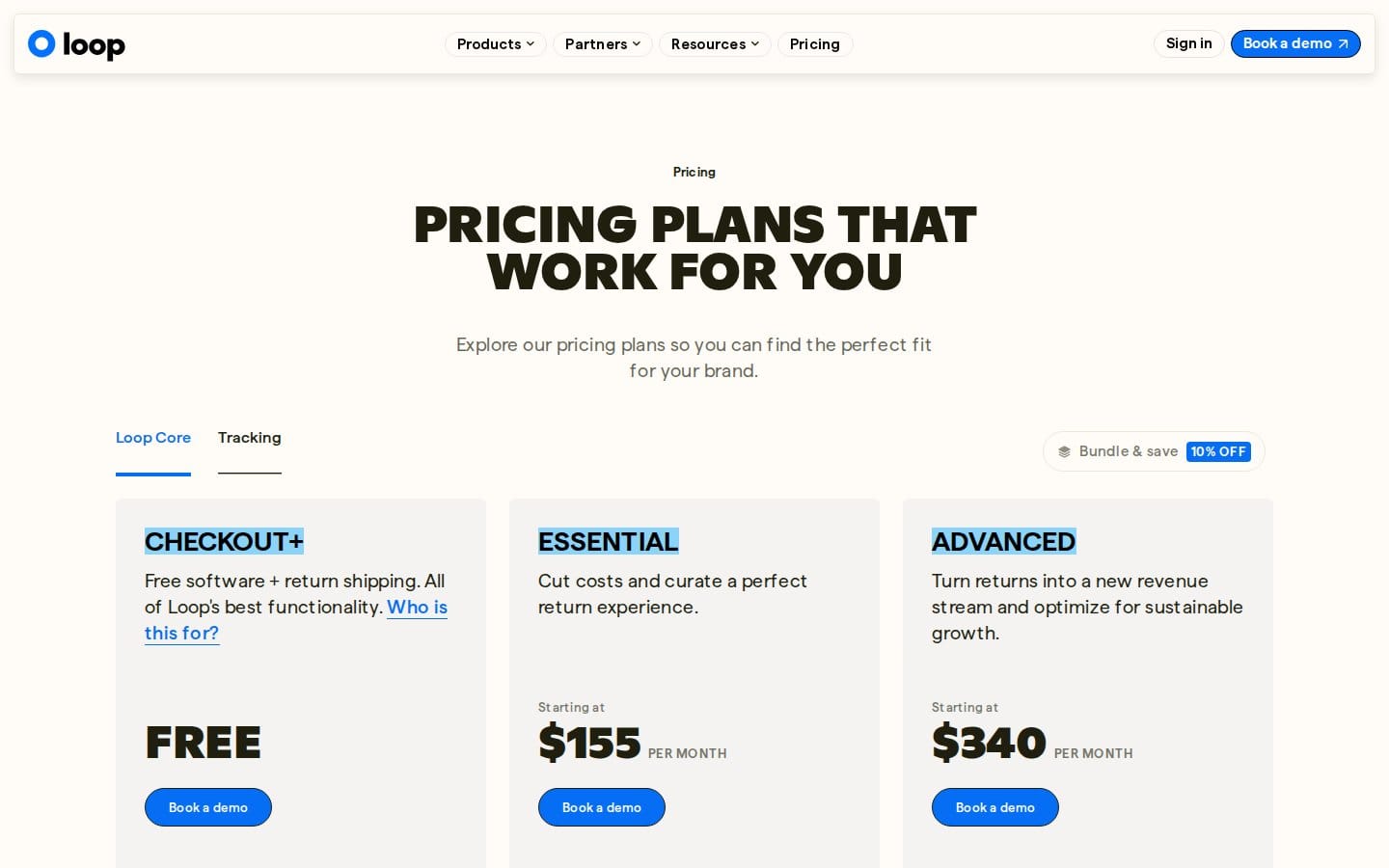
Loop Returns is an exchange-first returns platform built for Shopify brands — designed to retain revenue by steering customers toward exchanges and store credit rather than straight refunds.
Strengths
- Exchange-first return flow with Shop Now and Instant Exchange — lets customers swap for a different size or product before the original return is processed, which is particularly valuable in EU apparel markets
- Fraud detection built into the returns workflow — important when you're dealing with new customer cohorts in unfamiliar markets
- Self-service returns portal reduces agent handling time on straightforward return requests
Best fit
High-volume Shopify brands focused on post-purchase operations. Order Tracking pricing is based on the plan selected and monthly shipment volume, with additional per-shipment fees for volumes beyond the monthly estimate — read the pricing page carefully before projecting costs at EU scale.
AfterShip Returns
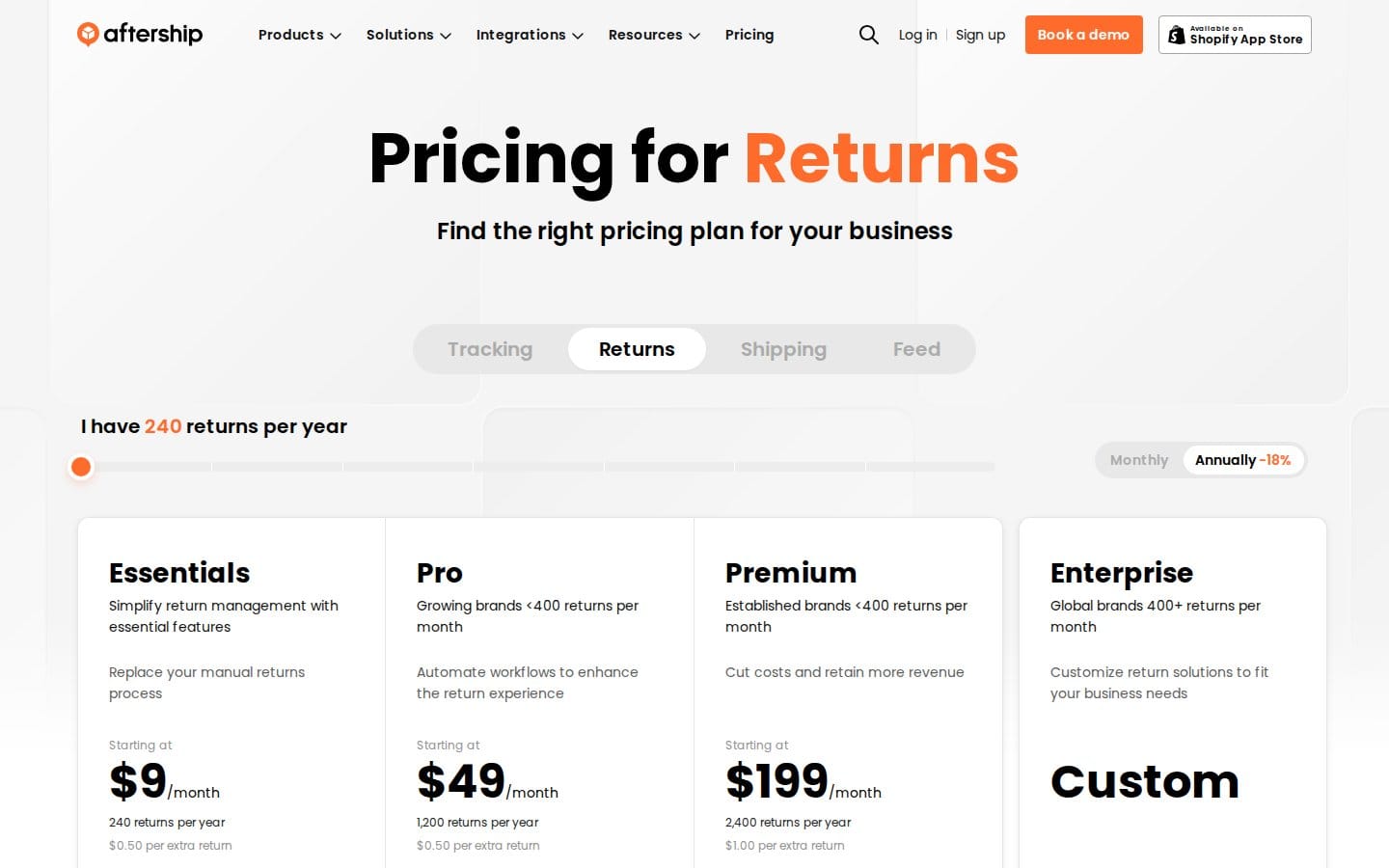
AfterShip Returns is a returns management platform that works across Shopify, BigCommerce, and WooCommerce — a better fit for brands running a multi-platform stack rather than pure Shopify.
Strengths
- Branded returns page keeps the customer experience consistent across markets without requiring custom development work
- Real-time return shipment tracking reduces inbound "where's my refund?" queries, which tend to spike when customers are dealing with international return shipping
- Incentivised exchanges and store credits give you the revenue-retention mechanics even at the Essentials tier
Best fit
E-commerce brands looking to automate and optimise returns and exchanges across multiple platforms. All pricing tiers cap the number of returns per year, with extra returns incurring an additional fee — model your expected EU return volume against the tier limits before selecting a plan.
Analytics
GDPR compliance makes your analytics choices non-trivial in Europe. Tools that rely on third-party cookies or transfer data outside the EU without appropriate safeguards can create compliance exposure. That's not theoretical — EU data protection authorities have issued fines for analytics implementations that couldn't demonstrate GDPR compliance. Choose tools where data residency and consent management are first-class features, not afterthoughts.
Matomo
Matomo is a privacy-first analytics platform with a self-hosted option that gives you full data ownership — which makes GDPR consent management substantially simpler, because you're not transmitting data to a third-party server in a non-EU jurisdiction.
Strengths
- Full data ownership — self-hosted deployments mean no data leaves your infrastructure, which simplifies your GDPR data processing records considerably
- E-commerce analytics and goal conversion tracking built in — covers funnel visibility without requiring a separate product analytics tool
- Real-time data updates, which matter when you're monitoring conversion rates across newly launched EU market campaigns
Best fit
Organisations seeking privacy-first web analytics with full data ownership and GDPR compliance. The self-hosted version requires you to manage your own servers and infrastructure — factor in the engineering overhead if your team isn't set up for that.
Mixpanel
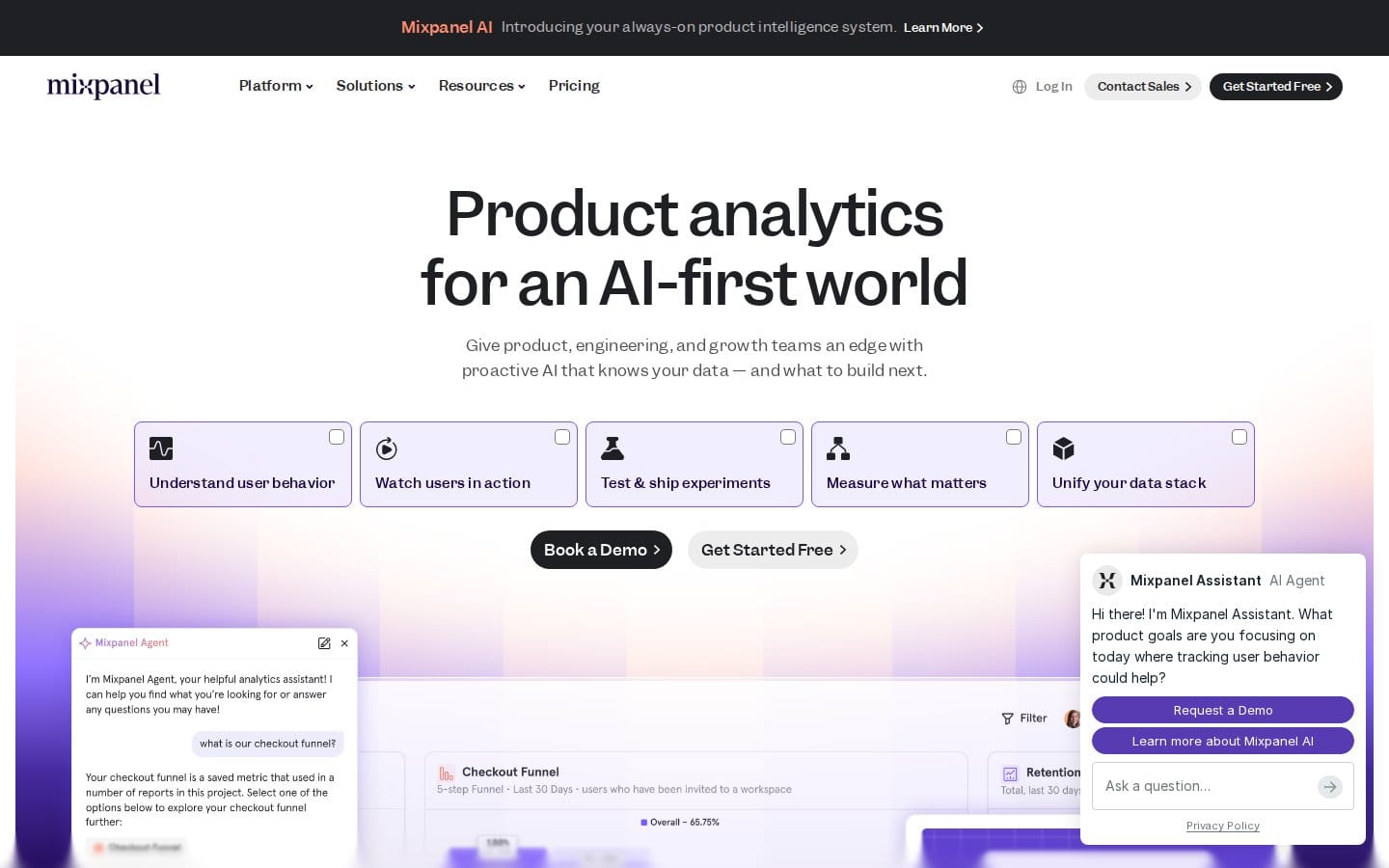
Mixpanel is a product analytics platform focused on user behaviour, conversion funnels, and retention — more suited to understanding how customers move through your storefront than tracking aggregate traffic volumes.
Strengths
- Funnel analysis lets you identify exactly where EU customers drop off during checkout — particularly useful when you're testing localised checkout flows for new markets
- Cohort analysis helps you understand retention differences between, say, German customers and French customers who came in through different acquisition channels
- Session Replay and Heatmaps on higher tiers give qualitative context to the quantitative funnel data
Best fit
Teams that need to track user behaviour, measure conversions, and improve retention at the product level. The free tier is limited to 5 saved reports and 10,000 monthly session replays — useful for early-stage EU testing, but you'll outgrow it quickly at meaningful traffic volumes.
Localisation
Localisation is the part of EU expansion that most brands underinvest in until it starts visibly hurting conversion. Running a German-language store with machine-translated product descriptions and no German-language customer support is better than nothing — but not by much. The good news is that modern localisation tooling has made the initial setup fast. Getting your Shopify store into four EU languages used to take weeks of development work. With the right tool, it's a weekend project.
Weglot
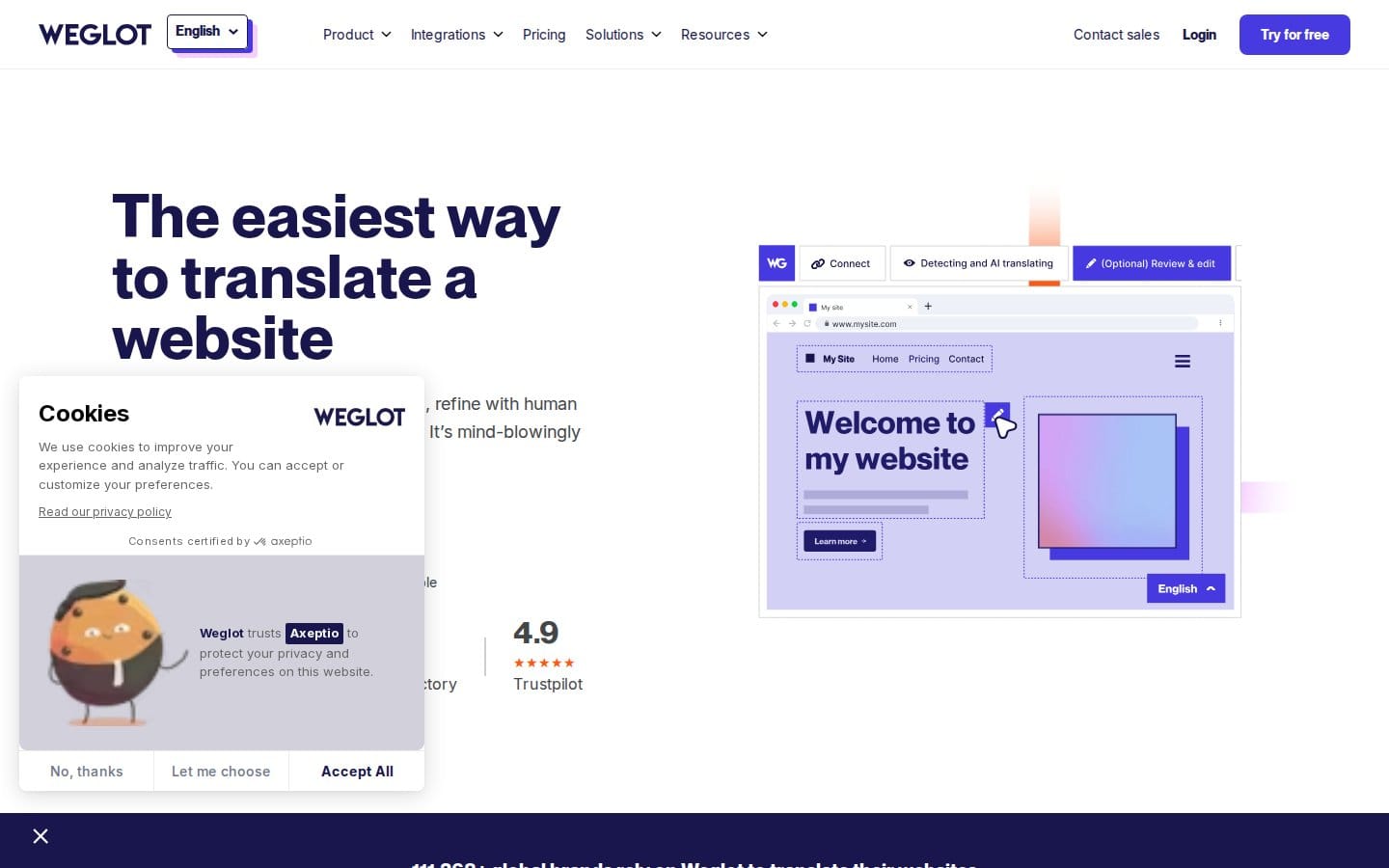
Weglot is a no-code translation platform that detects content automatically, handles multilingual SEO via language-specific URLs and hreflang tags, and integrates directly with Shopify and most other major e-commerce platforms.
Strengths
- No-code installation — a brand founder can get their Shopify store translating into three EU languages in an afternoon, without waiting on a developer
- Multilingual SEO with proper hreflang implementation means your translated pages actually get indexed and ranked in local search results, not just served to existing visitors
- Visual in-context editor lets you review and edit translations on the live storefront rather than in a spreadsheet — which dramatically reduces review time for non-technical team members
Best fit
Small to mid-sized businesses that need a fast, no-code solution to make their websites multilingual and SEO-ready. The free tier is limited to 2,000 translated words and one language — fine for testing, not enough for a full EU storefront.
Crowdin
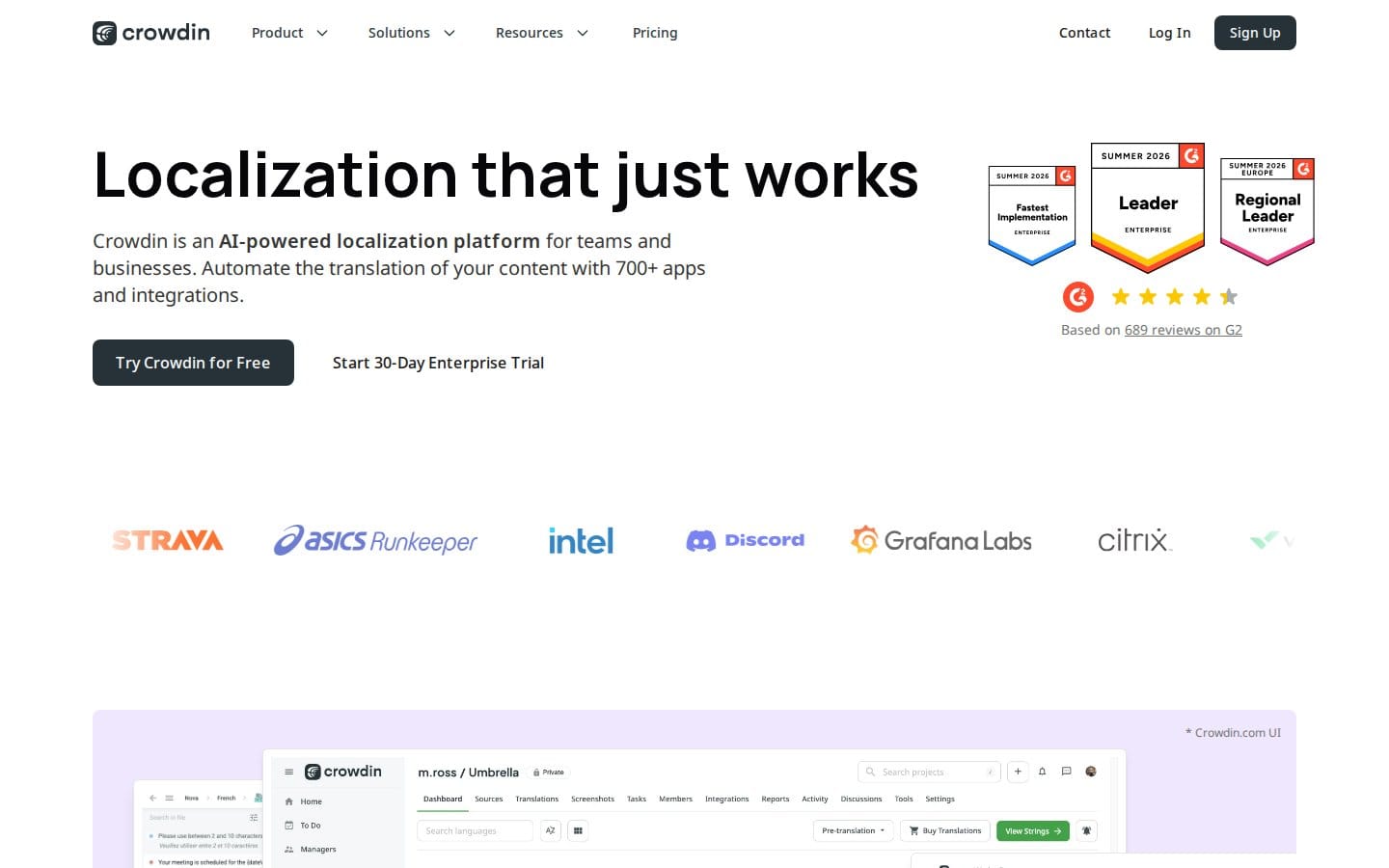
Crowdin is a translation management and localisation platform built for teams that need structured translation workflows — more appropriate when you're managing translators, maintaining translation memory across large content volumes, or localising software and mobile apps alongside your storefront.
Strengths
- Translation Memory reuses previously approved translations across new content — which cuts both cost and inconsistency as your EU content library grows
- Automated QA checks catch common translation errors before they reach your storefront or customer communications
- Customisable workflows let you set up review and approval stages — essential if you're working with external translators across multiple EU languages at the same time
Best fit
Teams and businesses managing translation workflows for software, web, and mobile applications at scale. The free tier (Crowdin Open) restricts access to advanced integrations, machine translation engines, and priority support — the paid tiers are where the workflow management value actually lives.
The stack at a glance
| Category | Tool | Free tier | Best integration |
|---|---|---|---|
| Payment Gateways | Stripe | Yes | Shopify, Taxually |
| Payment Gateways | Adyen | No | Shopify, Salesforce Commerce Cloud |
| Tax & VAT Compliance | Sovos | Yes | SAP, NetSuite, Xero |
| Tax & VAT Compliance | Taxually | No | Amazon, Shopify, Stripe |
| Inventory & Compliance | Ceendesis | — | Shopify, Amazon, Xero, QuickBooks |
| Customer Support | Gorgias | No | Shopify, Klaviyo |
| Customer Support | Zendesk | No | Shopify, Salesforce, Slack |
| Returns Management | Loop Returns | Yes | Shopify, Gorgias |
| Returns Management | AfterShip Returns | Yes | Shopify, BigCommerce, WooCommerce |
| Analytics | Matomo | Yes | WordPress, WooCommerce, Google Tag Manager |
| Analytics | Mixpanel | Yes | Segment, Snowflake, HubSpot |
| Localisation | Weglot | Yes | Shopify, WordPress, Webflow |
| Localisation | Crowdin | Yes | GitHub, Figma, Google Sheets |
Frequently asked questions
What software do I need to sell online in Europe?
At minimum: a payment gateway that supports EU local payment methods (Stripe or Adyen), a VAT compliance tool that monitors distance selling thresholds and handles OSS/IOSS filing (Taxually or Sovos), and a localisation solution for your storefront (Weglot gets most brands live fastest). If you're selling packaged goods, textiles, or battery-containing products, you'll also need EPR compliance coverage — that's where Ceendesis fills the gap for multi-channel brands. For shipping, our shipping software guide covers the carrier and label side of EU fulfilment in more detail.
How do DTC brands handle EU VAT and customs?
Most growing DTC brands use the Import One-Stop Shop (IOSS) for shipments into the EU from outside, which lets you register in a single EU member state and pay VAT on all eligible EU sales through one portal. For distance sales within the EU — if you're holding stock in an EU warehouse — the domestic OSS scheme handles multi-country VAT filing. What changes from July 2026 is customs duty: the €150 de minimis exemption is being removed, meaning every shipment from outside the EU now attracts duty regardless of value. That makes landed cost calculation at the point of sale non-negotiable for maintaining accurate margins and avoiding delivery surprises for your customers.
What are the biggest operational challenges of expanding an e-commerce brand to Europe?
In our experience, three things catch brands off guard. First, VAT compliance at scale — the EU's distance selling thresholds are easy to exceed quickly, and the penalties for late registration in some member states are significant. Second, EPR obligations — Germany's VerpackG, France's CITEO, and the UK's Plastic Packaging Tax all have different registration timelines, reporting formats, and fee structures. Brands that assumed EPR was a future problem have found themselves deregistered from Amazon EU marketplaces. Third, fragmented fulfilment — holding stock in two or three EU nodes dramatically improves delivery speed and cuts per-shipment costs, but it requires real-time multi-warehouse inventory visibility to avoid overselling. For a deeper look at the inventory side, our guide on syncing Shopify inventory to Amazon FBA covers the mechanics of multi-node stock management.
Where to start
If you're pre-launch in Europe, the essential tier is: payment gateway, VAT compliance, and localisation. Get those three working before you worry about anything else. Returns management becomes critical once you're past a few hundred EU orders a month — EU consumer law means your return rate will likely be higher than you're used to, and manual processing doesn't scale. Analytics (specifically Matomo if GDPR simplicity matters to you) should go in early, because EU market data from month one is worth more than retrospective analysis six months later.
Ceendesis slots in when you're operating across two or more channels and need inventory, EPR compliance, and accounting reconciliation handled in one place rather than stitched together across three separate tools. For fashion brands specifically, the EPR picture is more complex — Refashion in France, the Dutch UPV, and incoming EU Digital Product Passport requirements all add layers that warrant their own stack consideration. Our Refashion eco-modulation guide and the sustainable operations stack for fashion brands are the right starting points for that conversation. And if you're still building out the foundational purchase order and receiving workflows before EU expansion, our PO workflow automation guide covers what to fix first.
Screenshots are from each tool's public pricing or features page, captured May 2026. We are not affiliated with any third-party tool listed unless explicitly noted.