
The Upstream Sustainability Stack for E-commerce

Last verified: June 2026
Key takeaways
- Supply chain sustainability software covers five areas: carbon accounting, supplier ESG, traceability, sustainable packaging, and circular economy. Most growing brands need at least three of them.
- The EU's Corporate Sustainability Due Diligence Directive (CSDDD) starts phasing in obligations from 2027, which makes upstream data collection an urgent operational priority right now, not something to revisit later.
- Digital Product Passports become mandatory for batteries from 2027, with textiles following shortly after — and the data those passports require lives deep in your supply chain, not in your Shopify backend.
- Traceability tools like Sourcemap and Circulor are genuinely complex to implement. Both need a functioning ERP underneath them before you start.
- No single platform covers this entire stack. You'll be integrating across systems, so treat data standardisation as a first-class concern from day one.
Most e-commerce brands have their downstream operations reasonably sorted. Inventory syncs across channels. Returns get processed. Orders flow into the warehouse without anyone typing anything manually. But upstream? For a lot of brands that genuinely should know better by now, it's still a mess of spreadsheets nobody fully trusts.
Regulators are arriving. That's why this is changing. The EU's Corporate Sustainability Due Diligence Directive (CSDDD) legally requires large companies to identify and address environmental and human rights risks within their supply chains, with obligations beginning in 2027. Digital Product Passports are coming for textiles. Battery passport requirements kick in the same year. If you're selling into EU markets and haven't started building this operational layer, you're already behind.
This stack is for operations managers and brand founders who are past the "should we do something about sustainability?" conversation and into "what software do we actually need?" It covers five categories: carbon accounting, supplier ESG and risk, supply chain traceability, sustainable packaging, and circular economy platforms. We've picked one or two tools per category based on what's credibly built for this use case — not what has the longest feature list on a comparison site.
Carbon accounting and management
Carbon accounting software gives you a structured, auditable way to calculate your Scope 1 (direct emissions), Scope 2 (purchased energy), and Scope 3 (everything else, including your supply chain) emissions. For most e-commerce brands, Scope 3 is where 80%+ of the footprint actually sits, which makes this category inseparable from the supplier and traceability work further down this stack. There's nothing to reduce if you don't know where the numbers are coming from.
Salesforce Net Zero Cloud
Salesforce Net Zero Cloud is an enterprise-grade carbon accounting and ESG management platform built on top of the Salesforce ecosystem. It's designed for medium to large organisations that need to track Scope 1, 2, and 3 emissions, automate ESG reporting, and manage supplier value chain data — all within one connected environment.
Strengths
- Full Scope 1, 2, and 3 emissions tracking with AI-powered ESG reporting — useful for brands that need disclosure-ready reports without manual data wrangling.
- Supplier and value chain emissions tracking that pulls data across your supply chain and feeds it directly into your broader ESG picture.
- Deep native integration with the Salesforce ecosystem (MuleSoft, Commerce Cloud, CRM Analytics, Field Service) — if you're already Salesforce-heavy, this is a meaningful advantage.
Best fit
Best for mid-market and enterprise brands already running on Salesforce that need carbon accounting embedded in their existing operational data flows. Note that Net Zero Cloud Analytics dashboards require the CRM Analytics for Net Zero Cloud add-on licence — factor that into your platform evaluation.
Persefoni
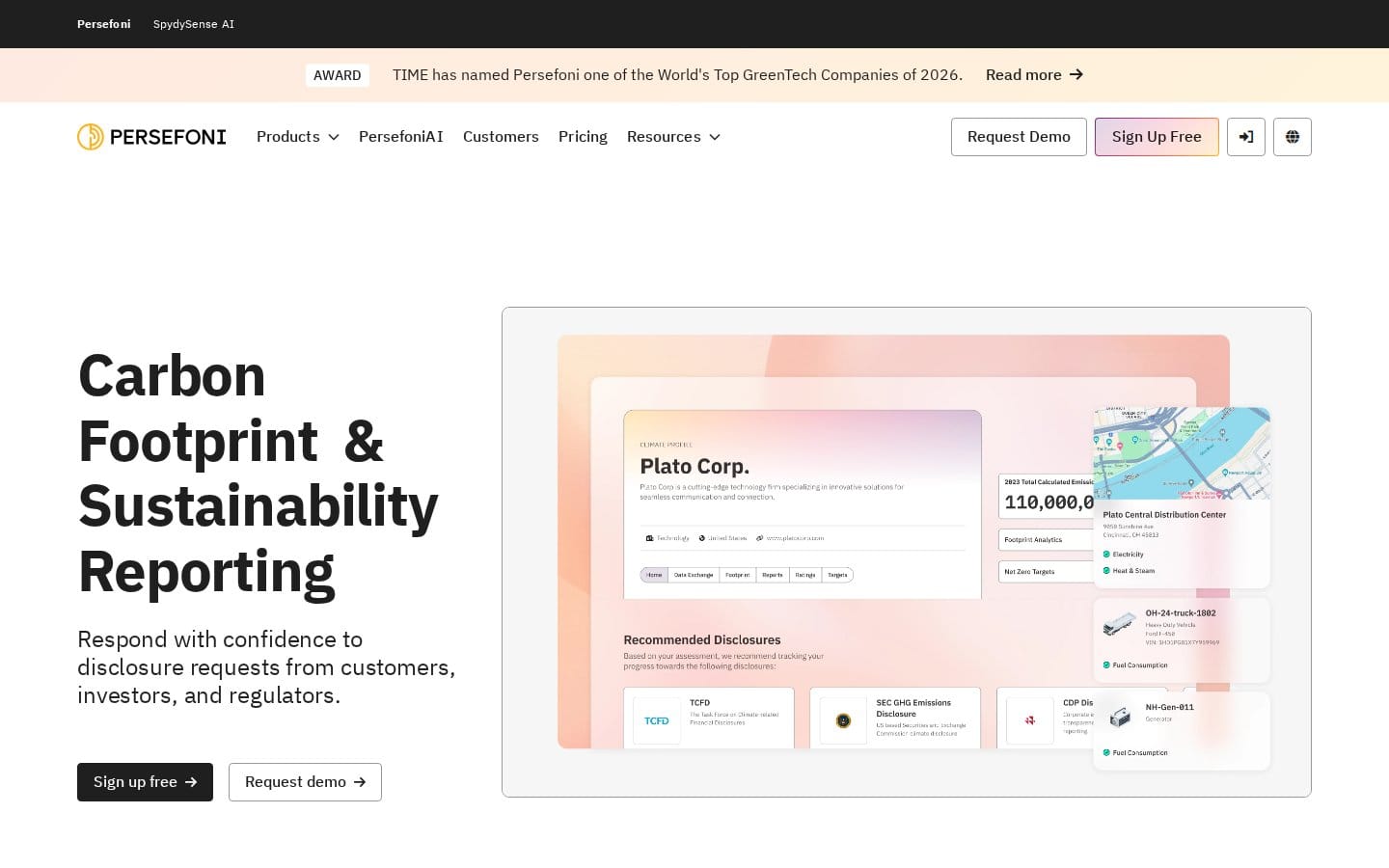
Persefoni is a dedicated carbon management platform covering the full GHG Protocol methodology — Scope 1, 2, and 3 — with built-in report builders aligned to CSRD, ISSB, and CDP frameworks. It's one of the more credible options for brands that need audit-ready climate disclosures without building a separate reporting workflow from scratch.
Strengths
- A CO2e Ledger that creates a transparent, auditable record of every emissions calculation — important when your sustainability claims face external scrutiny.
- Decarbonisation planning and reduction trajectory modelling, so you're not just measuring the problem but working out how to address it.
- PersefoniAI for anomaly detection and emissions factor mapping, with a Copilot feature — though note that natural language-based emissions factor mapping is listed as coming soon on the PersefoniAI product page.
Best fit
A strong option for brands that need framework-aligned reporting (CSRD, CDP) and want a standalone platform rather than one bolted onto a CRM. The free tier makes it accessible for smaller brands getting started with formal carbon measurement.
Supplier ESG and risk management
Knowing your own emissions is only half the picture. Supplier ESG tools let you assess, score, and monitor the sustainability and ethical performance of your supply base. As CSDDD obligations begin in 2027, a documented, auditable process for evaluating supplier risk stops being a competitive advantage and becomes baseline compliance. Doing this because it looks good in a sustainability report is beside the point — you'll need the paperwork either way.
EcoVadis
EcoVadis is a widely used supplier sustainability ratings platform. It scores companies across four themes — environment, labour and human rights, ethics, and sustainable procurement — and provides a shared, portable scorecard that suppliers complete once and share across multiple customers.
Strengths
- IQ Plus for real-time supply chain sustainability risk mapping and monitoring — useful for brands managing a dispersed supplier base across multiple geographies.
- Carbon Action Manager built into the platform, so supplier carbon data and ESG scoring sit together rather than in separate tools.
- Integrations with Salesforce, Ivalua, and Esker Supplier Management — relevant if you're already running procurement through one of those platforms.
Best fit
Best for brands that need a credible, third-party-backed supplier assessment process they can reference in ESG disclosures. EcoVadis doesn't publish transparent enterprise pricing — costs are determined after consultation based on company size and needs, so build in time for a proper sales conversation.
Sedex
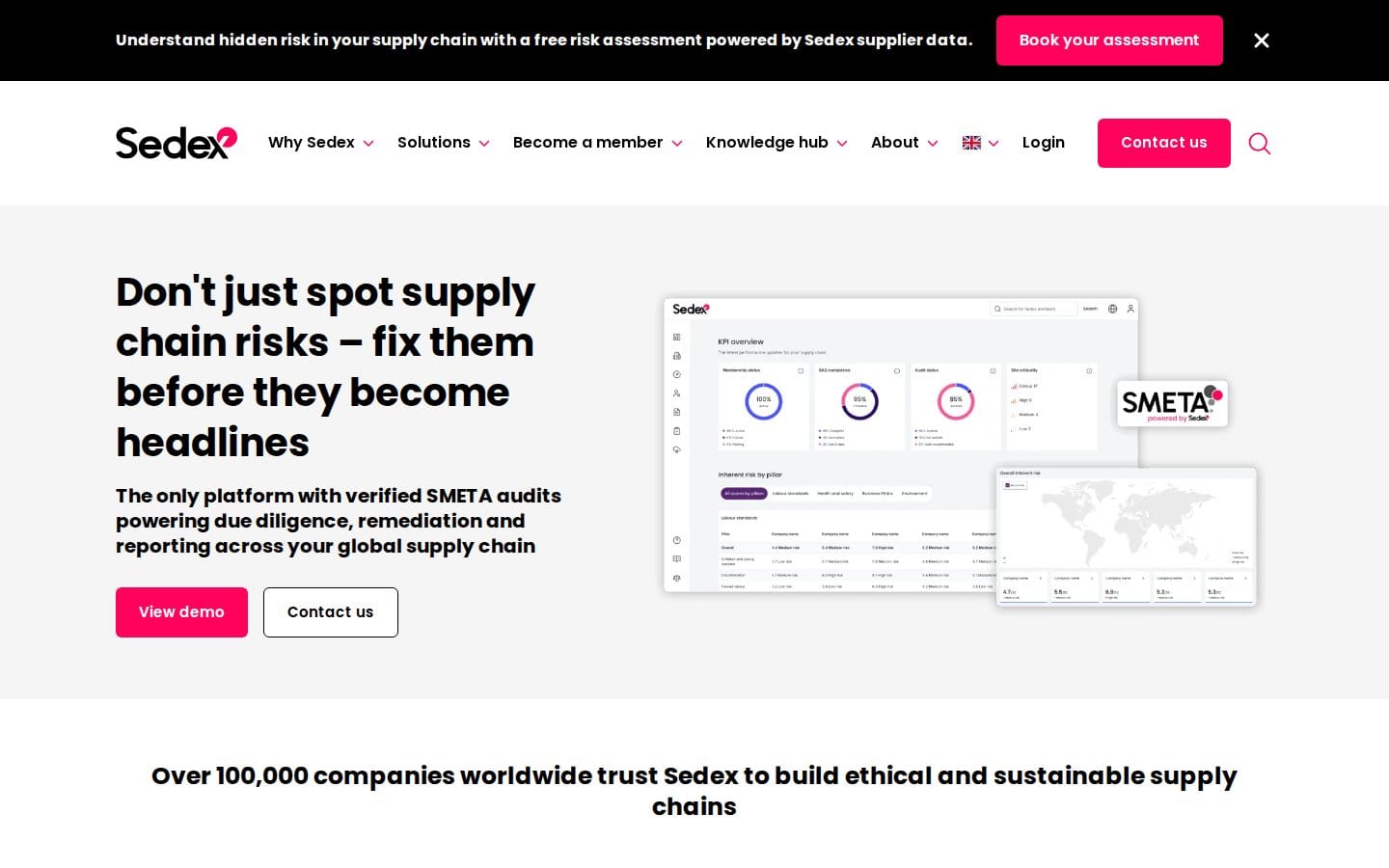
Sedex is an ethical trade membership platform built around SMETA (Sedex Members Ethical Trade Audit) — a widely recognised audit methodology for assessing labour standards, health and safety, environment, and business ethics across global supply chains.
Strengths
- Supplier self-assessment questionnaires (SAQs) that give you structured, comparable data across your supply base without requiring a full audit of every tier.
- A shared data exchange platform — suppliers upload their information once, buyers access it — which reduces audit fatigue across the supply chain.
- GRI-aligned reporting and analytics for ESG performance, giving you disclosure-ready output from supplier data.
Best fit
Sedex works well for brands that are serious about labour rights and ethical sourcing, particularly those with suppliers in high-risk manufacturing regions. Keep in mind that only Sedex Members can have a SMETA audit conducted by an Affiliate Audit Company — membership is a prerequisite, not an optional add-on.
Supply chain traceability
Honestly, this is the category where most brands underestimate the work involved. Supplier scorecards tell you how a supplier claims to perform. Traceability tools tell you what's actually happening — which raw materials came from where, which sub-suppliers processed them, and whether the chain of custody holds up to scrutiny. This category is directly relevant to Digital Product Passport compliance, where the data requirements go several tiers deep into your supply chain, not just to your tier-one manufacturer.
Sourcemap
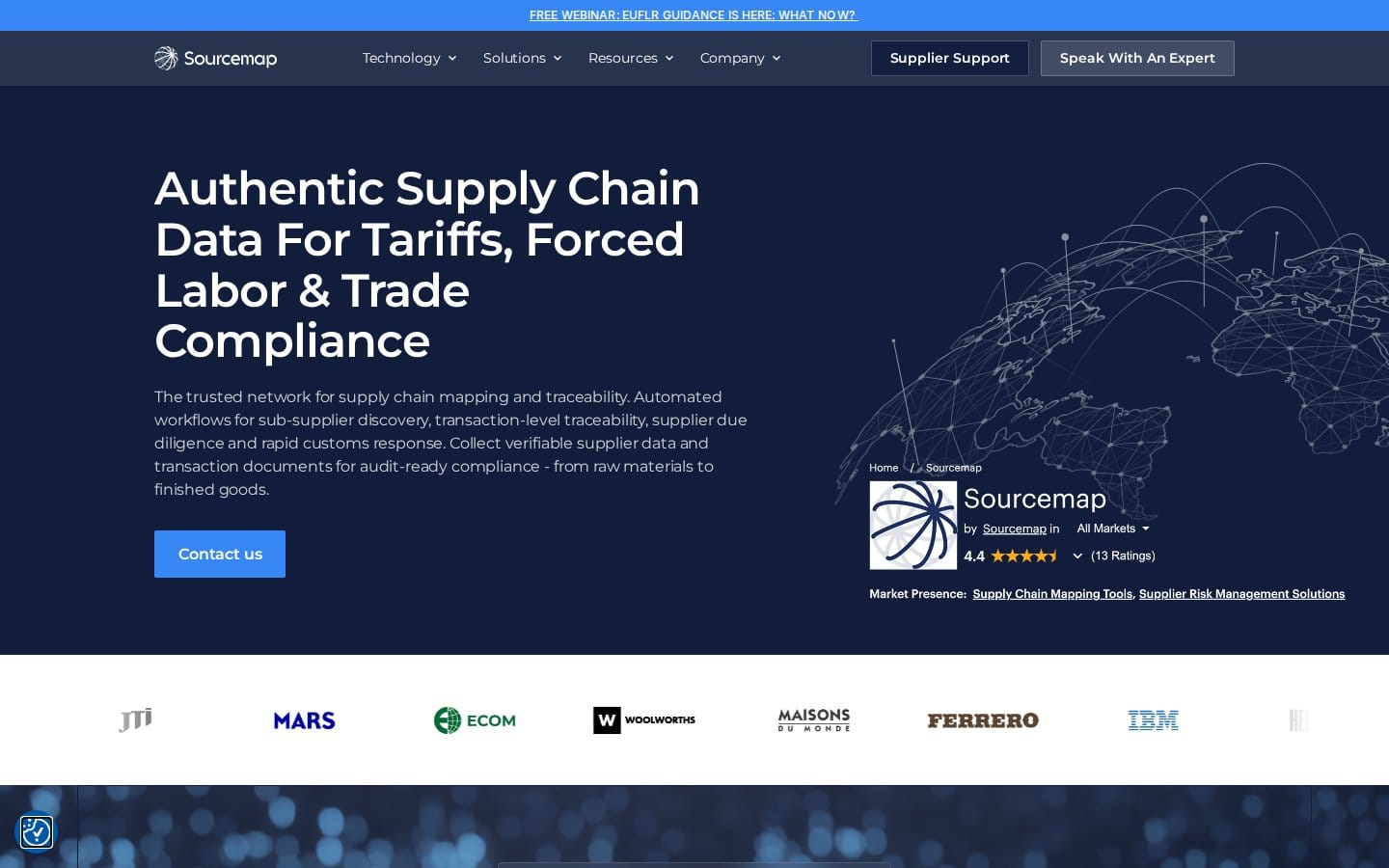
Sourcemap is an enterprise supply chain mapping and traceability platform. It traces product origins down to raw material level, onboards n-tier suppliers via a dedicated portal, and provides continuous monitoring and risk alerts across the full supply network.
Strengths
- End-to-end supply chain mapping down to raw materials — not just tier-one visibility, but the sub-supplier and ingredient-level detail that DPP requirements will actually demand.
- Transaction-level traceability and chain of custody, validated through supply chain verification and data validation tools.
- Integrations with SAP, the EU TRACES customs portal via API, and US CBP ACE 2.0 — useful for brands with cross-border import flows.
Best fit
Sourcemap is built for companies with complex, multi-tier supplier networks. It's worth knowing upfront that having an ERP in place is recommended before implementing Sourcemap — if you're still running operations on spreadsheets, fix that first (our NetSuite Shopify integration guide is a reasonable starting point).
Circulor
Circulor is a material traceability platform built for complex industrial supply chains, with particular depth in battery and automotive sectors. That makes it directly relevant for e-commerce brands selling battery-containing products into the EU, where Battery Passports become mandatory from early 2027.

Strengths
- Digital Product Passports and Battery Passports built natively into the platform, with blockchain-backed verification via Oracle Cloud Infrastructure and Hyperledger Fabric.
- Embedded carbon and ESG performance analytics alongside provenance tracking — so you're not running traceability and carbon accounting as completely separate data streams.
- RESTful API integrations with existing ERP platforms, with a manual data entry option for Battery Passports while you get API integration set up.
Best fit
If you sell battery-containing products — anything from power tools to wearables to electric mobility products — Circulor's Battery Passport functionality is worth serious evaluation given the regulatory timeline. Initial data entry can be manual while API integration is being configured, which lowers the implementation barrier somewhat.
Sustainable packaging solutions
Packaging sustainability sits at the intersection of operations and compliance. If you're handling more than 10 tonnes of packaging annually in the UK, you're already within scope for EPR registration, and the UK Plastic Packaging Tax runs at £228.82 per tonne for the 2026/27 tax year. Getting the materials right upstream matters. This category covers both the physical packaging you source and the artwork management workflow that governs what goes on it — two problems that get entangled faster than you'd expect at scale.

noissue
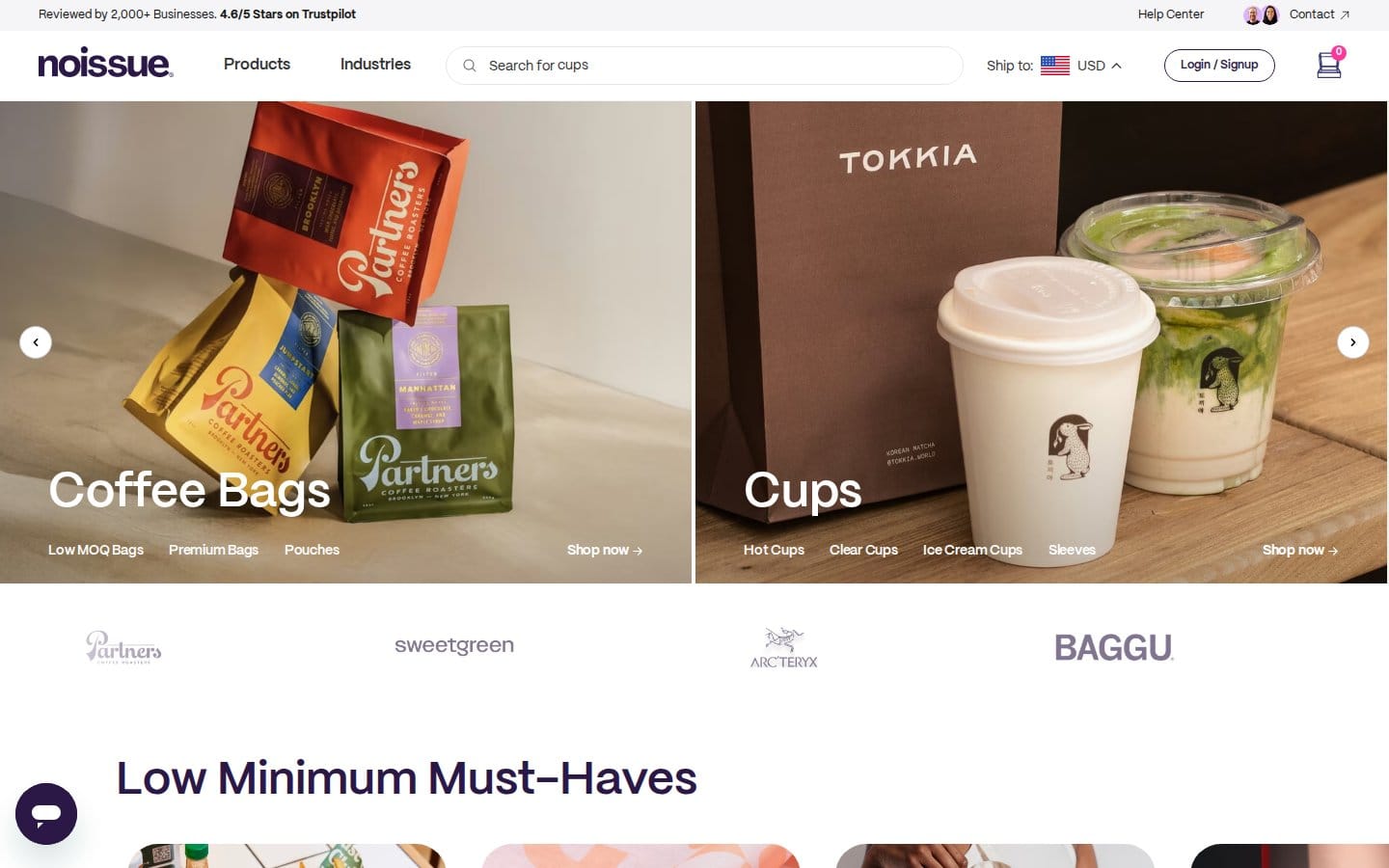
noissue is a custom sustainable packaging supplier offering compostable, recycled, and reusable materials with an online design platform, low minimum order quantities, and an Eco-Alliance programme that plants trees with every order.
Strengths
- Genuine material sustainability options — compostable mailers, recycled tissue, reusable bags — rather than vague "eco-friendly" claims backed by nothing.
- Low MOQs make it practical for growing brands that can't commit to 5,000-unit runs across every SKU (though note that custom sizing for certain products does require 5,000-unit minimums).
- Soy-based inks and the Eco-Alliance tree-planting programme — small details, but useful for brands that want packaging choices they can actually reference in their sustainability communications.
Best fit
Good for DTC and Shopify brands that want sustainable custom packaging without large procurement commitments. The free account tier lets you explore the platform before committing to orders.
ManageArtworks
ManageArtworks is a packaging artwork lifecycle management platform. It handles version control, approval workflows, AI-powered proofing, pack copy management, and regulatory compliance checks — the operational layer that prevents expensive packaging errors and keeps sustainability claims accurate across every SKU.

Strengths
- AI-powered proofing and compare tools that catch copy errors, missing regulatory information, and version inconsistencies before they go to print.
- Audit trails and version control — critical when packaging carries regulatory claims (recycled content percentages, compostability certifications) that could attract scrutiny.
- Integrates with PLM, ERP, DAM, PIM, and e-commerce systems, so artwork data doesn't live in isolation from your product data.
Best fit
Most valuable for brands managing packaging across multiple SKUs, markets, or regulatory jurisdictions — the more complexity you have, the more a structured artwork workflow earns its keep. Advanced features like Dieline & 3D Management and enterprise integrations are available in custom plans.
Circular economy platforms
Circular economy software connects the end of one product lifecycle to the beginning of the next — through resale, trade-in, repair, or take-back programmes. For fashion and consumer goods brands in particular, this is increasingly tied to regulatory obligations (France's AGEC Law has resale and repair-related provisions) and to the kind of returns management infrastructure that turns a cost centre into a revenue stream.
Trove
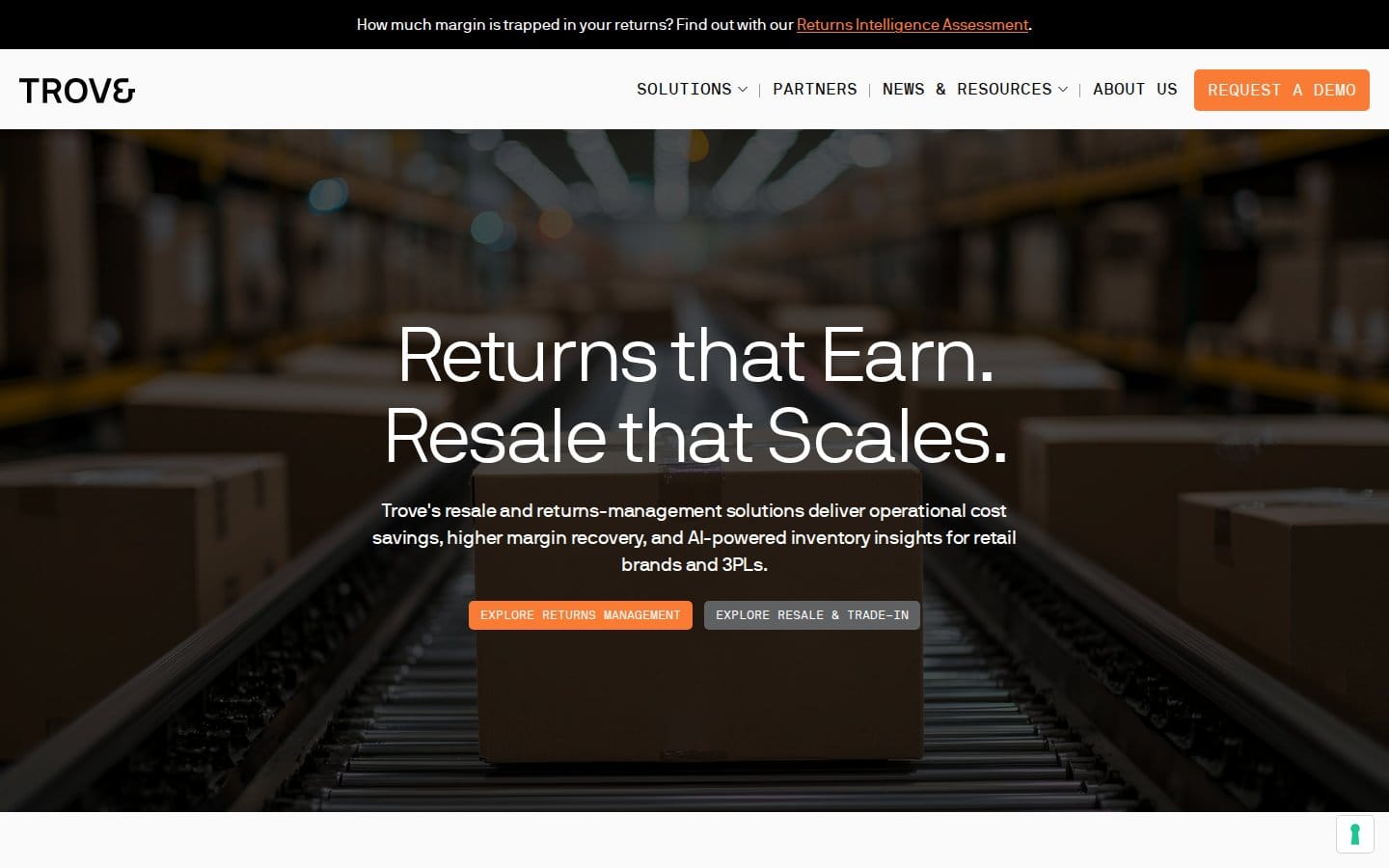
Trove is a recommerce operating system that powers branded resale, trade-in, and returns programmes for retail brands and 3PLs. It combines reverse logistics automation, AI-powered inventory grading, and a resale commerce layer that plugs into existing e-commerce platforms.
Strengths
- AI-powered condition grading using computer vision and predictive analytics, reducing the manual labour involved in processing returned and traded-in inventory at scale.
- ML-powered active pricing models for resale items — so you're not manually pricing every pre-owned unit, and margins stay defensible.
- A Resale Plugin that integrates pre-owned inventory into Shopify, Salesforce Commerce Cloud, and BigCommerce storefronts without rebuilding your front end.
Best fit
Built for brands that want to run resale as a proper revenue line, not an afterthought. The platform operates in North America, UK, and EU — worth confirming coverage for your specific market before committing. It pairs well with the omnichannel fashion tech stack if you're a fashion brand building out multiple selling channels alongside a resale programme.
Tools covered in this stack
| Category | Tool | Free tier | Best integration |
|---|---|---|---|
| Carbon Accounting & Management | Salesforce Net Zero Cloud | Yes | Salesforce Commerce Cloud, MuleSoft |
| Carbon Accounting & Management | Persefoni | Yes | Standalone; framework exports (CSRD, CDP) |
| Supplier ESG & Risk Management | EcoVadis | Yes | Salesforce, Ivalua, Esker Supplier Management |
| Supplier ESG & Risk Management | Sedex | No | API for internal systems; GRI-aligned reporting |
| Supply Chain Traceability | Sourcemap | No | SAP, EU TRACES, US CBP ACE 2.0 |
| Supply Chain Traceability | Circulor | No | Oracle OCI Blockchain, Hyperledger Fabric, ERP |
| Sustainable Packaging Solutions | noissue | Yes | Standalone; design platform |
| Sustainable Packaging Solutions | ManageArtworks | Yes | PLM, ERP, DAM, PIM, e-commerce |
| Circular Economy Platforms | Trove | No | Shopify, Salesforce Commerce Cloud, BigCommerce |
Frequently asked questions
What is supply chain sustainability software?
It's a broad category covering tools that help businesses track and address the environmental and social performance of their upstream operations. In practice, that means carbon accounting platforms (Scope 1, 2, and 3 emissions), supplier ESG tools (labour standards, environmental risk, ethical performance), traceability platforms (verifying material origins tier by tier), sustainable packaging tools, and circular economy platforms that extend product life through resale or take-back. For e-commerce brands, the practical driver for adopting these tools is increasingly regulatory: CSDDD, Digital Product Passports, EPR obligations, and framework-based disclosure requirements like CSRD are creating hard deadlines where operational data needs to exist in auditable, structured form.
How can e-commerce brands ensure ethical sourcing?
It starts with knowing who's actually in your supply chain beyond your immediate tier-one suppliers. Tools like Sedex and EcoVadis provide structured frameworks for assessing labour rights, health and safety, and environmental performance across your supply base — through supplier self-assessment questionnaires, third-party audits (SMETA for Sedex members), and ongoing risk monitoring. But software alone isn't the answer. You need supplier contracts with explicit ethical standards, a process for acting on low scores or red flags, and enough leverage with your suppliers to drive improvement rather than just documenting problems. For brands selling into the EU, CSDDD obligations from 2027 will formalise many of these requirements — making "we asked them to fill in a questionnaire" insufficient on its own.
What is the EU Corporate Sustainability Due Diligence Directive (CSDDD)?
The CSDDD is an EU law that requires large companies to identify, prevent, mitigate, and account for adverse environmental and human rights impacts in their own operations and across their supply chains. Unlike disclosure-only frameworks, it creates actual legal obligations — including a duty of care that companies must exercise over their value chains. Obligations begin phasing in from 2027, starting with the largest companies (those with over 5,000 employees and €1.5bn turnover) and extending to smaller large companies in subsequent years. For e-commerce operations managers, the practical implication is straightforward: you need structured, auditable upstream data — on suppliers, materials, and environmental impacts — before those deadlines arrive. The supplier ESG and traceability categories in this stack are the most direct operational response to CSDDD requirements.
How do you track sustainability in the supply chain?
It requires layering several different data types. Carbon accounting platforms give you emissions data across your operations and value chain. Supplier ESG tools give you performance scores and audit records for individual suppliers. Traceability platforms give you material-level provenance data — which is where most of the complexity lives, because sub-suppliers rarely self-report voluntarily. The emerging pressure point is Digital Product Passports, which will require e-commerce brands to hold and expose structured data on product composition, carbon footprint, and material origins in machine-readable form. Batteries come first (from 2027), with textiles expected to follow. For brands selling into EU markets, centralising upstream data now — before those mandates land — avoids the kind of emergency implementation project that nobody wants to run in Q4 of a deadline year. Our guide to EU Textile Digital Product Passport compliance covers the textile-specific requirements in more detail.
Where to start
If you're a founder-led brand doing under £5m in revenue, don't try to build this entire stack at once. Carbon accounting and sustainable packaging are your first moves — Persefoni's free tier and noissue's low MOQs let you get going without a large upfront commitment. Supplier ESG via Sedex or EcoVadis comes next, once you have enough supplier relationships to justify the overhead.
Traceability is genuinely the hardest part of this. Sourcemap and Circulor are serious enterprise implementations — they need an ERP underneath them, dedicated project resource, and supplier buy-in across multiple tiers. We've watched teams underestimate this by months. Get the operational foundations in place first. Our international CPG operations stack covers some of those foundations if you're still building them out.
And the circular economy layer — Trove — is a genuine revenue opportunity for fashion and consumer goods brands with meaningful return volumes. But it's a strategic programme, not a tool you switch on. A resale programme is more defensible and more likely to actually turn a profit when it sits on top of an operations stack that knows what's in your products. So sort the upstream data layer first, then build out the resale programme on top of it.
The omnichannel fashion tech stack and the agile operations stack for fast fashion cover complementary ground if sustainability is one piece of a broader operations build-out you're working through.
Screenshots are from each tool's public pricing or features page, captured June 2026. We are not affiliated with any third-party tool listed unless explicitly noted.