
The International CPG E-commerce Operations Stack

Last verified: June 2026
Key takeaways
- International CPG e-commerce runs on seven operational layers: platform, analytics, email and SMS, loyalty, localisation, subscriptions, and the inventory-and-compliance foundation underneath all of it.
- DTC channels are projected to account for 50% of CPG revenue by 2026. The infrastructure to support that scale matters now, not later.
- The EU removed the €150 customs duty-free threshold from 1 July 2026. That changes the landed cost maths for every brand shipping into Europe.
- New EU packaging rules under the PPWR (Regulation EU 2025/40) apply from 12 August 2026. CPG brands shipping packaged goods into the EU need to be across this.
- Not every tool here is essential from day one. Platform and analytics are table stakes. Subscriptions and localisation can wait until you've confirmed product-market fit in each new market.
CPG brands have always had complex operations. But selling internationally through direct-to-consumer channels adds a whole new tier: expiration date management, country-specific ingredient restrictions, multilingual storefronts, packaging compliance across five different regulatory regimes, and customers who expect a localised experience even when you're shipping from a single 3PL in the Midlands or New Jersey. And that's before you touch subscription billing, loyalty mechanics, or the cross-border customs changes hitting EU imports right now.
This stack is built for CPG brands — food and beverage, health and beauty, household goods — that are either already selling internationally or actively planning to. Brands doing £50k a year on a single Shopify SKU should start with our guide to dynamic safety stock for e-commerce first. Here we're talking about brands that have found product-market fit domestically and are working out how to scale across markets without operations turning into a mess.
We've structured this around seven categories. Each one solves a distinct operational problem. Some tools overlap at the edges — Yotpo does loyalty and reviews and SMS, Klaviyo does email and SMS and segmentation — so you'll need to make deliberate choices about where you want consolidation versus best-of-breed. We'll flag those tradeoffs as we go.
E-commerce platform
Your platform is the foundation everything else plugs into. For international CPG, you need multi-currency pricing, a strong third-party app ecosystem (because no platform does everything natively), and reliable checkout that handles VAT and duty calculations across markets. There are two credible options at this scale.
Shopify
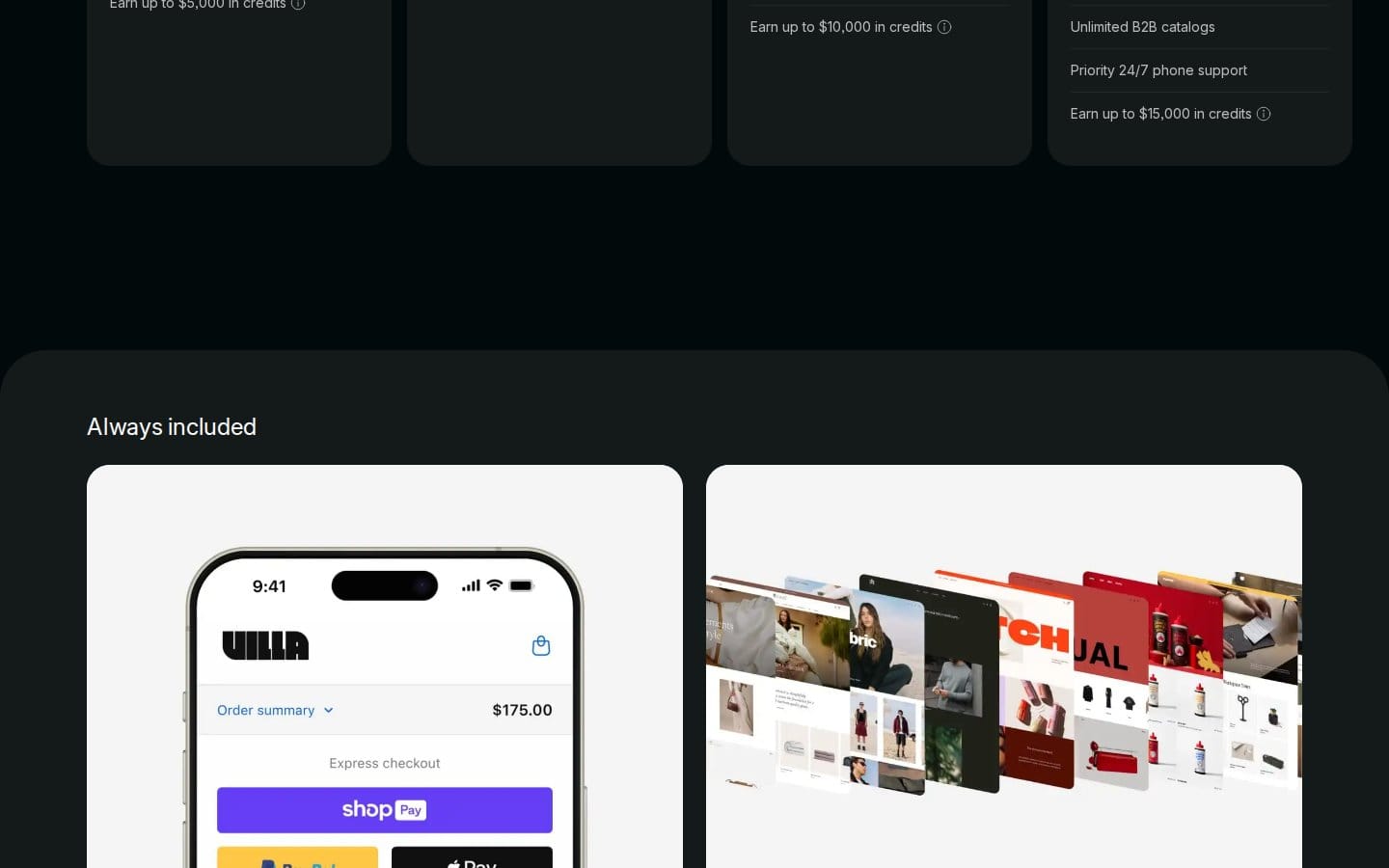
Shopify is the default choice for most CPG brands entering DTC — and for good reason. Its Shopify Markets feature handles multi-currency pricing, local payment methods, and market-specific domains without additional tools. The app store covers virtually every gap, from subscription billing to compliance reporting. For brands already on Amazon or other marketplaces, Shopify works as the DTC hub while third-party tools handle channel sync.
Strengths
- Multi-currency and multilingual storefronts via Shopify Markets, with automated currency conversion and local pricing overrides
- Shopify Payments plus support for Apple Pay, PayPal, and Stripe — broad international payment coverage without custom integration work
- 8,000+ apps in the Shopify App Store, meaning almost every tool in this stack integrates natively
Best fit
Best for CPG brands wanting a proven, well-integrated DTC foundation without heavy development overhead. Worth knowing: higher-tier plans (Shopify and above) are required to unlock detailed channel-by-channel and cohort reporting. The Basic plan's analytics are thin for brands running multi-market campaigns.
BigCommerce
BigCommerce is the stronger choice when you're running both DTC and B2B wholesale from a single platform — think a CPG brand selling direct to consumers while also managing trade accounts with distributors or food service buyers. Its native B2B features (customer groups, bulk pricing, quote management) remove the need for a separate wholesale tool. It also connects directly to ERP systems like Oracle NetSuite and Microsoft Dynamics 365, which matters once your order volumes require proper financial integration. For more on the wholesale side of operations, see our B2B wholesale operations stack.
Strengths
- Native B2B capabilities (customer groups, quote management, bulk pricing) without additional apps
- Open API and headless commerce support for brands with custom front-end requirements
- Direct marketplace connections to eBay, Amazon, and Google Shopping from one catalogue
Best fit
Best for CPG brands running hybrid DTC and B2B models, or those needing deep ERP integration. Be aware that annual revenue limits apply per plan tier — exceeding the limit triggers an automatic upgrade.
Analytics and business intelligence
For international CPG, analytics isn't just about knowing which products sell. It's about understanding which markets are actually profitable once you account for duties, returns, and shipping costs. You need both a traffic-and-conversion layer (Google Analytics) and a data visualisation layer for deeper BI work (Tableau).
Google Analytics
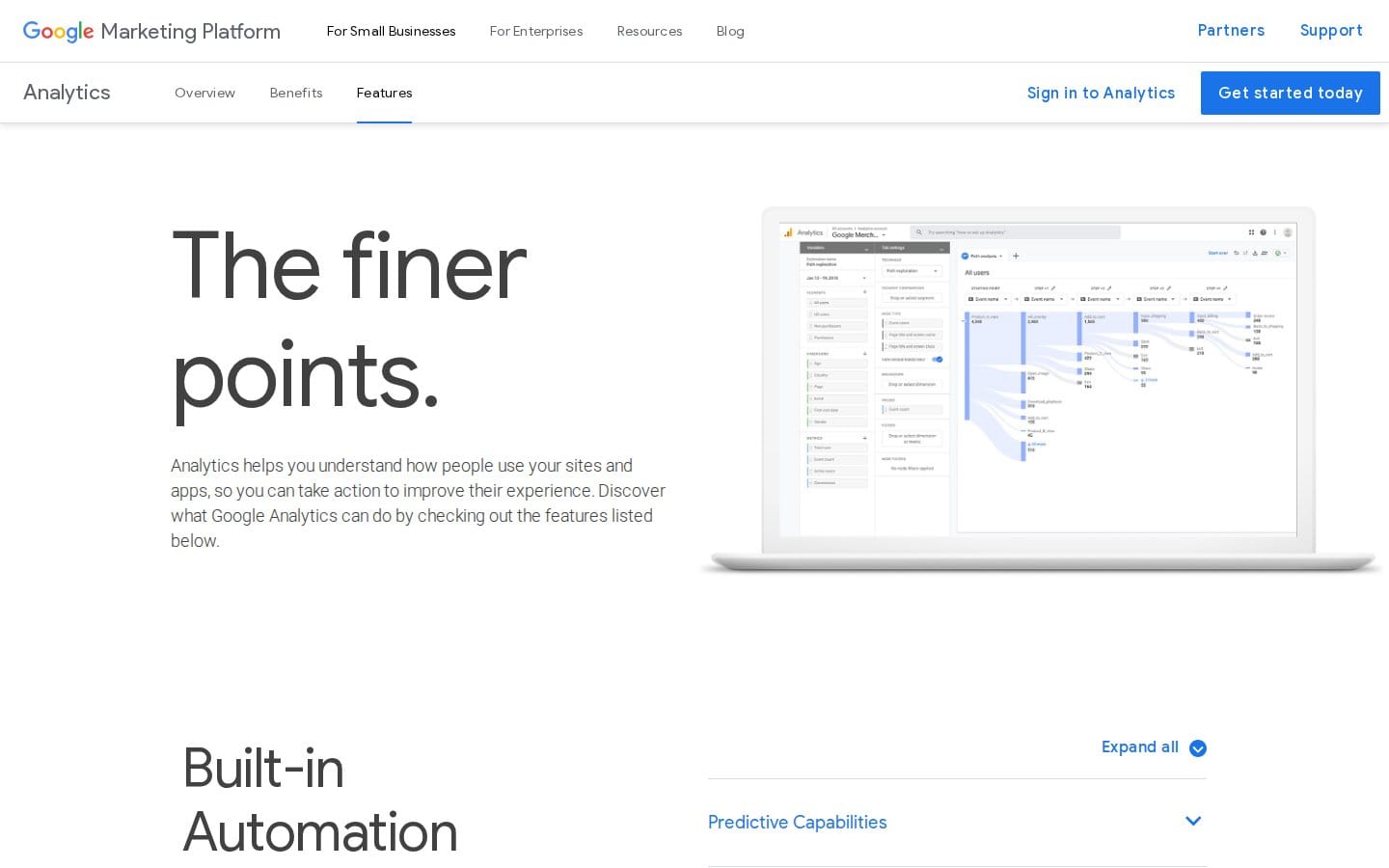
Google Analytics 4 is where every e-commerce brand's measurement stack starts. GA4's event-based model handles cross-device journeys better than its predecessor — which matters for CPG consumers who research on mobile and buy on desktop. The free tier covers most brands' needs at the traffic and conversion level, and the integration with Google Ads makes it non-negotiable for brands running paid acquisition across markets.
Strengths
- Real-time monitoring, funnel analysis, and conversion tracking across web and app touchpoints
- AI-powered predictive metrics — including purchase probability and churn likelihood — without additional ML tooling
- Direct integration with Google BigQuery for brands that want to run their own SQL queries on raw event data
Best fit
Worth having for any brand running paid traffic or needing to understand customer journeys across markets. One caveat: the free GA4 plan limits data retention to 14 months and applies data sampling at high traffic volumes. Brands generating millions of monthly sessions may need GA360.
Tableau
Tableau sits above GA4 in the stack. It's where you pull together data from your e-commerce platform, inventory system, marketing tools, and financials to answer harder questions. For a CPG brand, that might mean a dashboard showing sell-through rates by SKU across three markets, or profitability per order after landed costs. It connects to Amazon Redshift, Google BigQuery, and Salesforce, so your data warehouse feeds directly into the visualisations your team actually looks at.
Strengths
- Interactive dashboards that connect to both cloud and on-premises data sources — no single source of truth required
- Advanced analytics including predictive modelling, with Python and R integrations for data science teams
- Natural language queries (Ask Data) so non-technical team members can explore data without SQL
Best fit
Best for CPG brands with more than one data source that need cross-functional reporting — operations, finance, and marketing looking at the same numbers. Note: Tableau Public requires all visualisations to be published publicly, so paid plans are necessary for any proprietary operational data.
Email and SMS marketing
Email and SMS are still the highest-ROI retention channels for CPG brands — especially for subscription products where churn prevention matters as much as acquisition. The two tools here take different approaches: Klaviyo is the data-heavy, segmentation-first option; Omnisend is leaner and more accessible for brands without a dedicated CRM team.
Klaviyo
Klaviyo has become the standard email and SMS platform for serious DTC brands. It integrates with Shopify at a depth that few tools match — subscriber behaviour, purchase history, and predictive lifetime value all flow in automatically, and the segmentation engine lets you act on that data without exporting a CSV first. For international CPG, that means you can trigger localised flows based on market-specific behaviour rather than blasting the same sequence to every geography. Connecting it to your Amazon channel takes a bit more work; our guide to connecting Amazon Seller Central to Klaviyo walks through that setup.
Strengths
- Unified customer profiles combining e-commerce behaviour, purchase history, and predictive analytics in one view
- Automated flows (abandoned cart, win-back, post-purchase) that can be customised per market or per product line
- Native integrations with Shopify, BigCommerce, and Recharge — the whole subscription and loyalty stack talks to it
Best fit
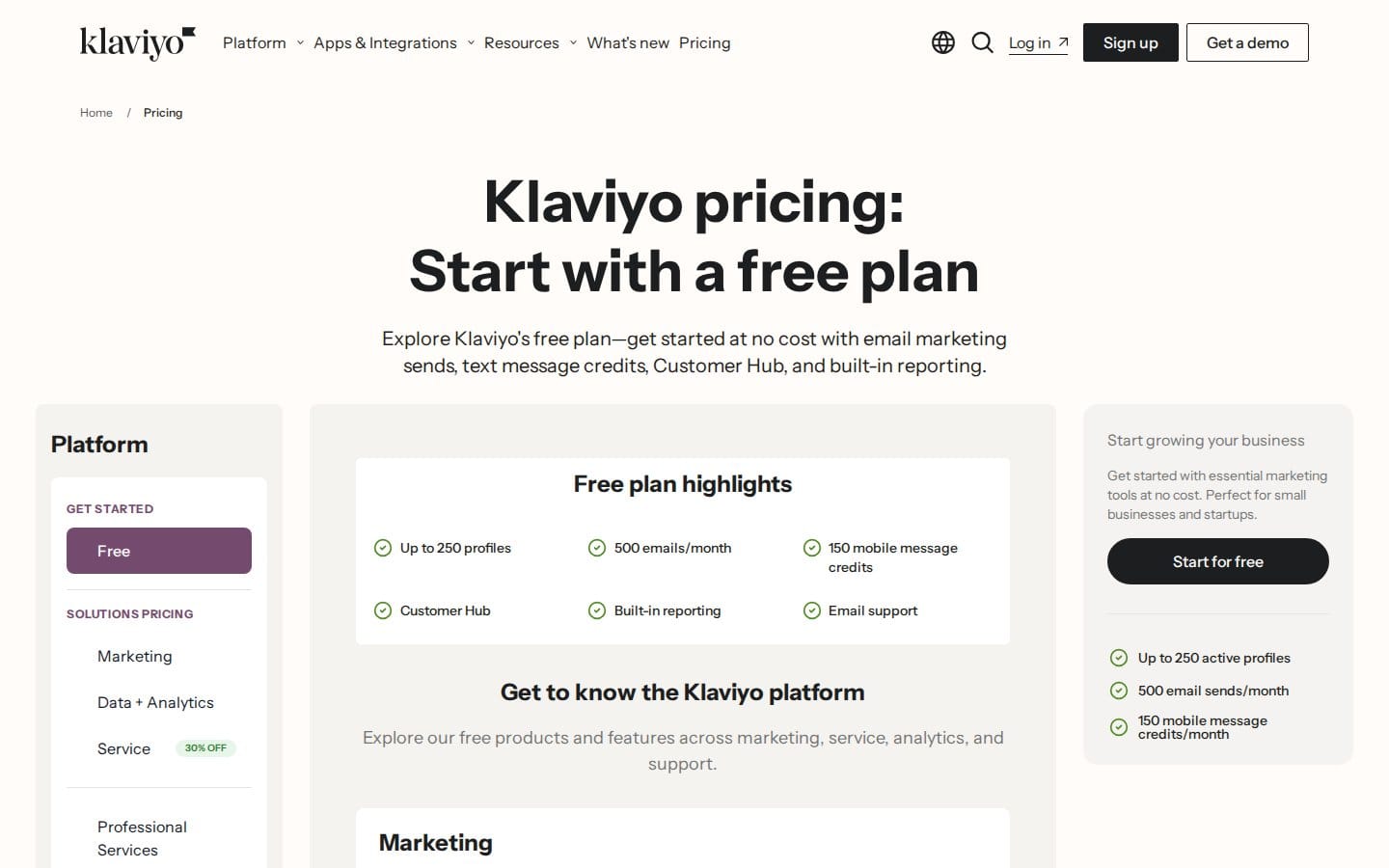
Best for CPG brands with established customer lists and a need for sophisticated segmentation across multiple markets. The free plan is limited to 250 active profiles and 500 email sends per month — functional for early testing, not for any real list.
Omnisend
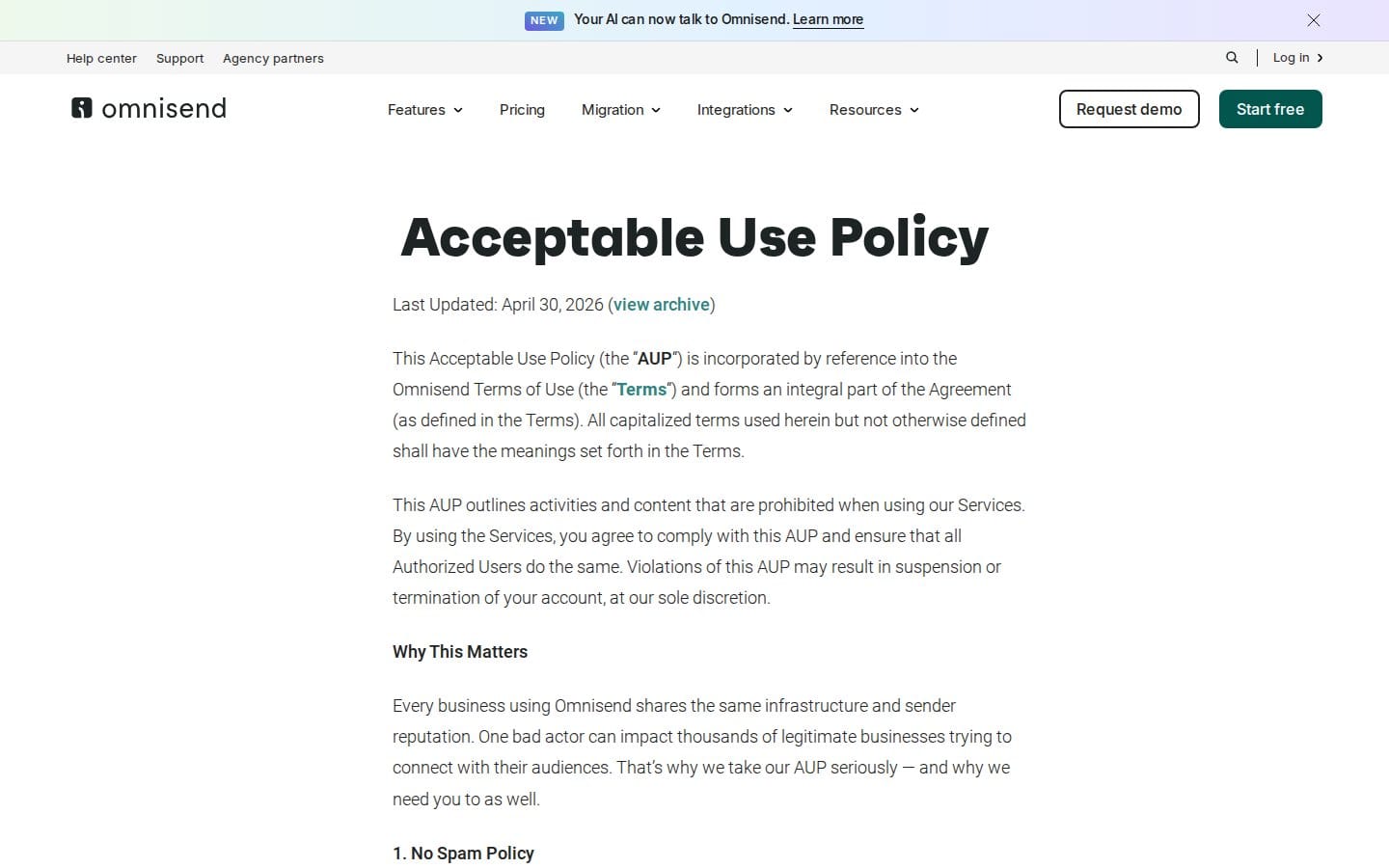
Omnisend covers email, SMS, and web push notifications from a single dashboard. That's genuinely useful for CPG brands that want coordinated campaigns without stitching together three separate tools. Its automation templates (abandoned cart, browse abandonment, welcome sequences) are solid from the start, and the AI tools for subject line generation and product recommendations reduce the content production overhead that kills smaller teams.
Strengths
- Omnichannel campaigns combining email, SMS, and web push in a single automated workflow
- AI-generated email copy, subject lines, and product recommendations to reduce manual content work
- Audience segmentation based on shopping behaviour, purchase frequency, and product category
Best fit
Best for CPG brands that want one tool covering email, SMS, and push without the complexity of Klaviyo's data model. Note: all outgoing emails on the Free plan carry Omnisend branding — you'll want a paid plan before running any customer-facing campaigns.
Customer loyalty and reviews
Repeat purchase rate is everything in CPG. A subscriber who buys every six weeks for two years is a fundamentally different business proposition than someone who converts once and disappears. Loyalty programmes and social proof — reviews, UGC — are the two levers that move repeat rate. These tools handle both.
Yotpo
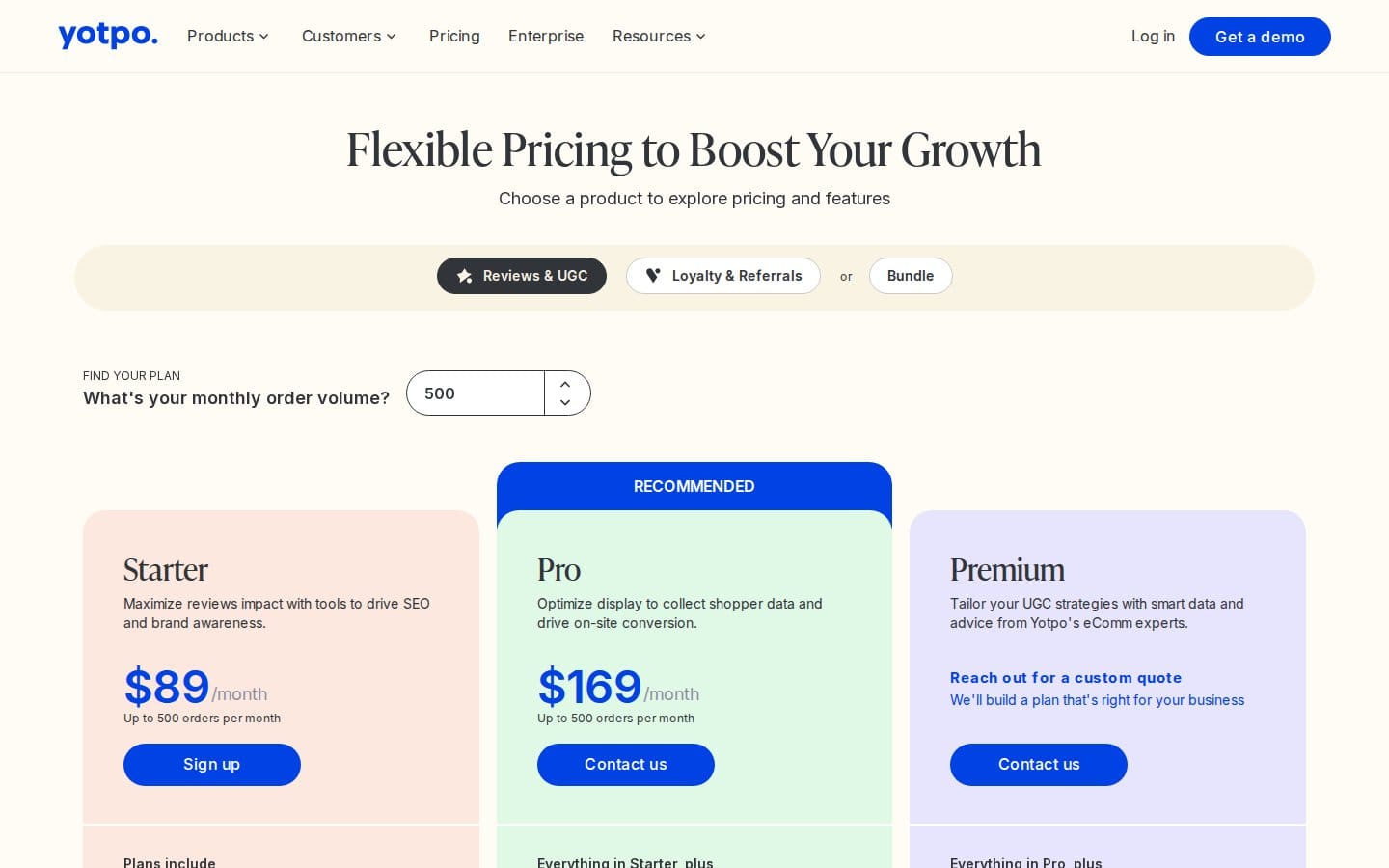
Yotpo is the broadest platform in this category. It combines product reviews, UGC (photos and videos), loyalty and referral programmes, and SMS marketing under one roof. For a CPG brand, the reviews-and-loyalty combination is particularly useful: you can reward customers with points for leaving a review, then surface that UGC across Google, Facebook, and Instagram. The AI-powered review summaries and sentiment analysis help you spot quality issues by market before they become customer service problems.
Strengths
- Reviews, UGC, and loyalty in one platform — reduces the number of tools needed for social proof and retention
- Loyalty and referral programmes with points-for-purchase, VIP tiers, and custom rewards configurable per market
- AI-powered review summaries and sentiment analysis to surface product or fulfilment issues early
Best fit
Best for CPG brands wanting reviews and loyalty managed in one place, with strong Shopify and BigCommerce integration. The Starter tier for Reviews and UGC is limited to 500 orders per month — growing brands will move to Growth or Advanced pricing fairly quickly.
LoyaltyLion
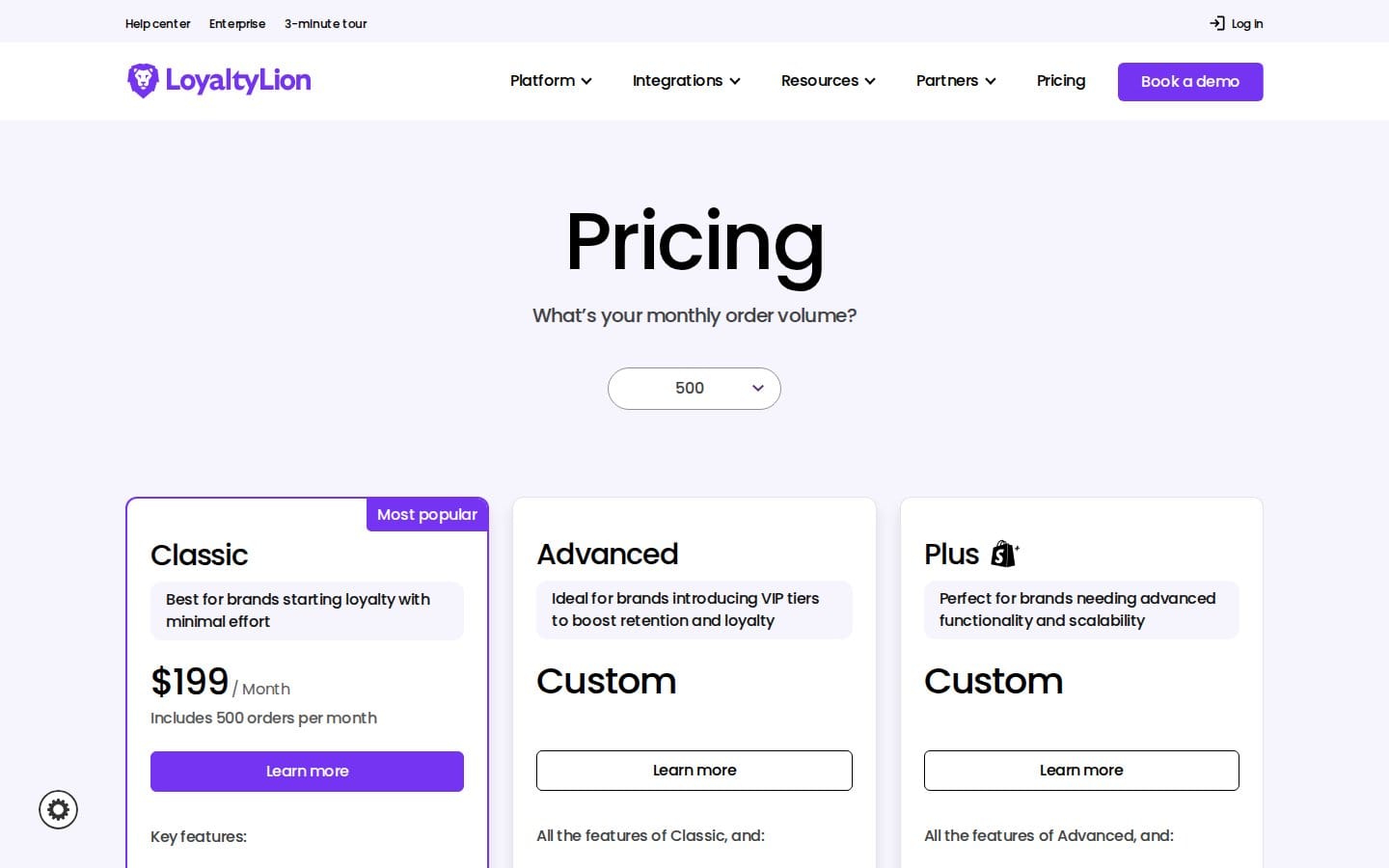
LoyaltyLion is the dedicated loyalty specialist. It doesn't do reviews or SMS, but it goes deeper on loyalty mechanics than anything else in this stack. For CPG brands with genuinely complex programmes — VIP tiers with early access to new product launches, points redeemable for product bundles, birthday rewards that drive reactivation — LoyaltyLion gives you the configurability. It integrates with both Klaviyo and Omnisend, so loyalty events can trigger email and SMS flows directly.
Strengths
- Flexible rewards covering purchases, reviews, referrals, and custom on-site activities — with VIP tier management
- AI-powered recommended rewards and bonus campaigns that adapt based on customer behaviour
- Shopify POS integration for brands that also sell in physical retail
Best fit
Best for mid-market CPG brands where loyalty programme depth is a genuine competitive differentiator. The Free tier supports up to 400 monthly orders — most brands that need LoyaltyLion's depth will already be past that threshold.
Localisation
Localisation is where international CPG operations get genuinely difficult. It's not just translation. It's product descriptions adapted for local taste preferences, legal copy that meets each market's requirements, and SEO structured so you rank in German, French, or Japanese search results. These two tools solve the problem at different scales.

Smartling
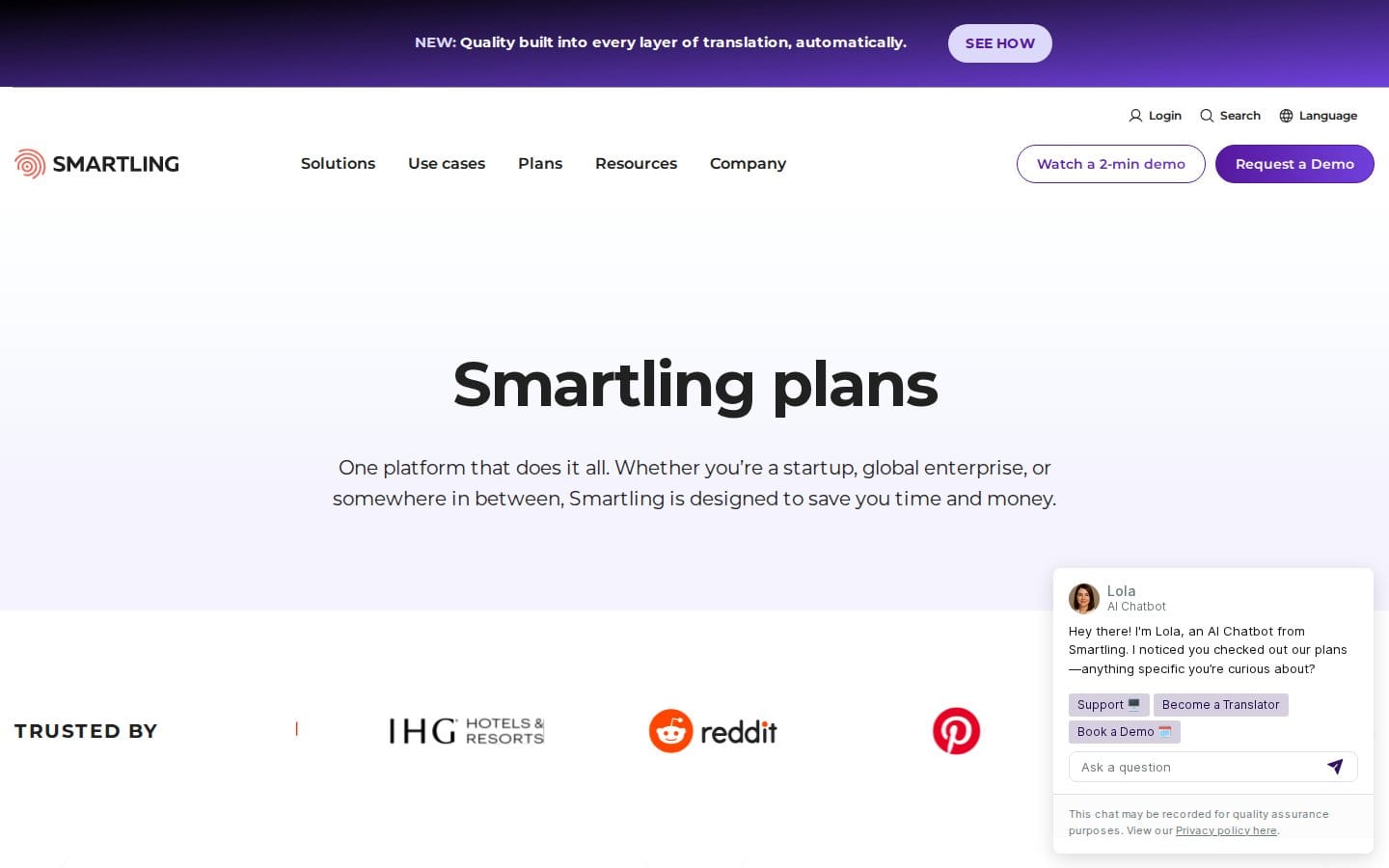
Smartling is the enterprise option — a full Translation Management System with AI-powered translation (LanguageAI™), automated workflows, and a Global Delivery Network for website localisation. For CPG brands managing large content volumes across multiple markets (product pages, compliance copy, marketing materials, ingredient lists), Smartling's combination of automation and human review workflows handles the scale. The real-time analytics on localisation spend and quality help justify the investment internally.
Strengths
- Up to 99% automated translation workflows with AI quality checks for tone, bias, and terminology consistency
- Global Delivery Network for website localisation without re-platforming
- Real-time reporting on localisation spend, content volume, and quality metrics across all languages
Best fit
Best for CPG brands with high content volume across five or more languages that need enterprise-grade translation management. The Free to Start plan includes translation memory for 180 days only — paid plans are needed for any ongoing localisation programme.
Weglot
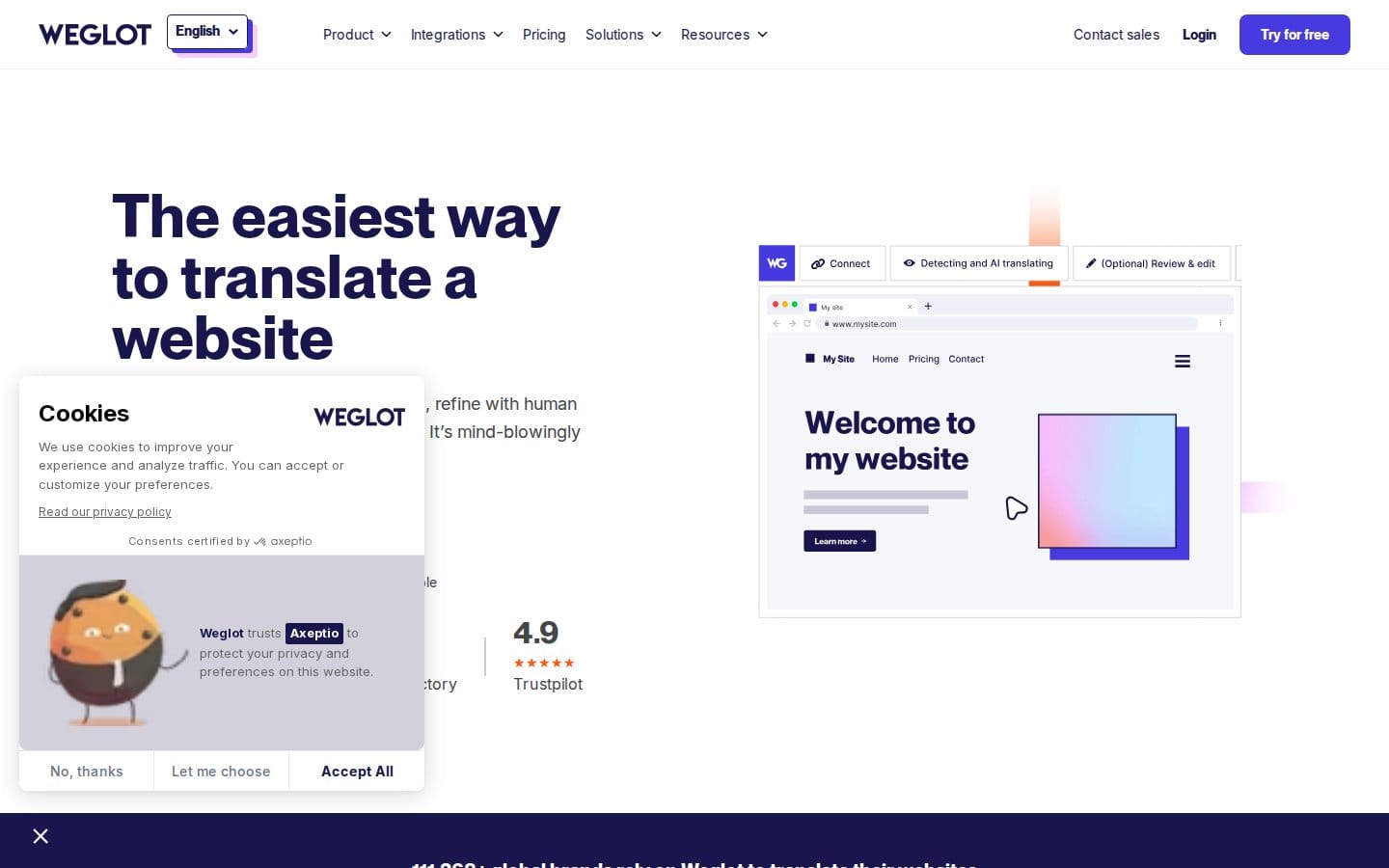
Weglot is the faster, lighter option. No-code installation detects content automatically, translates it with AI, and handles multilingual SEO (language-specific URLs, hreflang tags, translated metadata) without developer involvement. For a Shopify brand launching into two or three new markets, Weglot can have you live in an afternoon. The in-context visual editor lets non-technical team members tweak translations directly on the page.
Strengths
- No-code installation with automatic content detection and real-time syncing of new content — no developer required
- Multilingual SEO with language-specific URLs and hreflang tags built in from day one
- Visual in-context editor for non-technical review and correction of AI translations
Best fit
Best for Shopify CPG brands expanding into a small number of additional languages quickly and without heavy technical overhead. The free tier is limited to 2,000 translated words and one language — which covers a product page or two at best.
Subscriptions
Subscription revenue suits CPG well. Coffee, protein powder, vitamins, cleaning products — anything a customer reorders on a predictable cycle is a candidate for recurring billing. The operational challenges are the same regardless of category: failed payment recovery, subscriber self-service (skip, swap, reschedule), and churn prevention before it happens rather than after. Both tools here are built for Shopify; one is more affordable for brands just starting out, the other is more complete for brands scaling hard.
Bold Subscriptions
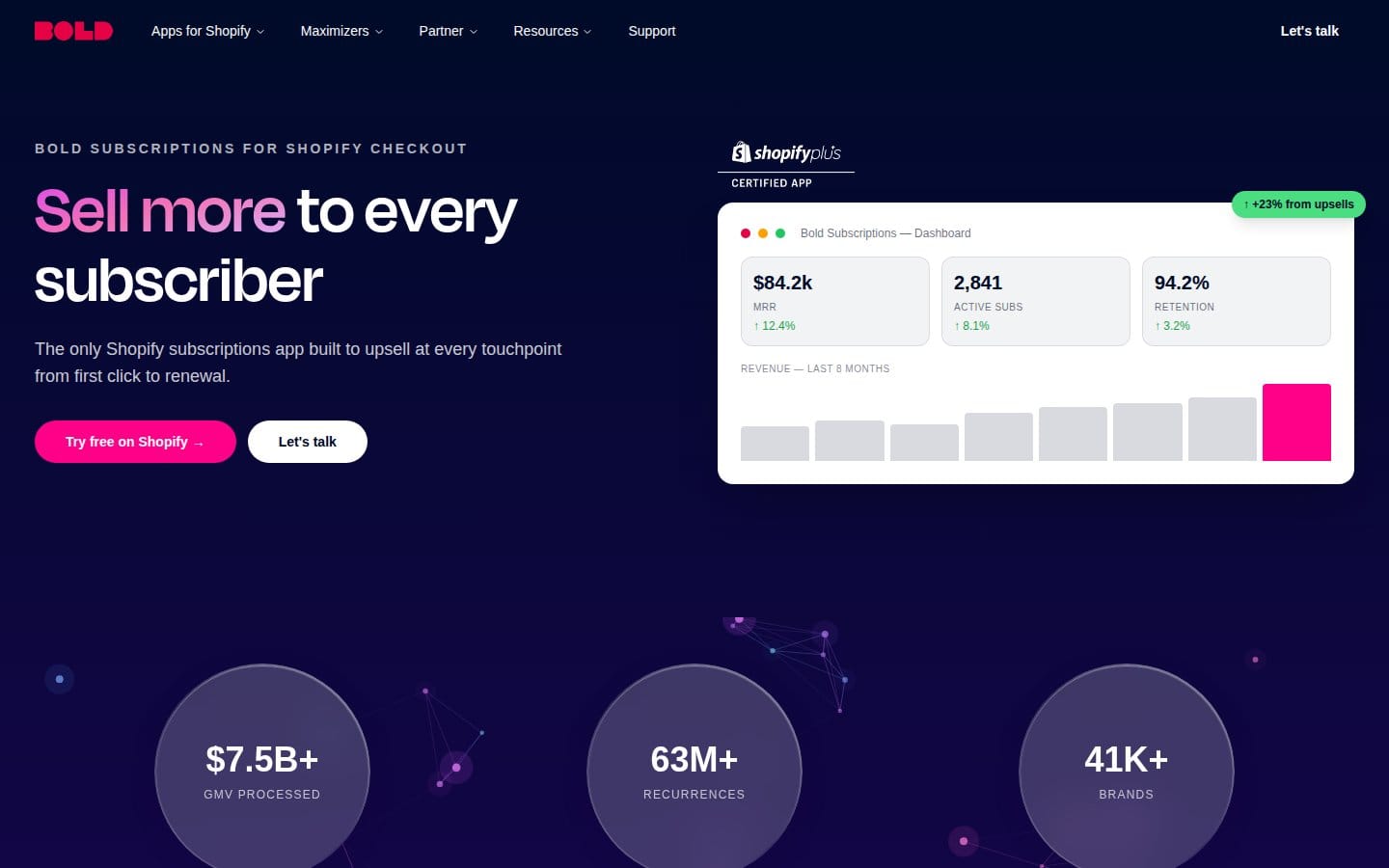
Bold Subscriptions supports standard, prepaid, and convertible subscription models with a customer self-service portal and automatic dunning management for failed payments. Its developer API gives technically capable teams the flexibility to build custom subscription experiences on top of the core engine — useful for CPG brands that want subscription mechanics embedded in their storefront rather than bolted on.
Strengths
- Standard, prepaid, and convertible subscription models in one tool — handles most CPG use cases without customisation
- Cancellation flows and automatic dunning management to recover revenue without manual intervention
- Developer API for brands needing custom subscription experiences
Best fit
Best for Shopify brands launching subscriptions and wanting a free entry point with room to grow. Bold includes 1,000 subscriber cancellation sessions per month at the base level, with additional sessions charged at $0.70 per session thereafter.
Recharge
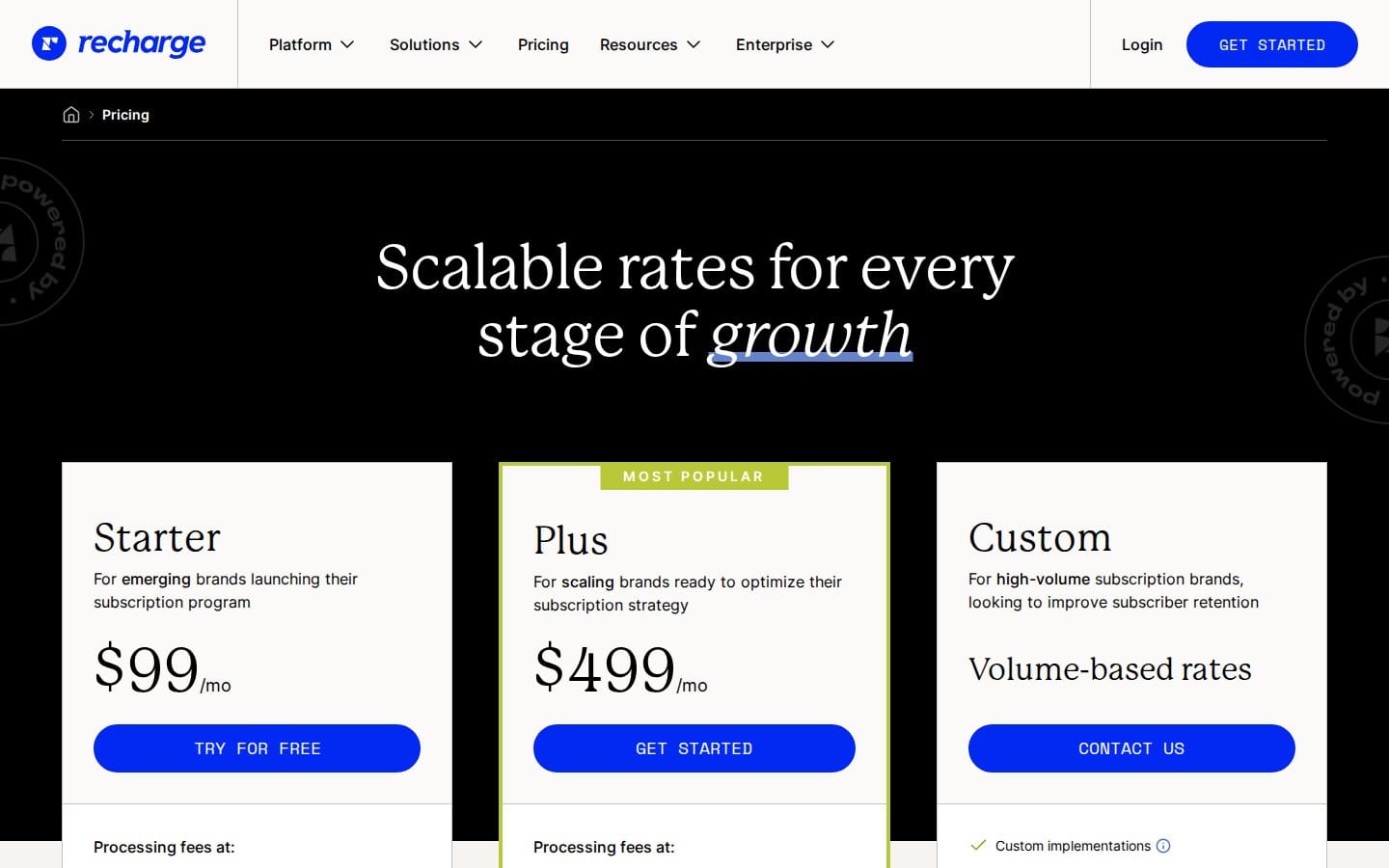
Recharge is the more complete subscription platform for brands at scale. Its cancellation prevention, win-back campaigns, and advanced analytics go deeper than Bold's base offering — and for CPG brands where subscriber lifetime value is the primary metric, those tools justify the higher starting point. The Klaviyo integration is tight: subscriber events trigger email and SMS flows automatically, so your retention marketing and subscription management work together. It also runs on BigCommerce, which Bold does not.
Strengths
- Cancellation prevention and win-back campaigns with automated workflows — not just a cancellation button
- Advanced subscription analytics covering churn rate, lifetime value, and cohort performance
- Tight integrations with Klaviyo, Gorgias, and Avalara — subscription data flows into your marketing and tax tools automatically
Best fit
Best for CPG brands with established subscriber bases where retention analytics and churn prevention are operational priorities. All bundle functionality requires the Plus plan or higher, and Plus requires a 12-month term commitment.
Inventory, compliance and accounting
International CPG brands need more than a storefront and marketing tools. Underneath the customer-facing stack sits the operational layer: inventory synced across marketplaces, EPR compliance for packaging and products sold into regulated markets, and accounting reconciliation that handles multi-currency marketplace payouts. This is where Ceendesis fits in the stack.
Ceendesis
Ceendesis combines multi-channel inventory management, EPR compliance (packaging, textiles, batteries), and marketplace-to-accounting sync in one platform — built specifically for brands selling across Shopify, Amazon, eBay, Walmart, and TikTok Shop. For CPG brands dealing with the EU's new packaging rules under PPWR (Regulation EU 2025/40, applying from 12 August 2026), or with packaging EPR obligations in Germany (LUCID), France (CITEO), or the UK (PPT), having that compliance layer built into your inventory system rather than managed separately in a spreadsheet makes a real operational difference. Honestly, most brands that come to us are managing EPR reporting manually long after it stops being viable. For multi-channel inventory challenges specific to CPG, our multi-channel inventory forecasting guide covers the methodology in detail.
Strengths
- Multi-channel inventory, EPR compliance, and marketplace-to-accounting sync in one platform
- Built for brands selling on Shopify, Amazon, eBay, Walmart, and TikTok Shop
- Native Xero and QuickBooks reconciliation for marketplace payouts
Best fit
Built for brands on 2+ marketplaces — overkill for single-channel Shopify-only stores. For accounting integration context, our guide to connecting Stripe to QuickBooks Online is useful background.
The stack at a glance
| Category | Tool | Free tier | Best integration |
|---|---|---|---|
| E-commerce platform | Shopify | Yes (trial) | Klaviyo, Recharge, Yotpo, Weglot |
| E-commerce platform | BigCommerce | Yes (trial) | Oracle NetSuite, Klaviyo, LoyaltyLion |
| Analytics and BI | Google Analytics 4 | Yes | Google Ads, BigQuery, Shopify |
| Analytics and BI | Tableau | Yes (Public only) | Amazon Redshift, Google BigQuery, Salesforce |
| Email and SMS marketing | Klaviyo | Yes | Shopify, Recharge, LoyaltyLion |
| Email and SMS marketing | Omnisend | Yes | Shopify, BigCommerce, Google Ads |
| Customer loyalty and reviews | Yotpo | Yes | Shopify, Klaviyo, Google |
| Customer loyalty and reviews | LoyaltyLion | Yes | Shopify, Klaviyo, Omnisend |
| Localisation | Smartling | Yes (limited) | WordPress, Salesforce, HubSpot |
| Localisation | Weglot | Yes (limited) | Shopify, BigCommerce, Webflow |
| Subscriptions | Bold Subscriptions | Yes | Shopify, Klaviyo, Bold Upsell |
| Subscriptions | Recharge | No | Shopify, Klaviyo, Gorgias |
| Inventory, compliance and accounting | Ceendesis | No | Shopify, Amazon, Xero, QuickBooks |
Frequently asked questions
What is the best tech stack for a CPG brand?
There's no single answer — it depends on your channels, markets, and product type. A functional international CPG stack typically covers: a storefront (Shopify or BigCommerce), analytics (GA4 plus a BI tool once you have enough data to warrant it), email and SMS retention (Klaviyo for data-heavy operations, Omnisend for simpler setups), loyalty and reviews (Yotpo for consolidation, LoyaltyLion for depth), localisation (Weglot for fast market entry, Smartling for scale), subscription billing if relevant (Bold or Recharge), and an inventory and compliance layer underneath. These are the tools we'd recommend to any brand asking that question right now. The cross-border stack for US e-commerce covers the US-specific variant in more detail.
How do you manage inventory with expiration dates for international DTC sales?
Expiry date management is one of the genuine pain points of international CPG. A product that expires in four months might sell fine in your domestic market but get rejected by a 3PL in Germany because it won't clear customs and reach the end customer within their minimum shelf-life requirement. The operational approach is to manage inventory at batch or lot level, track expiry dates per batch in your IMS, and set automated alerts when stock approaches the minimum remaining shelf life for each destination market. FEFO (first expired, first out) pick logic at your 3PL or warehouse is non-negotiable. For the forecasting side of this, see our guide to dynamic safety stock — the same principles apply, with expiry windows as an additional constraint on your reorder calculations.
What are the compliance requirements for selling food and cosmetics internationally online?
This is complex — and it's getting more complex. The FAO's 2023 report on e-commerce and food systems noted that most national regulatory frameworks were written before cross-border DTC existed as a meaningful channel, and enforcement is still catching up. The broad categories to manage are: food safety certification and labelling (requirements vary by country; the EU mandates local-language ingredient lists and nutritional information under Regulation EU 1169/2011), cosmetics safety registration (the EU requires a Responsible Person and a Product Information File under EU Cosmetics Regulation 1223/2009), packaging compliance (the EU's PPWR applies from 12 August 2026), import duties (the EU eliminated the €150 customs duty-free threshold for low-value imports Screenshots are from each tool's public pricing or features page, captured June 2026. We are not affiliated with any third-party tool listed unless explicitly noted.