
The Cross-Border Stack for US E-commerce

Last verified: June 2026
Key takeaways
- Every state with a sales tax now has economic nexus rules for remote sellers following the 2018 South Dakota v. Wayfair decision — foreign sellers aren't exempt.
- Showing full landed cost at checkout matters: surprise fees at delivery are one of the leading causes of cart abandonment.
- A US-based 3PL collapses your cross-border shipping times and removes most customs documentation headaches.
- Localisation isn't just translation — it's currency, payment methods, and language-specific SEO working together.
- Returns are a cross-border problem as much as a domestic one; handle them with the same intentionality as outbound shipping.
Selling into the US from abroad — or pushing a US brand into new international markets — is genuinely complex. Not "skim a blog post and crack on" complex. We're talking multiple tax jurisdictions, customs documentation, currency conversion, consumer expectations around two-day delivery, and return flows that span continents. The brands that handle it well don't do it manually. They build a stack.
This article is for e-commerce operators who are either a foreign brand entering the US market, a US brand starting to ship internationally, or somewhere in between — scaling past the point where cobbling things together still works. We've mapped out the six functional layers you need and matched a tool to each, based on what they actually do rather than what their marketing claims.
One thing upfront: cross-border operations touch compliance territory that goes well beyond this stack. If you're selling into EU markets — whether that's packaging, textiles, or battery-containing products — there's a whole separate compliance layer on top of what's covered here. We've written about that in our EU expansion operations stack. For now, let's focus on the US-facing cross-border stack.
E-commerce platforms
Your platform is the foundation everything else connects to. For cross-border specifically, you need one that handles multi-currency pricing, international checkout, and plays well with the tax, fulfilment, and localisation tools sitting downstream. Switching platforms mid-growth is painful, so get this right early.
Shopify
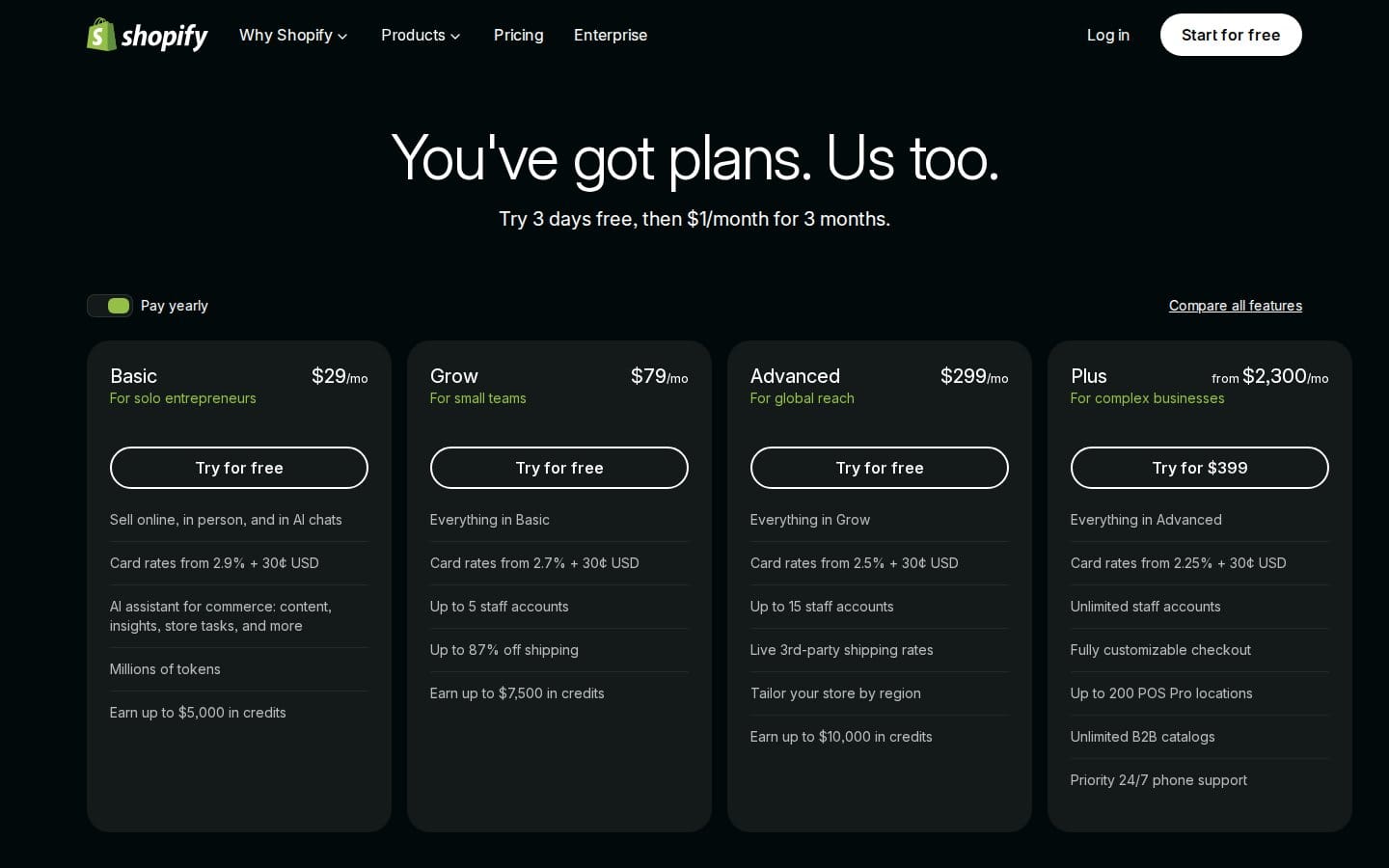
Shopify is the dominant cloud-based e-commerce platform for SMEs and growing brands. Its cross-border credentials have improved significantly with Shopify Markets — the built-in feature that handles multi-currency pricing, local domains, and language switching without requiring a separate app for each.
Strengths
- Shopify Markets enables multi-currency and multilingual selling from a single store, with local payment method support and regional pricing rules.
- The Shopify App Store connects to 8,000+ third-party tools — meaning every other tool in this stack (Zonos, ShipBob, Loop Returns, Weglot) integrates directly.
- Automated tax calculation and abandoned cart recovery are included out of the box, reducing the baseline ops lift for new market entry.
Best fit
Best for brands that want a broad ecosystem and fast international setup without heavy dev work. Note that higher-tier plans are required to unlock more detailed reports — sales by channel, product, staff, location, and customer cohort analysis.
BigCommerce
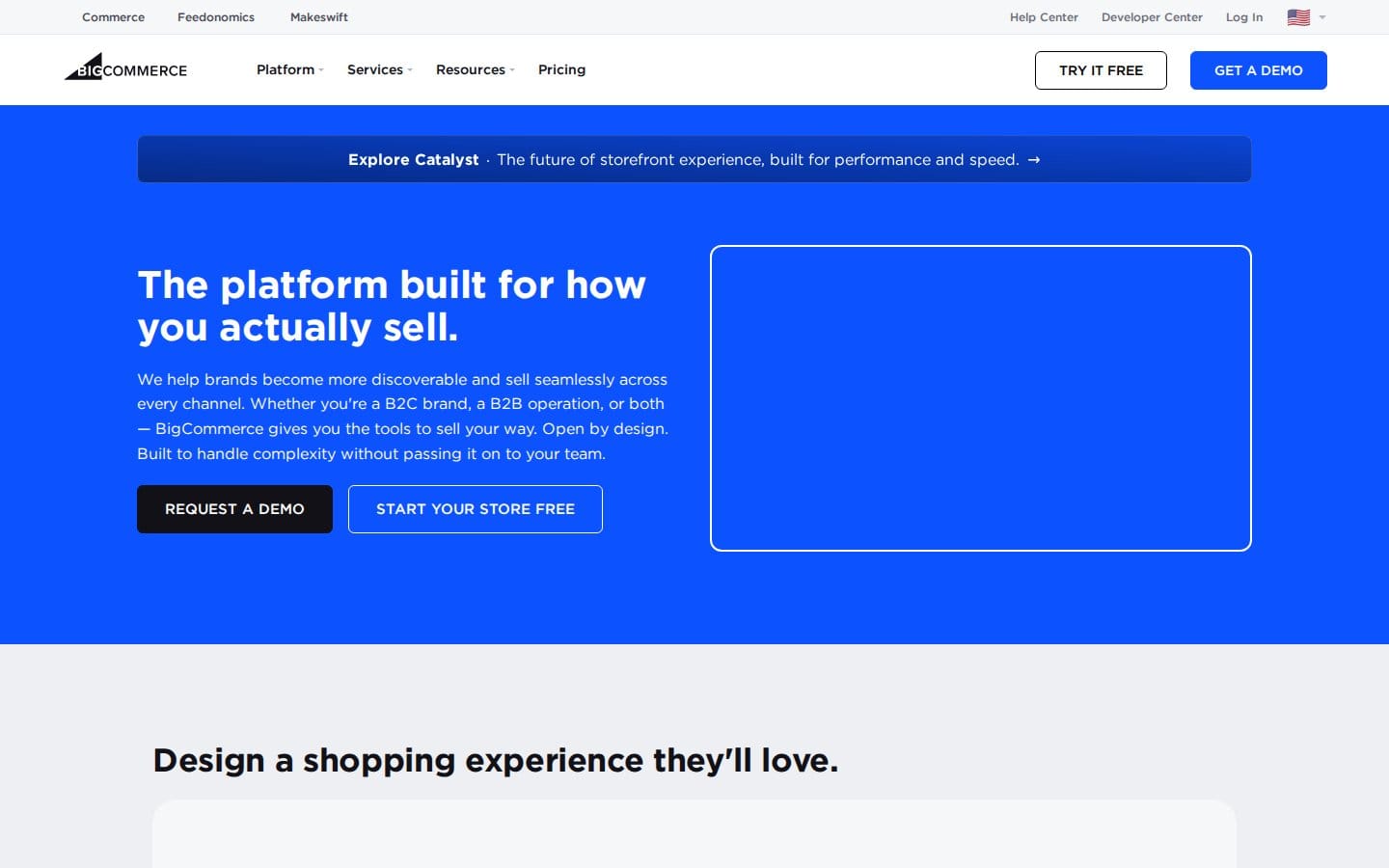
BigCommerce is a scalable platform built for growing and enterprise-level businesses, with stronger native B2B capabilities than Shopify and an open API that makes custom headless builds more accessible.
Strengths
- Multi-storefront management lets you run region-specific storefronts (US, EU, APAC) from a single back-end — useful once you're operating across multiple markets at scale.
- Native B2B capabilities — customer groups, bulk pricing, quote management — are built in, not bolted on via apps. That matters for brands with wholesale or distributor channels alongside DTC.
- Deep ERP and CRM integrations (Oracle NetSuite, Microsoft Dynamics 365, Salesforce) make BigCommerce a reasonable choice if you're connecting to enterprise back-office systems. We've written a related guide on the Shopify-to-Dynamics 365 integration if you're evaluating that route instead.
Best fit
Good fit for mid-market and enterprise brands with B2B requirements or complex multi-storefront needs. Annual sales limits apply per plan, so you may need to upgrade if you grow quickly.
International payments
Payment infrastructure for cross-border selling has two jobs: accepting the widest possible range of payment methods globally, and moving money reliably across currencies. You probably need both tools here — they serve different buyer segments and geographies.
Stripe
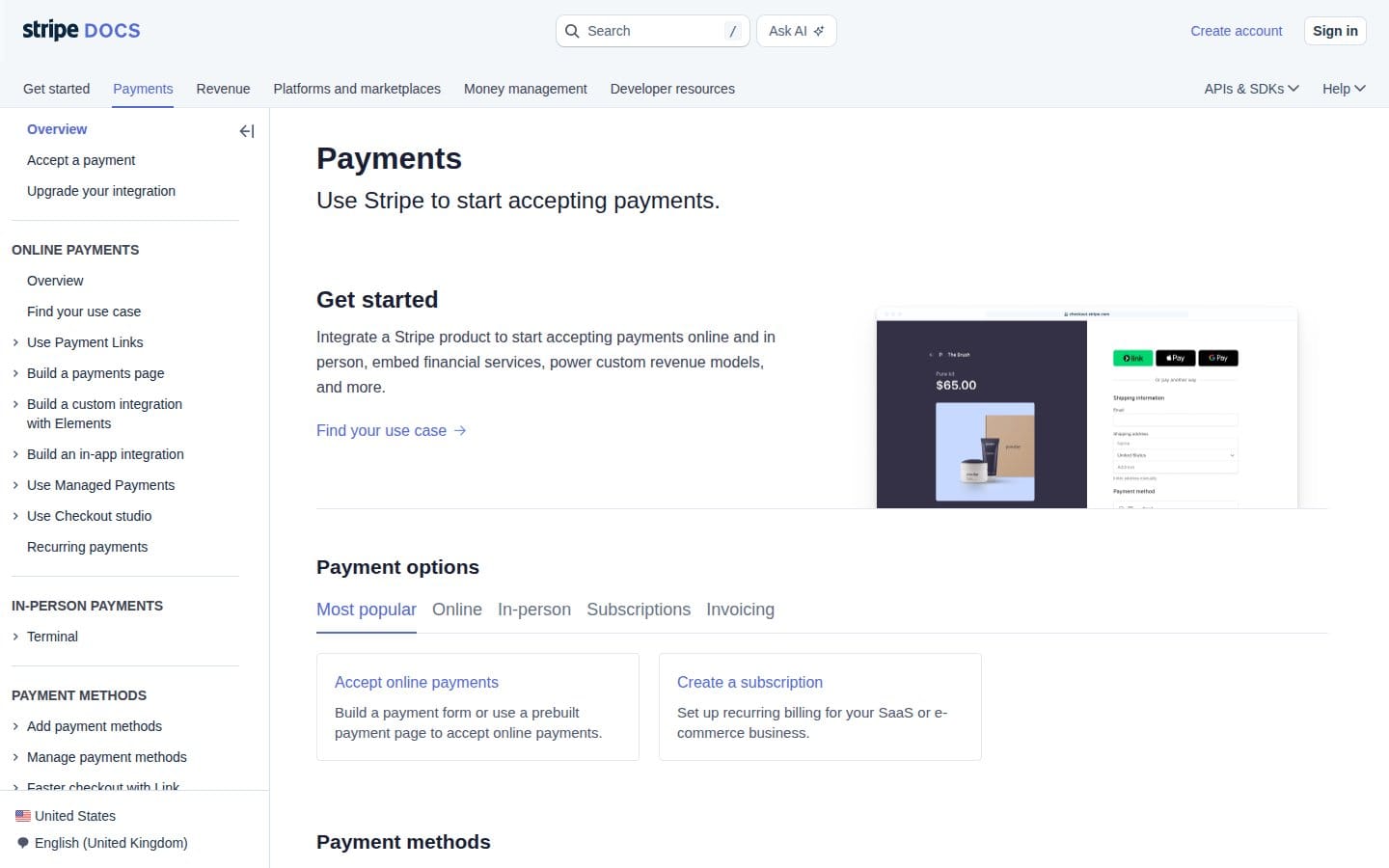
Stripe is the developer-first payment processor that's become the default infrastructure for e-commerce brands building international payment flows — partly because its API coverage is exceptional, and partly because Stripe Tax handles automated VAT, GST, and sales tax calculation in one product.
Strengths
- Stripe Tax automates sales tax, VAT, and GST calculation across jurisdictions — directly relevant for US economic nexus compliance (more on that in the Tax & Duty section).
- Stripe Radar provides fraud detection and risk management, which matters more for cross-border transactions where fraud rates are typically higher than domestic ones.
- Subscription and recurring billing management is native to Stripe — useful for brands running subscription boxes or replenishment models internationally.
Best fit
Strong choice for brands with developer resource and complex payment flows. Stripe's core payment processing incurs per-transaction fees — factor these into your margin calculations at volume.
PayPal
PayPal Business is the trust-signal payment option that a meaningful share of US shoppers — and international buyers — expect to see at checkout. Some shoppers will abandon a cart rather than enter card details on an unfamiliar site, but they'll pay via PayPal without hesitation.
Strengths
- Accepts payments from over 200 global markets supporting 140 currencies — one of the broadest reach profiles of any payment tool in this stack.
- Seller Protection covers eligible transactions against chargebacks, reversals, and fees — meaningful for cross-border sales where dispute rates can be higher.
- Accepts Venmo, PayPal balance, credit/debit, Apple Pay, and Google Pay in a single integration, reducing checkout friction across buyer types.
Best fit
Best used alongside Stripe rather than instead of it — PayPal as the trust-signal option, Stripe as the primary infrastructure. PayPal often holds funds for 72 hours before they're accessible, so plan your cash flow accordingly.
Tax & duty calculation
This is the most consequential layer in a cross-border stack, and the one most brands underinvest in until something goes wrong. Following the 2018 South Dakota v. Wayfair decision, every US state with a sales tax has economic nexus requirements for remote sellers — including foreign sellers with no US physical presence. Once you cross a state's revenue or transaction threshold, you're obligated to collect and remit. Get the tooling right before you scale, not after.
Avalara
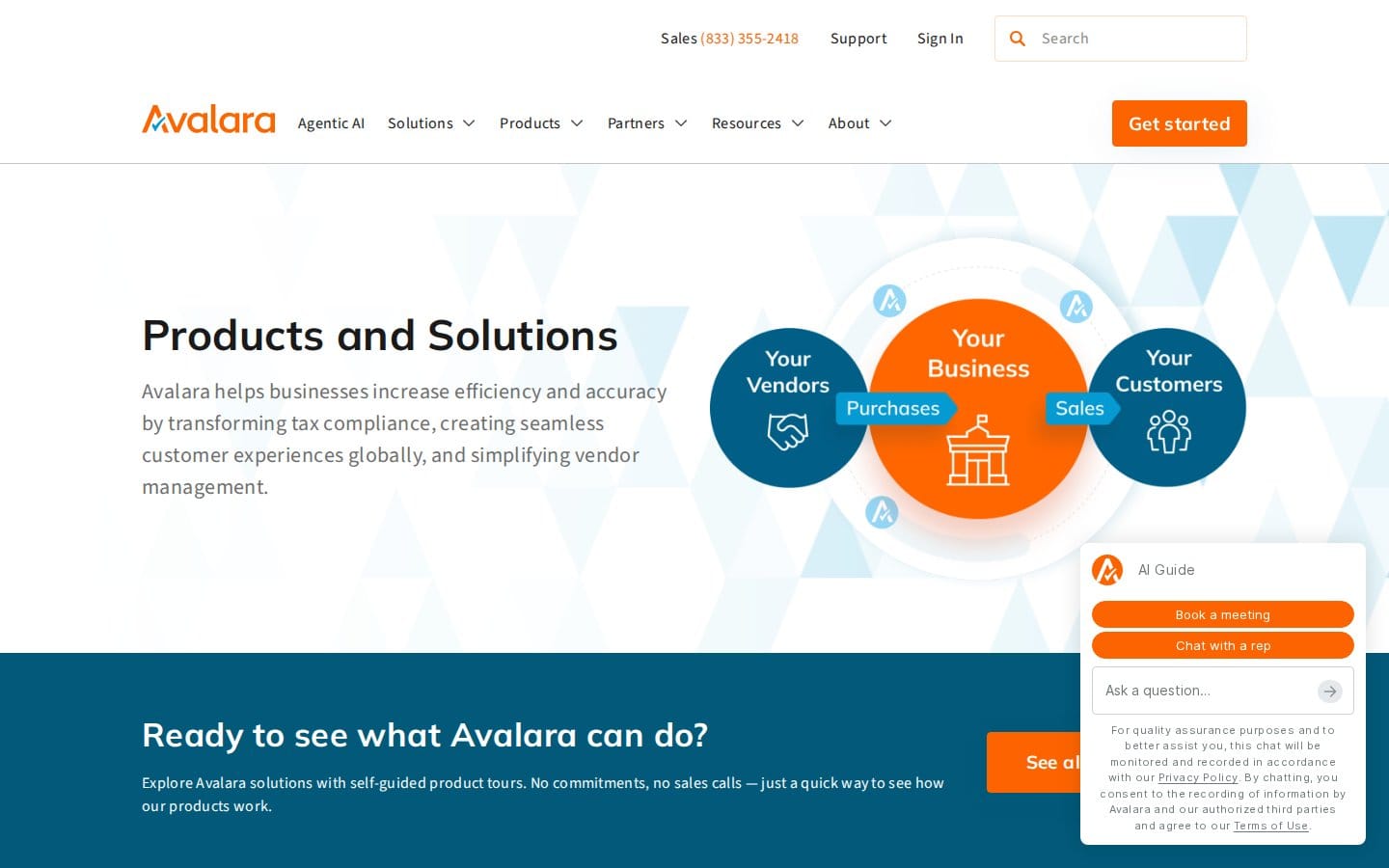
Avalara is a tax compliance platform built to handle the kind of multi-jurisdiction complexity that makes US sales tax genuinely difficult — think 13,000+ tax jurisdictions across 50 states, each with their own rates, product taxability rules, and filing calendars.
Strengths
- Sales and use tax calculation handles the real complexity: product-level taxability, jurisdiction stacking (state + county + city + special district), and economic nexus threshold tracking across states.
- Returns preparation and filing automates the ongoing compliance work — not just calculating what you owe, but actually submitting the returns.
- Exemption certificate management is something most brands overlook until they're audited. Avalara handles it systematically.
Best fit
Strong fit for brands hitting economic nexus in multiple US states, or those with complex product catalogues where taxability varies by state. Avalara's functionality is split across multiple products that can be purchased and combined — scope your actual needs before signing up.
Zonos
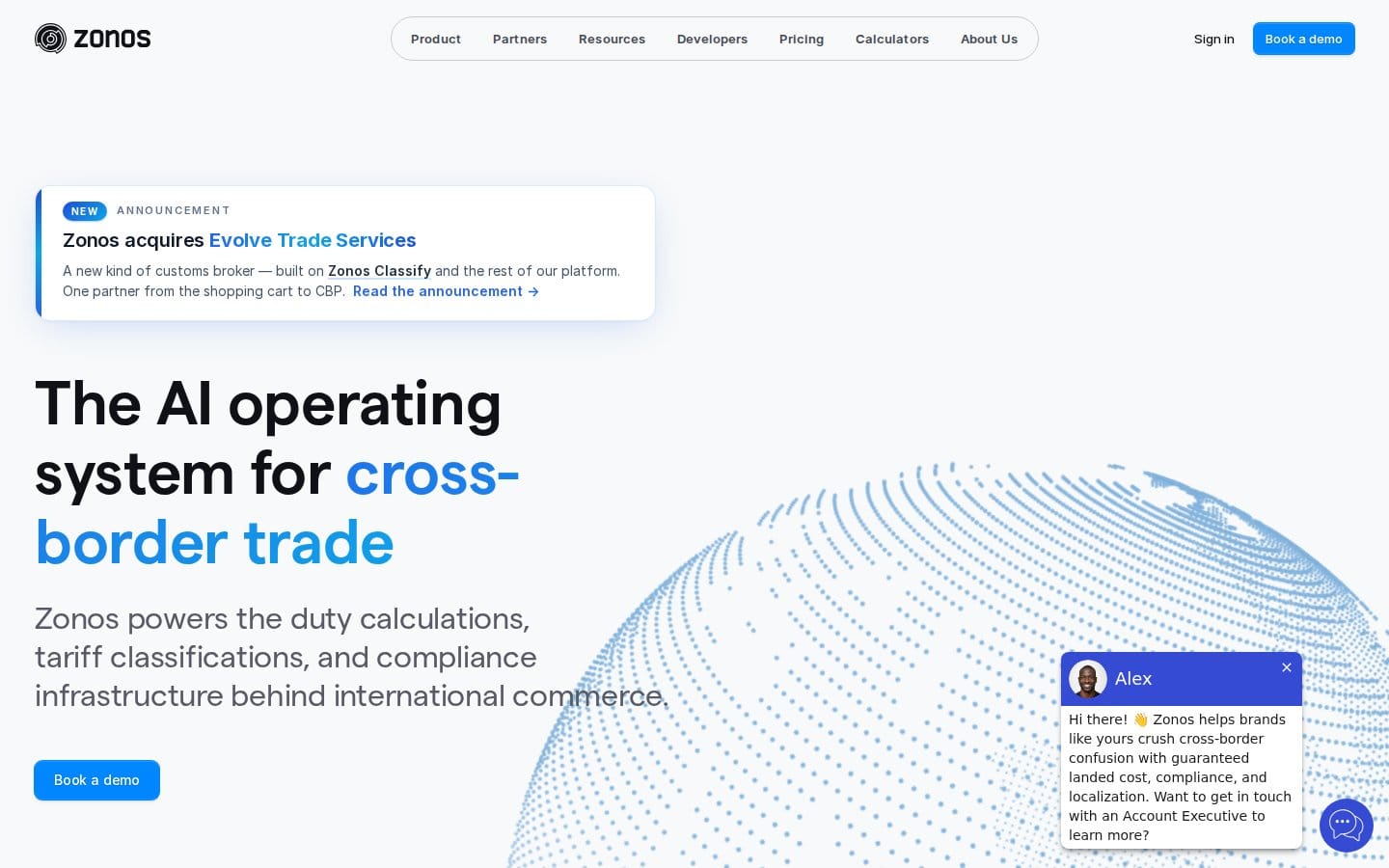
Zonos is built specifically for the cross-border use case: calculating landed costs, classifying HS codes, remitting taxes in international markets, and presenting a localised checkout experience. Where Avalara handles domestic US tax complexity, Zonos handles the international side.
Strengths
- Duty and tax calculation with guaranteed landed cost — Zonos backs its calculations, meaning if the number shown at checkout is wrong, they cover the difference. That's a meaningful commitment for brands using a Delivered Duty Paid (DDP) strategy.
- Automated HS classification reduces the manual work of categorising products for customs — a genuine time sink at scale.
- Localised checkout in multiple currencies and languages, with fraud protection built in.
Best fit
Essential for any brand shipping physical goods internationally and showing landed cost at checkout. Zonos doesn't handle the physical shipping or package handling — that's ShipBob's job.
Global fulfilment
Consumer expectations in the US are unforgiving: 74% of online shoppers expect delivery within two days. Shipping from a warehouse in Germany or Australia to a US customer and hitting that window isn't realistic. A US-based 3PL solves this by positioning your inventory inside the market before orders are placed.
ShipBob
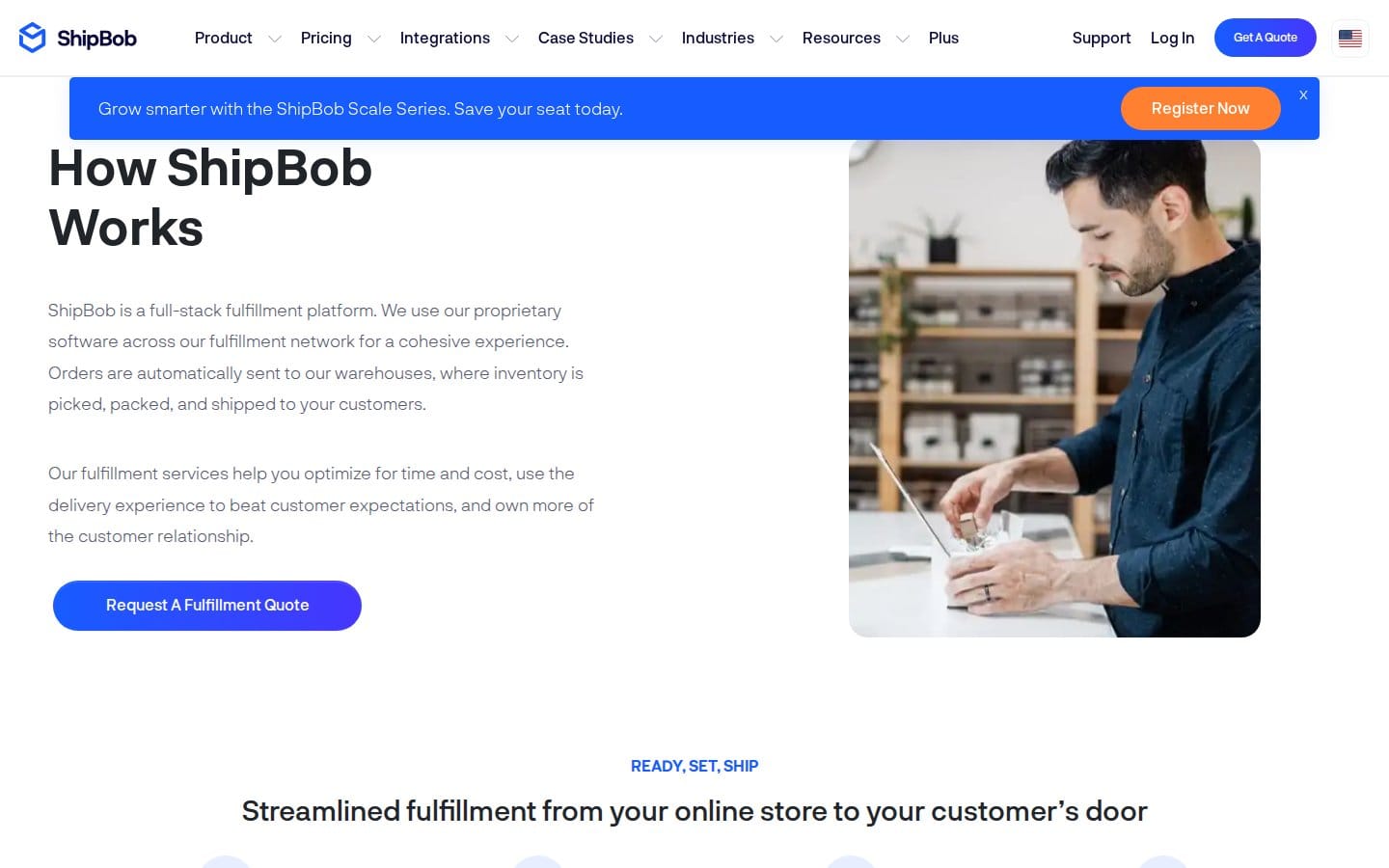
ShipBob is a global fulfilment network with more than 60 fulfilment centres, including significant US coverage, designed to let e-commerce brands outsource pick-pack-ship operations while maintaining real-time inventory visibility. For a foreign brand entering the US, it's the most practical way to get inventory into the market without leasing warehouse space.
Strengths
- The 2-Day Express Shipping Program lets US customers receive orders within two days from strategically located fulfilment centres — meeting the baseline expectation without building your own US logistics network.
- Real-time inventory management and tracking across all fulfilment locations gives you visibility without manual reconciliation. If you're also tracking inventory across channels, see our guide on syncing Amazon FBA inventory to Google Sheets for a sense of the reporting flows involved.
- Returns management is included — ShipBob handles inbound returns and restocking, which simplifies the cross-border returns loop considerably.
Best fit
Best for brands shipping meaningful volume (not one-off test orders) into the US who want outsourced fulfilment with multichannel integration. ShipBob charges processing fees for returns that aren't included in standard fulfilment pricing — worth modelling if your return rate is above average for your category.
Website localisation
Localisation is more than translation. It's currency display, hreflang tags so your German-language pages don't cannibalize your English SEO, local payment method visibility, and product descriptions that read naturally in the target language. The two tools here serve different scale points — one for fast deployment, one for enterprise-level content operations.
Weglot
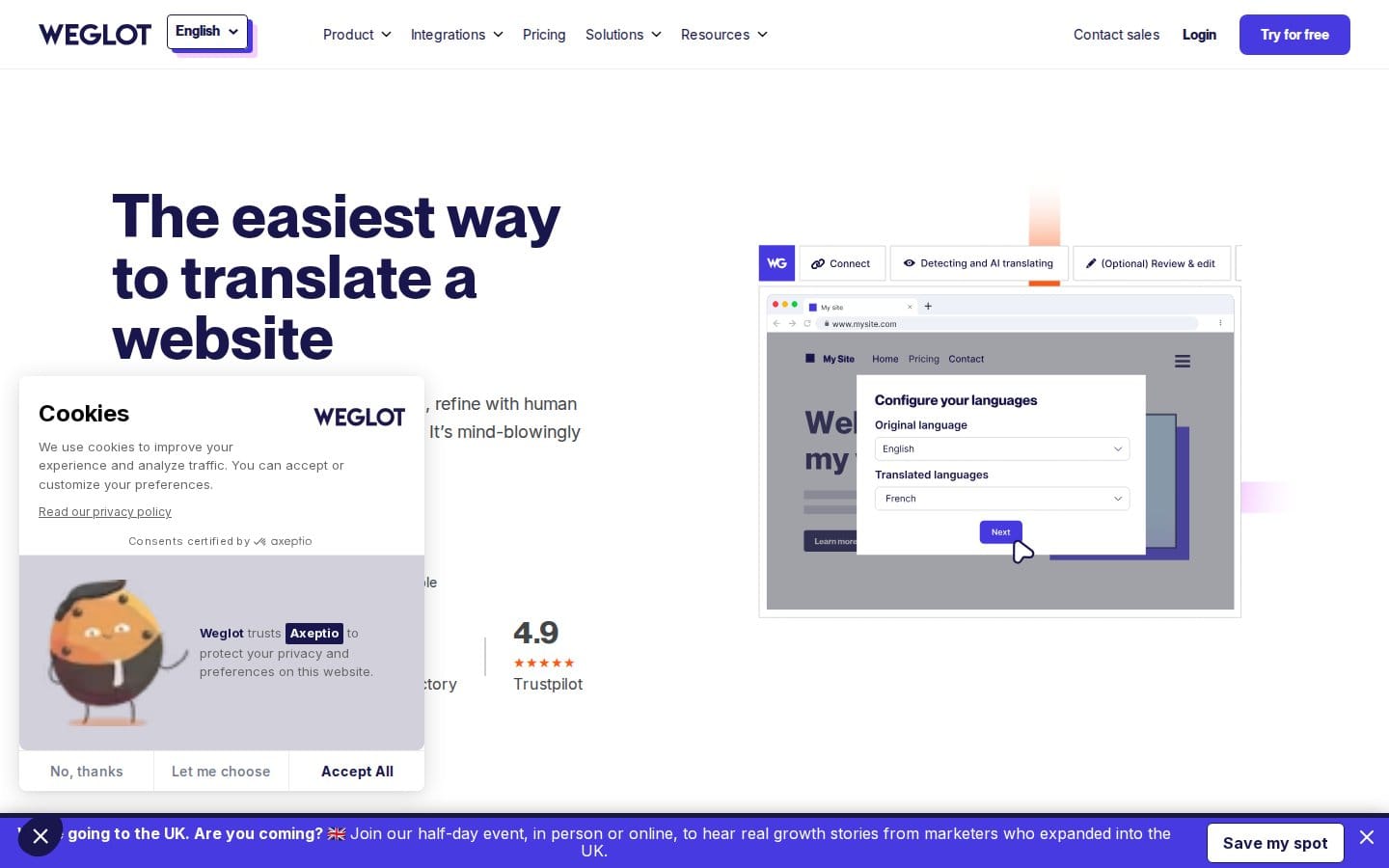
Weglot is a no-code localisation tool that installs on your existing site and automatically detects, translates, and serves multilingual content — including language-specific URLs and hreflang tags for SEO. For a brand that needs to go multilingual without a developer project, it's the fastest route.
Strengths
- AI translation with automatic content detection means new product descriptions, blog posts, and landing pages get translated without manual triggers — new content syncs in real time.
- Multilingual SEO is handled properly: language-specific URLs, hreflang tags, and translated metadata rather than just translated page content.
- The visual translation editor lets you review and adjust translations in context, on the live page — which matters when you're checking tone, not just accuracy.
Best fit
Ideal for SMEs needing fast, no-code multilingual deployment. The free tier is limited to 2,000 translated words and one language — fine for testing, but you'll need a paid plan for any real deployment.
Smartling
Smartling is an enterprise-grade Translation Management System (TMS) with automated translation workflows, AI-powered quality checks (including tone and bias detection), and a Global Delivery Network for website localisation at scale.

Strengths
- Automated translation workflows reaching up to 99% automation according to Smartling's own documentation — relevant for brands producing high volumes of product content across multiple languages at once.
- LanguageAI™ includes quality checks that go beyond grammar: tone consistency, bias detection, and brand voice adherence across markets.
- Real-time analytics and reporting on localisation spend and performance give ops teams visibility into which markets are getting content and at what quality.
Best fit
Right tool for enterprise brands running multi-market content operations with translation teams. The 'Free to Start' plan includes translation memory for 180 days — after that, evaluate whether a paid plan makes sense for your volume.
Returns management
Cross-border returns are where a lot of brands quietly lose money and customer trust at the same time. Customers expect international returns to be as seamless as domestic ones — even when the logistics are objectively harder. The goal of a returns tool in this stack is to convert returns into exchanges where possible, and make the unavoidable refunds as low-friction as possible. For more context on the Shopify-specific landscape, see our roundup of the best Shopify returns apps.
Loop Returns
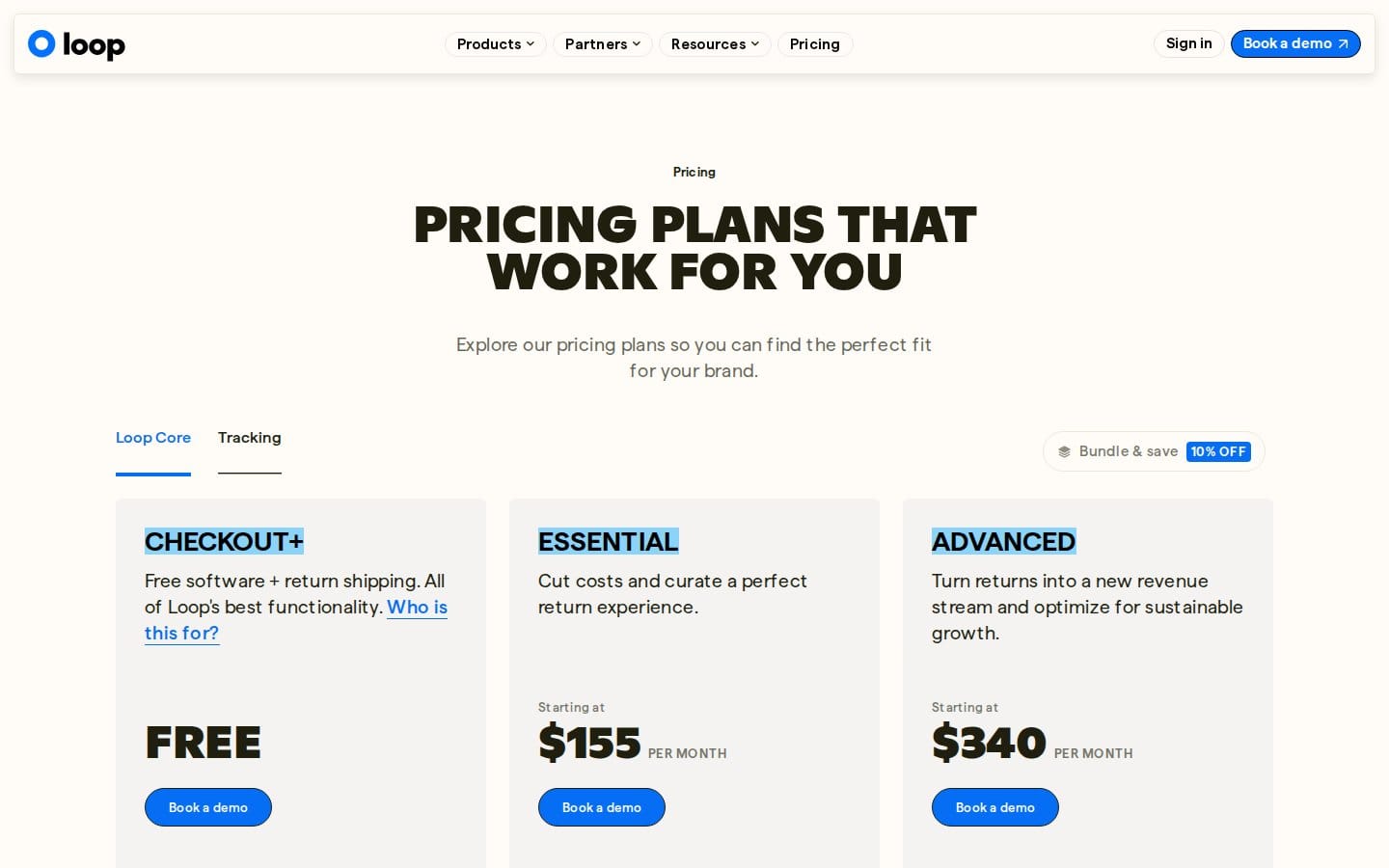
Loop Returns is a post-purchase operations platform originally built for Shopify brands, designed to steer customers toward exchanges instead of refunds through its Shop Now and Instant Exchange features. At high order volumes, shifting even a fraction of returns to exchanges has a material impact on revenue retention.
Strengths
- Exchange-first return flow — Shop Now lets customers browse the full catalogue during a return, not just swap for the same item — which increases the chance of retaining revenue from a return that would otherwise be a pure refund.
- Automated return policies and workflows reduce the manual triage work, and fraud detection flags suspicious return patterns before they process.
- Integrates directly with ShipBob and other major 3PLs, closing the loop between the returns portal and the physical handling of inbound inventory.
Best fit
Best for Shopify brands with meaningful return volume who want to recover revenue from returns rather than just process them. Pricing is based on plan and monthly shipment volume — review the Loop Returns pricing page against your shipment estimates before committing.
The stack at a glance
| Category | Tool | Free tier | Best integration |
|---|---|---|---|
| E-commerce Platform | Shopify | Yes (trial) | Zonos, ShipBob, Loop Returns, Weglot |
| E-commerce Platform | BigCommerce | Yes (trial) | ERP systems, Zonos, ShipBob |
| International Payments | Stripe | Yes (pay-as-you-go) | Shopify, BigCommerce, Avalara (via Stripe Tax) |
| International Payments | PayPal | Yes | Shopify, BigCommerce, WooCommerce |
| Tax & Duty Calculation | Avalara | Yes (limited) | ERP, e-commerce platforms, accounting systems |
| Tax & Duty Calculation | Zonos | Yes (Lite calculator) | Shopify, BigCommerce, UPS, FedEx, DHL |
| Global Fulfilment | ShipBob | Yes (quote-based) | Shopify, BigCommerce, Amazon, Walmart |
| Website Localisation | Weglot | Yes (2,000 words / 1 language) | Shopify, BigCommerce, WordPress, Webflow |
| Website Localisation | Smartling | Yes (180-day TM) | WordPress, Adobe Experience Manager, Salesforce |
| Returns Management | Loop Returns | Yes (Checkout+) | Shopify, ShipBob, Gorgias, Klaviyo |
Frequently asked questions
What software do I need to sell online in the US from another country?
At minimum: an e-commerce platform (Shopify or BigCommerce), a payment processor that handles your target markets (Stripe, PayPal, or both), and a tax calculation tool for US sales tax compliance (Avalara for domestic complexity, Zonos for cross-border duty calculation). If you're shipping physical goods, you'll also need a fulfilment solution — either a US-based 3PL like ShipBob, or your own domestic warehouse. Website localisation is worth adding once you're generating meaningful traffic from non-English markets, not necessarily from day one.
How do I handle US sales tax as a foreign e-commerce seller?
This is the compliance question most foreign brands underestimate. Following the 2018 South Dakota v. Wayfair decision, every US state with a sales tax has economic nexus rules that apply to remote sellers — including those with no US physical presence. Once you exceed a state's revenue or transaction threshold, you're required to register, collect, and remit sales tax in that state. The thresholds vary by state. A tool like Avalara tracks your exposure across states and handles filing. Don't wait until you're audited to sort this out — the penalties compound.
What is the best way to ship e-commerce products to the US?
For brands outside the US, the most practical approach is pre-positioning inventory inside the US via a 3PL like ShipBob. That means shipping a larger consolidated batch to a US fulfilment centre rather than dispatching individual orders internationally for every sale. Once inventory is stateside, customers get domestic shipping speeds and costs. The alternative — shipping each order internationally from your home country — is slower, more expensive per unit, and very difficult to reconcile with the two-day delivery expectation that a large portion of US shoppers hold.
How do I calculate duties and taxes for selling in the US?
Landed cost — the true cost of getting a product to a customer — combines the product value, international freight, customs duties, tariffs, brokerage fees, and applicable taxes. Calculating this manually per SKU per country isn't realistic at any volume. Zonos automates HS classification and duty/tax calculation and can display the guaranteed landed cost at checkout, supporting a Delivered Duty Paid (DDP) model where the customer pays everything upfront and receives no surprise fees on delivery. That matters for conversion: unexpected costs at checkout or delivery are one of the biggest drivers of cart abandonment. For US domestic sales tax specifically, Avalara handles the multi-state complexity that Zonos doesn't cover.
Where to start
Not every layer of this stack is equally urgent. If you're just entering the US market, the non-negotiables are: your platform, payments, and tax compliance. Get those three right before anything else. Fulfilment becomes critical once you're generating enough volume that international shipping timelines are actively hurting conversion — for most brands, that's earlier than they expect. Localisation and returns management are genuinely stage-gated: Weglot makes sense once you have traffic from non-English markets worth converting; Loop Returns makes sense once returns are a meaningful operational cost.
And if you're also selling into EU markets — facing packaging EPR, textile labelling requirements, or battery regulation compliance — that's a different but equally important layer. We cover it in detail in the EU expansion stack, and in category-specific guides like France CITEO reporting for foreign sellers and the sustainable operations stack for fashion brands. Cross-border operations rewards the brands that build the infrastructure before they need it — not the ones scrambling to catch up.
Screenshots are from each tool's public pricing or features page, captured June 2026. We are not affiliated with any third-party tool listed unless explicitly noted.