
The LATAM E-commerce Operations Stack

Last verified: June 2026
Key takeaways
- Latin America's e-commerce market is on track to surpass $200 billion in 2026, growing faster than the global average — the opportunity is real, but so is the operational complexity.
- Local payments aren't optional. Brazil's Pix and installment options directly affect conversion; your payment stack has to reflect that from day one.
- For platforms, you're choosing between Shopify's global ecosystem and VTEX's LATAM-native depth — each suits a different scale and ambition.
- Last-mile logistics in LATAM is a specialist problem. Generic global carriers won't cut it; use regional providers like clicOH or 99minutos.
- Multi-channel inventory management becomes essential fast — especially once Mercado Libre enters the picture alongside your own storefront.
Selling into Latin America isn't just "go global, but south." It's a distinct operational challenge with its own payment rails, logistics realities, tax regimes, and dominant marketplace. LATAM e-commerce is on track to surpass $200 billion in 2026, driven by mobile penetration and the rapid expansion of digital payments — but that headline figure hides just how fragmented the region actually is. Brazil alone has its own language, its own tax infrastructure, and its own dominant payment methods. Argentina has currency controls. Mexico has OXXO cash payments. No single platform or logistics provider solves everything.
This stack is for brands either expanding into LATAM from Europe or North America, or building a regional operation from scratch. It covers six categories that actually determine whether your ops hold together: storefront, payments, fulfillment, marketing, support, and analytics. We've also included a slot for multi-channel inventory management — because once you're selling on both your own site and Mercado Libre (and you will be, eventually), keeping stock in sync becomes a full-time job without the right tooling. For a broader look at how this connects to cross-border operations, see our piece on the cross-border stack for US e-commerce.
We've kept this list lean on purpose. Every tool here is either purpose-built for LATAM or has meaningful regional presence. No filler, no tools that only half-work in the region.
E-commerce platforms
Your platform choice shapes everything downstream — which payment gateways plug in natively, how easily you localise checkout, and how much custom development you'll need for regional requirements. In LATAM, that means multi-currency, multi-language, and ideally a marketplace connection to Mercado Libre that doesn't require a painful integration project.
Shopify
Shopify needs little introduction globally, and it's a legitimate option in LATAM — Latin America accounts for roughly 5% of global Shopify merchants, with Brazil leading regional adoption. Its strength here is the ecosystem: 8,000+ apps, native Shopify Markets for multi-currency and multilingual storefronts, and direct integrations with Mercado Pago and dLocal for local payment processing. Abandoned cart recovery, automated tax calculation, and built-in SEO tools are all included out of the box.
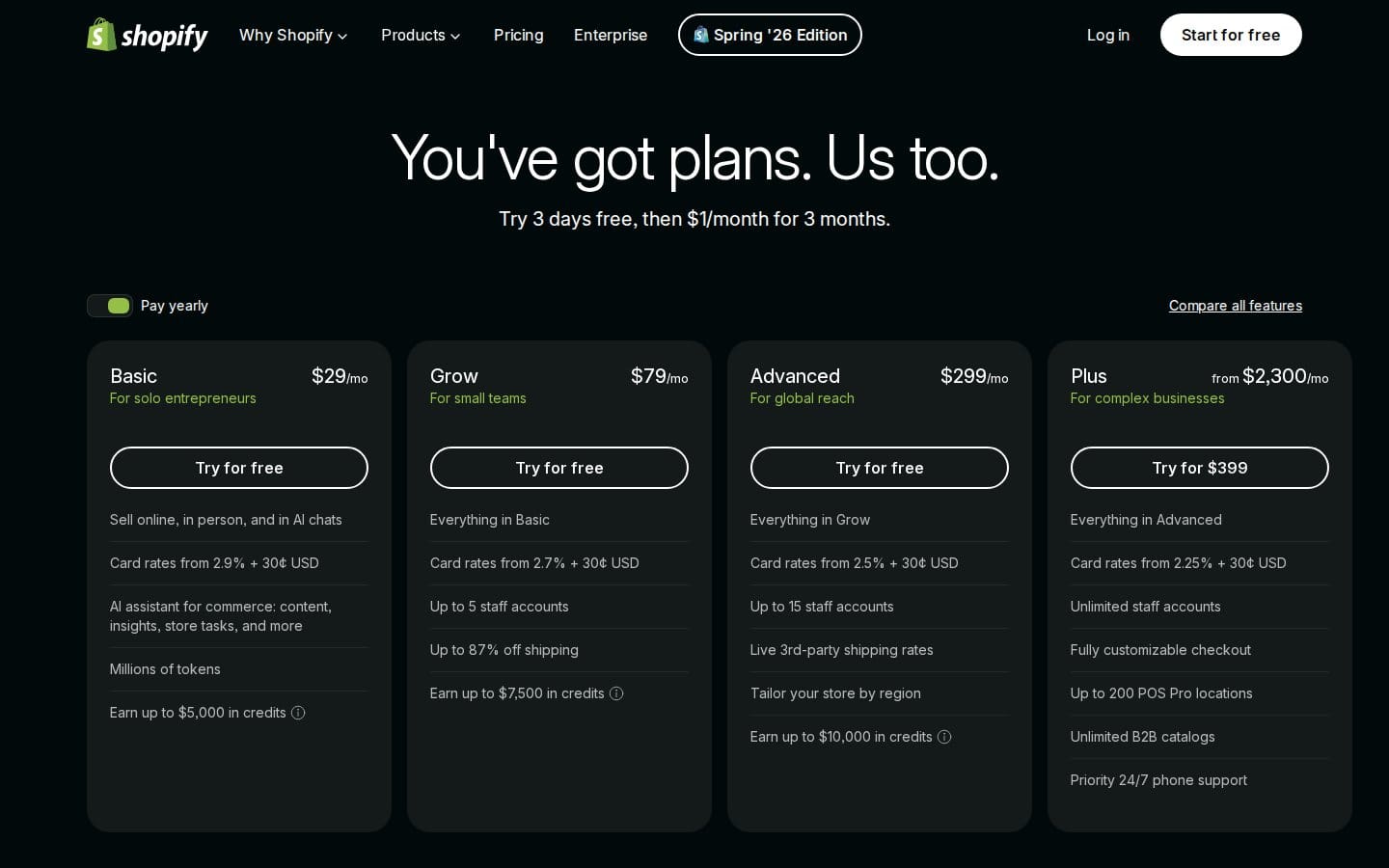
Strengths
- Multi-currency and multilingual support via Shopify Markets, cutting the engineering lift for cross-border selling
- Drag-and-drop store builder with analytics covering sales, traffic, and customer behaviour
- Native integrations with Meta, TikTok, and Google for social commerce — increasingly important across LATAM markets
Best fit
Solid for brands entering LATAM that already run on Shopify globally and want a consistent stack. Worth noting: higher-tier plans (Shopify and above) are required to unlock more detailed reports, such as sales by channel, product, staff, location, and customer cohort analysis.
VTEX
VTEX is the other serious contender — and in many ways the more LATAM-native choice. In Brazil's market for medium and large operations, VTEX is one of the dominant names. It's an AI-native commerce suite built for enterprises running D2C, B2C, and B2B at the same time, with omnichannel operations, headless commerce via APIs, and an integrated marketplace and seller management layer built in.
Strengths
- AI-native commerce suite with omnichannel capabilities — useful for brands running both physical and digital retail in markets like Brazil and Mexico
- Integrated marketplace and seller management, reducing integration effort for brands using LATAM-specific channels
- Global commerce capabilities with deep regional roots, particularly across Brazil, Mexico, Argentina, and Colombia
Best fit
Best for mid-market to enterprise brands that need LATAM-native depth and can handle an enterprise implementation. Non-native API integrations require analysis of effort and scope and may involve external services.
Payment gateways
This is the category where LATAM ops most often go wrong. Growth across the region runs on digital payment methods — but those methods are hyper-local. Offering only card payments will cost you a significant share of potential customers in Brazil, Mexico, and Argentina. You need a gateway that understands installments, Pix, OXXO, and boleto bancário. Most global gateways don't.
Mercado Pago
Mercado Pago is the payments arm of Mercado Libre — which means it's already embedded in how LATAM consumers pay. It supports online checkout, payment links, in-person QR and POS payments, installment options, digital wallet transfers, and credit access. Its SDK libraries cover Java, Ruby, Python, PHP, Node.js, and .NET, and it integrates directly with WhatsApp and social networks — which matters in a region where social commerce is accelerating fast. A Brazilian brand offering 12-month installment options through Mercado Pago will typically see meaningfully higher conversion on high-ticket items than one forcing a single-payment card checkout.
Strengths
- Comprehensive installment payment options — essential for conversion on higher-value products across the region
- Native connection to Mercado Libre's ecosystem, simplifying payment handling for brands selling on the marketplace
- QR code and POS support for brands with physical touchpoints alongside their online store
Best fit
The default payment layer for any brand taking LATAM seriously, especially those also selling on Mercado Libre. Fund accreditation times vary depending on the chosen processing speed.
dLocal
dLocal is built specifically for the emerging-market cross-border problem: accepting local payment methods (payins) and sending funds cross-border (payouts) through a single API. It already works with Shopify, Amazon, and Microsoft, and it handles fraud and compliance management in markets where the regulatory environment is genuinely complex. If your brand is headquartered outside LATAM but selling into it, dLocal is the cleaner solution for reconciling what you receive locally against what lands in your home-currency account.
Strengths
- Single API covering payins and payouts across multiple LATAM markets
- Fraud and compliance management for markets with complex local regulations
- Purpose-built for platforms and marketplaces, not just direct D2C — useful for brands operating at scale
Best fit
Best for international brands that need clean cross-border settlement rather than local-market-first operations. Funds from approved transactions have a settlement period of 14 days before becoming available for transfer.
Shipping and fulfillment
Last-mile delivery in LATAM is genuinely hard. Infrastructure gaps, complex customs regimes, and the sheer geographic spread of the region mean global carriers often struggle where regional specialists thrive. For most brands, the question isn't whether to use a regional logistics partner — it's which one covers your specific markets. This connects to broader questions around how you structure returns too; our international e-commerce returns stack covers that side of the equation.
clicOH
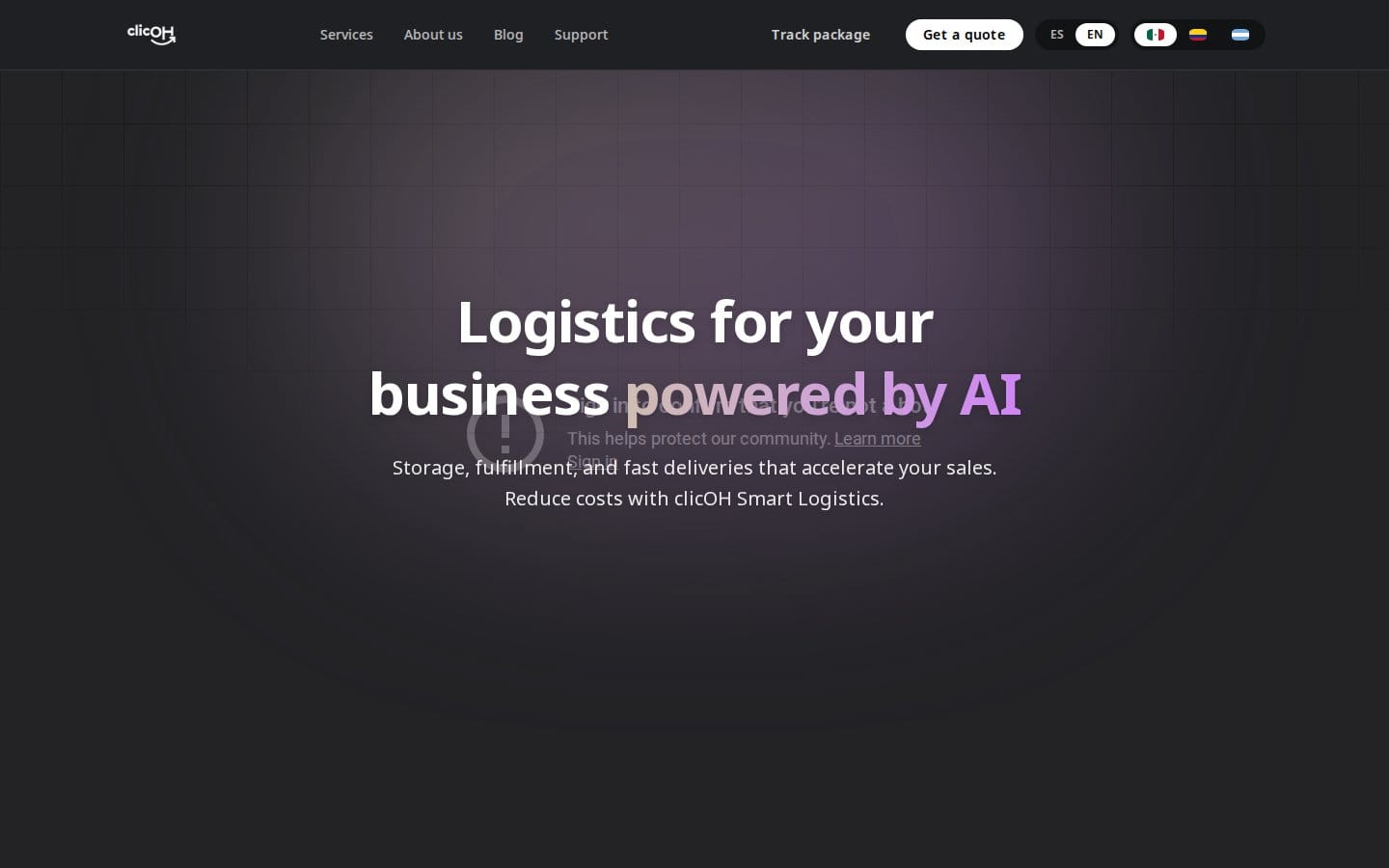
clicOH offers end-to-end logistics across six LATAM countries — Mexico, Colombia, Chile, Argentina, Uruguay, and Peru — covering warehousing, picking, packing, shipping, and last-mile home delivery including same-day and next-day options. It also runs clicOH Points, a pickup and drop-off network for customers who can't or won't accept home delivery. Its AI-optimised distribution network is built specifically for the route complexity of LATAM last-mile. Custom finishing for product packaging and labelling is available too — useful for brands that want white-label fulfillment without running their own warehouse.
Strengths
- End-to-end logistics in a single provider — warehousing through last-mile — which simplifies ops significantly versus stitching together separate providers
- clicOH Points PUDO network for flexible delivery in markets where home delivery reliability varies
- Native integrations with Shopify, Tienda Nube, WooCommerce, and Mercado Libre
Best fit
Strong choice for brands wanting a single logistics partner across Southern Cone and Andean markets. Operations are limited to Mexico, Colombia, Chile, Argentina, Uruguay, and Peru.
99minutos
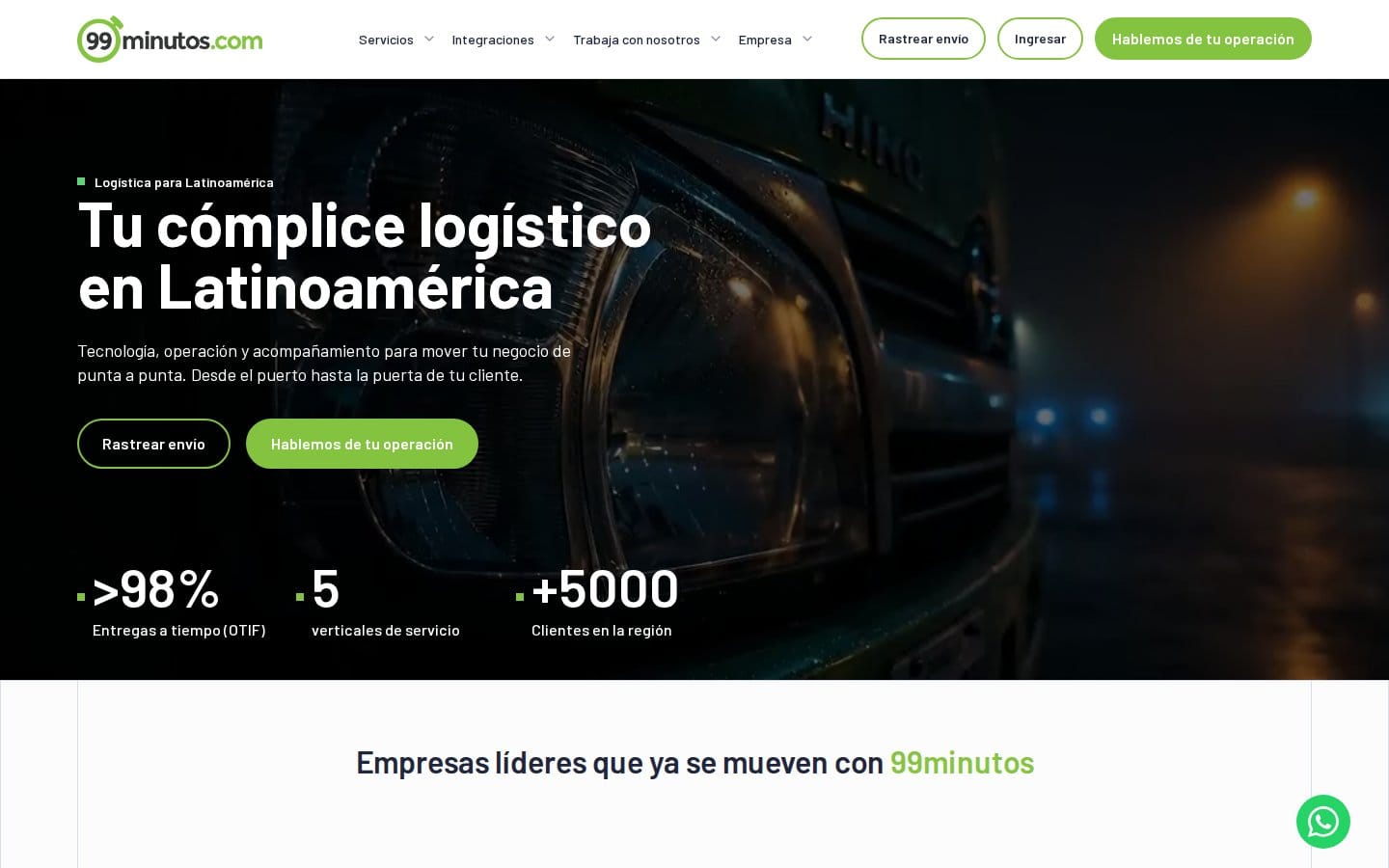
99minutos covers the full logistics chain: express deliveries (under 99 minutes, same-day, next-day), full fulfillment (almacenaje, pick and pack), real-time tracking, reverse logistics, a PUDO network, freight transport including FTL and drayage, and cross-border import management. Its dashboard and APIs are strong, and it integrates natively with Shopify, Tiendanube, TikTok Shop, MercadoEnvíos, and MercadoFLEX. For a brand running a mixed social-commerce and marketplace strategy, that breadth of integration matters.
Strengths
- Express delivery options including under-99-minute delivery — a genuine differentiator for brands competing on speed in urban LATAM markets
- Integration with TikTok Shop and MercadoFLEX, covering the channels where LATAM growth is happening fastest
- Full-service offering from port to customer, including cross-border import management
Best fit
Particularly strong for brands prioritising speed and needing broad channel coverage. Shipments are limited to 1–25 kg, so it's not suitable for heavy-goods categories.
Marketing automation
LATAM e-commerce customers are increasingly mobile-first, and the competition for attention across WhatsApp, Instagram, and TikTok is intense. Your marketing automation platform needs to handle segmentation, behavioural triggers, and email sequences — but it should also integrate cleanly with the rest of your stack, particularly your CRM and Shopify data. If you're building out a more sophisticated retention strategy, our guide on connecting Amazon Seller Central to Klaviyo covers complementary approaches to marketplace-to-CRM data flow.
ActiveCampaign
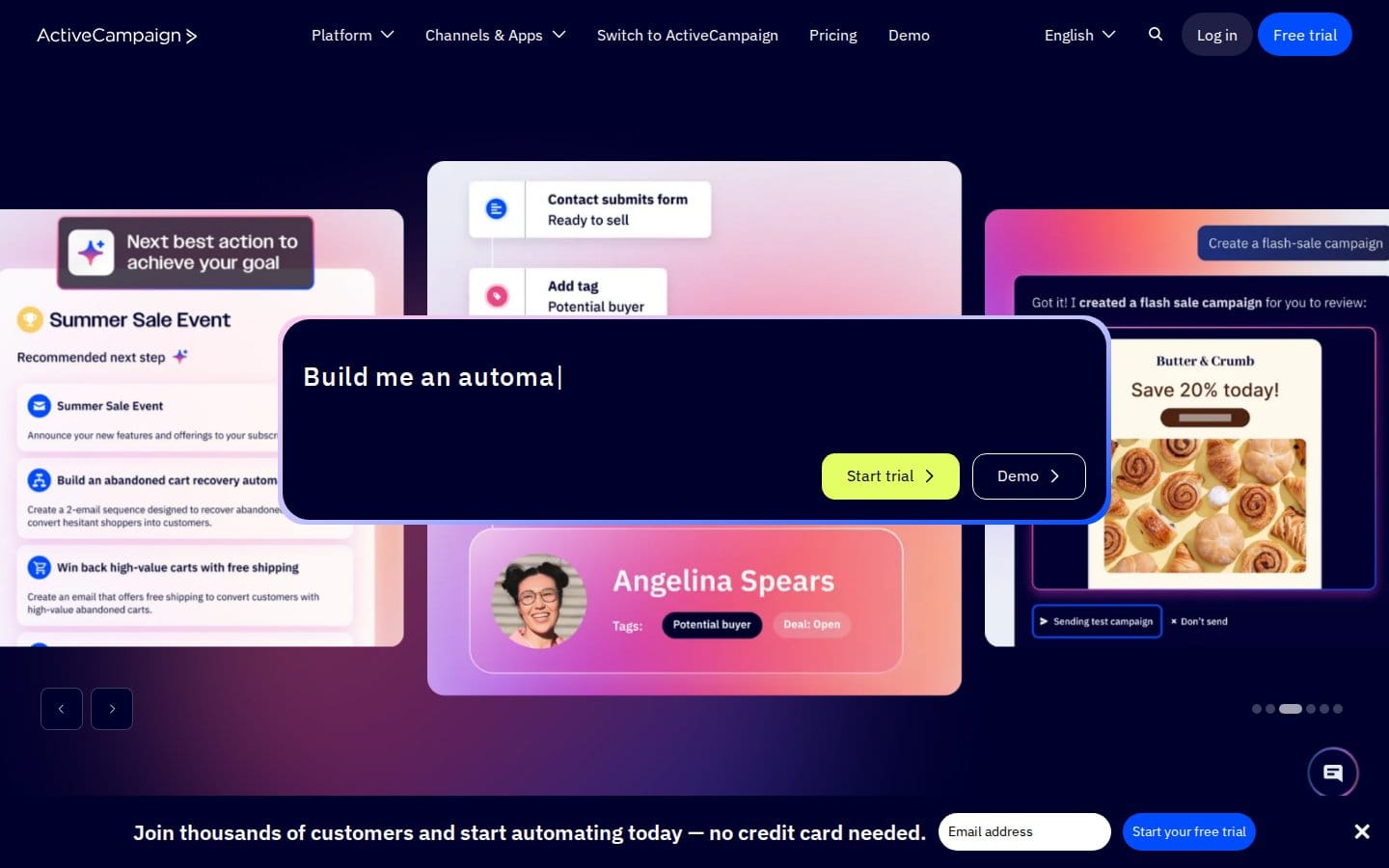
ActiveCampaign is a serious marketing automation platform covering email, CRM and sales automation, landing pages, and AI-driven features under what it calls Active Intelligence. Its Shopify, Salesforce, Google Ads, Facebook/Meta, and Zapier integrations give it solid connectivity into the rest of the stack. For brands running complex post-purchase sequences — welcome series, win-back flows, abandoned cart — it handles conditional logic and branching well at the right tier.
Strengths
- Marketing automation with branching and conditional logic for sophisticated customer journey management
- CRM and sales automation in one platform, reducing the need for a separate sales tool at early stages
- AI/Active Intelligence features for predictive sending and content generation
Best fit
Good for brands serious about automation depth. The Starter plan restricts automations to 5 actions per workflow with no branching or conditional logic, no landing pages, no AI-generated content, no predictive sending, and supports only 1 user seat.
HubSpot
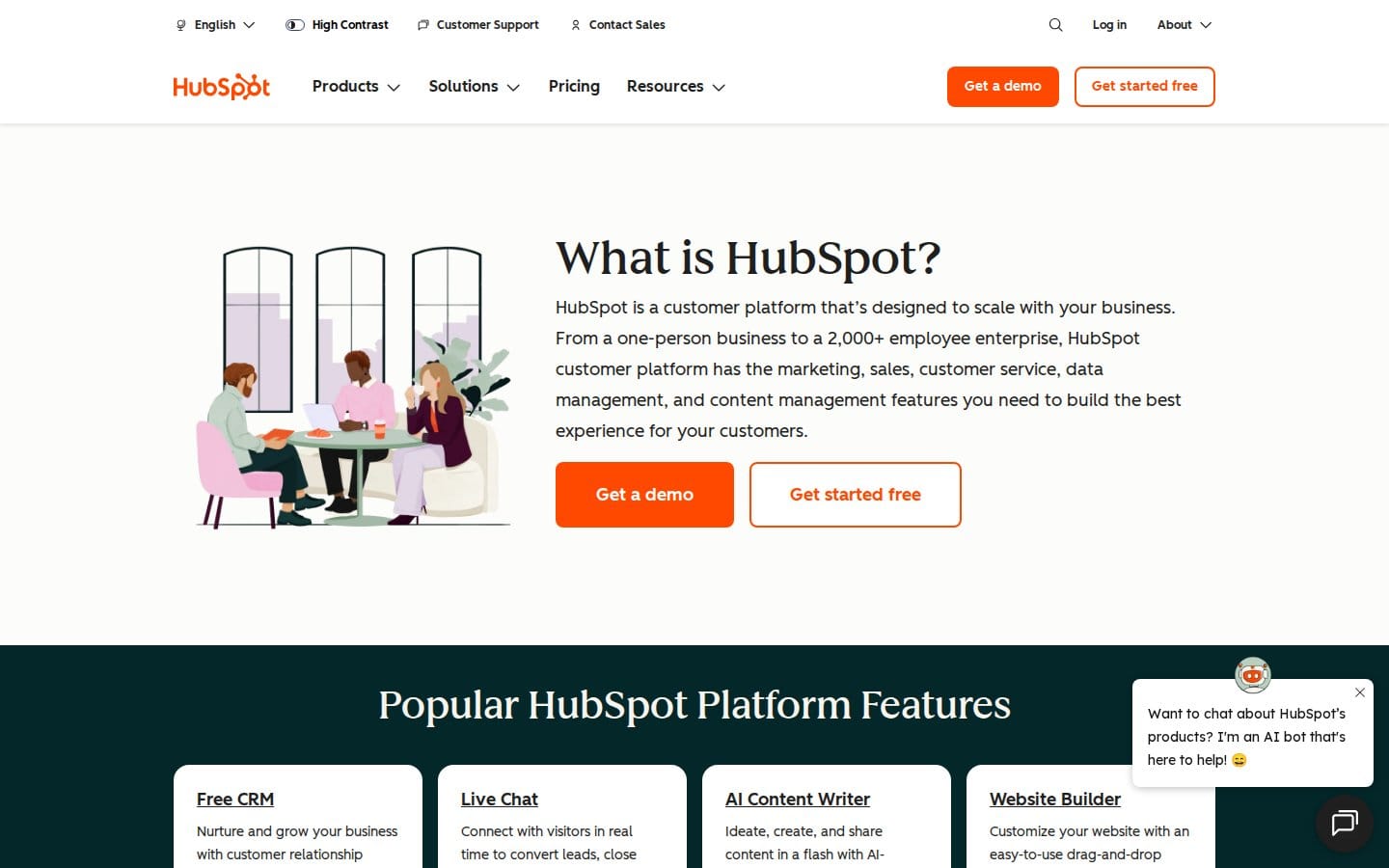
HubSpot covers marketing automation, a free CRM, sales pipeline management, customer service tools, and a website builder in one platform. For a growing LATAM brand that wants one tool to handle marketing and sales without stitching together multiple point solutions, it's a reasonable anchor. Its free CRM is genuinely useful even before you upgrade, and the integration list (Gmail, Outlook, QuickBooks, PayPal, Salesforce) means it connects without friction into most existing stacks.
Strengths
- Free CRM with no seat limit — useful for lean teams that need visibility across customer interactions without upfront cost
- Marketing, sales, and customer service on one platform, reducing context-switching for small ops teams
- Email, social, and content management capabilities in the marketing automation layer
Best fit
Best for scaling brands that want a broad platform over deep specialisation. The free tier for email marketing is limited to 2,000 sends per month across the entire account.
Customer support
Customer expectations in LATAM are high and support channels are fragmented — WhatsApp is often a primary support channel in Brazil and Mexico, not a nice-to-have. Your helpdesk needs to handle omnichannel volume without requiring an army of agents. For fashion and apparel brands in the region, this connects to how you handle returns communication too — see our omnichannel fashion tech stack for more on that.

Gorgias
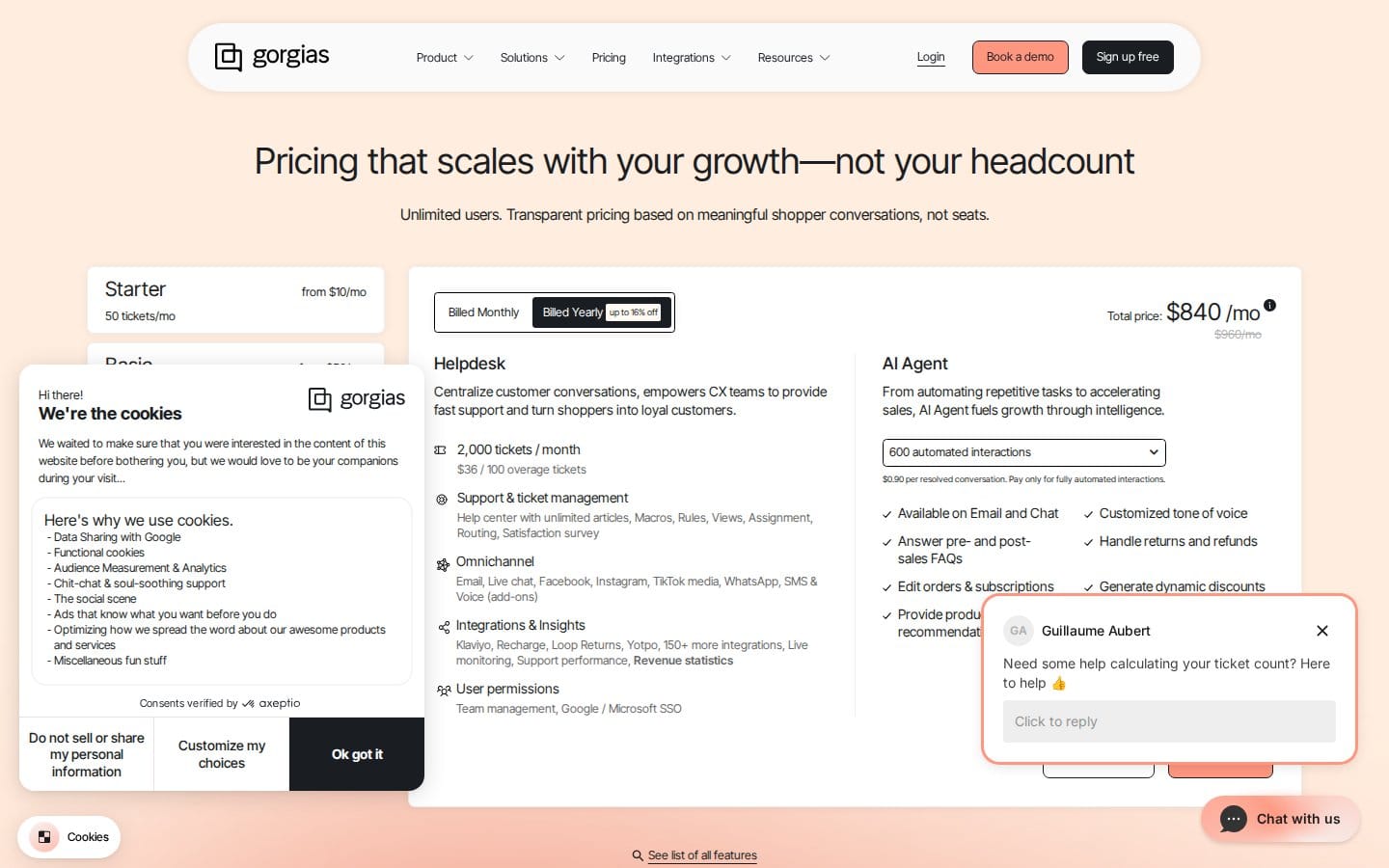
Gorgias is purpose-built for e-commerce, with a single omnichannel inbox covering email, chat, SMS, WhatsApp, Instagram, and Facebook. Its native Shopify integration lets agents cancel orders, apply discounts, process refunds, and edit orders without leaving the support thread. The AI Agent handles automated ticket resolution and shopping assistance, and revenue attribution reporting ties support activity to actual sales outcomes.
Strengths
- WhatsApp in the omnichannel inbox — critical for LATAM markets where WhatsApp is a primary customer communication channel
- Native Shopify integration enabling in-conversation order actions (cancellations, refunds, discounts) without switching tools
- Revenue attribution reporting, so support isn't treated as a pure cost centre
Best fit
Strong fit for Shopify-first brands with meaningful ticket volume. AI Agent capabilities are an add-on billed separately per resolved conversation, in addition to the helpdesk ticket fee.
Zendesk
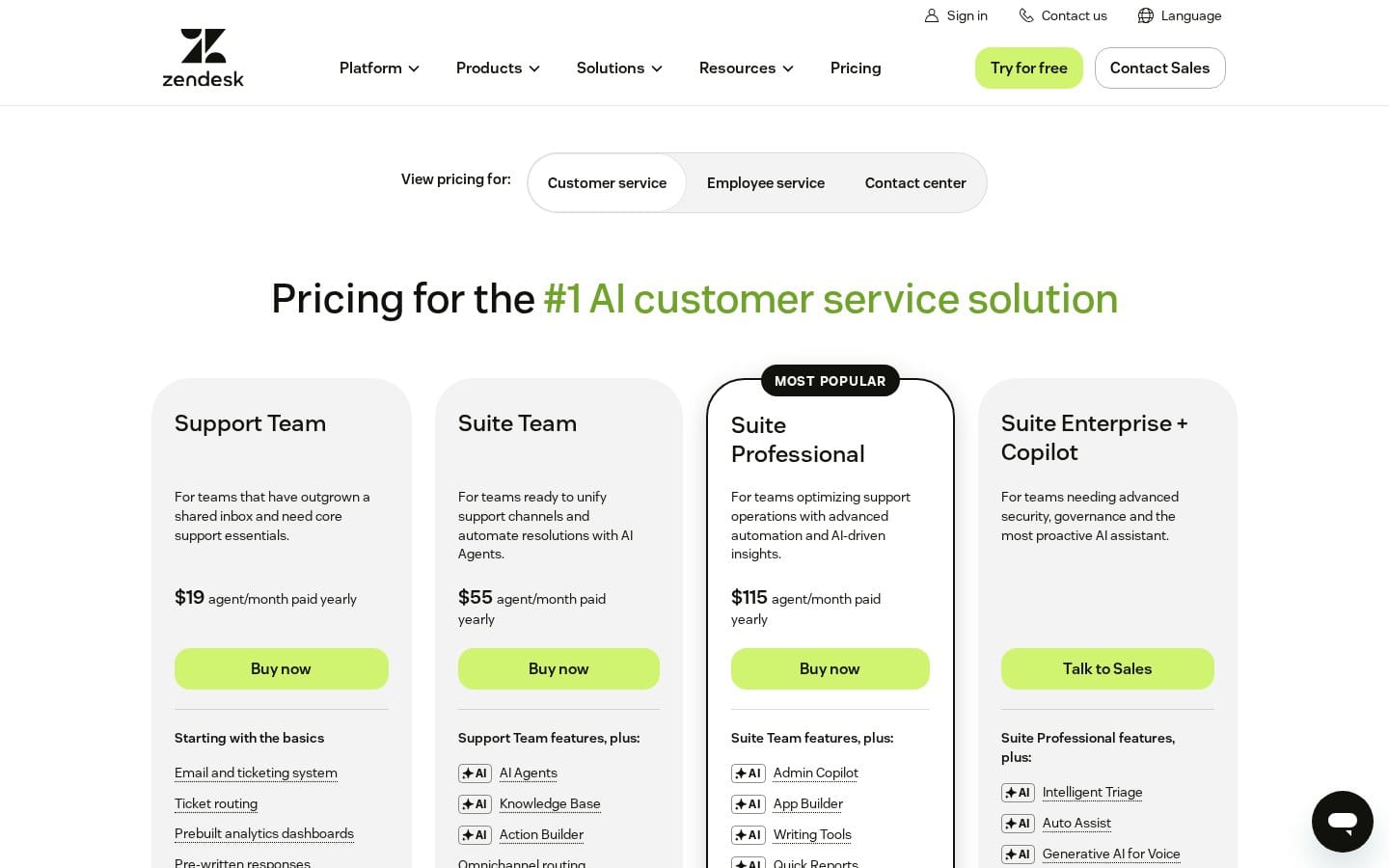
Zendesk is the enterprise end of customer support: omnichannel ticketing across email, chat, phone, social, and messaging apps; a self-service knowledge base; AI-powered agents and copilot; and Zendesk Explore for detailed analytics. It has workforce management and quality assurance tooling that Gorgias doesn't match at scale. For LATAM operations with large support teams or complex multi-brand setups, Zendesk's customisation and integration depth (Salesforce, Oracle, Jira, HubSpot, Slack) is harder to replicate.
Strengths
- Omnichannel ticketing at scale with workforce management and quality assurance tooling
- Self-service knowledge base and Help Centre to reduce inbound volume across markets
- AI-powered automation including AI Agents, Copilot, and generative replies
Best fit
Better suited to larger operations with dedicated support teams than to lean e-commerce brands. Advanced AI features and certain add-ons are often locked behind higher tiers or carry additional costs.
Analytics and business intelligence
In LATAM, competitive pricing pressure is acute — especially on Mercado Libre, where price visibility is high and shoppers comparison-shop aggressively. Your analytics layer needs to cover both operational performance and competitive market intelligence. For deeper work on marketplace analytics, our guide on connecting Amazon Seller Central to Looker Studio is worth reading alongside this.
Price2Spy
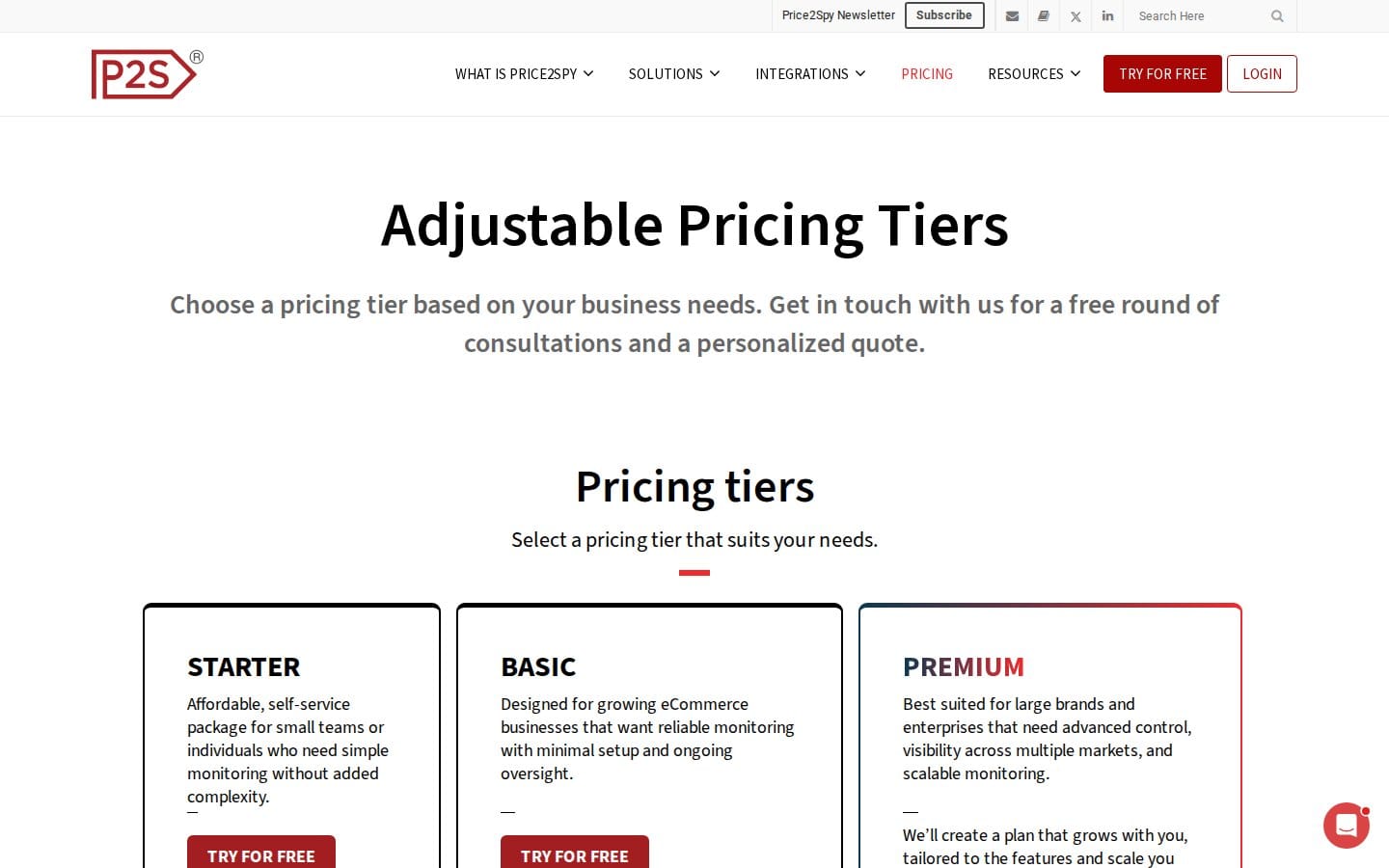
Price2Spy monitors competitor prices at high frequency, handles product matching through automated, manual, or hybrid methods, and runs an automated repricing engine with custom formulas. MAP policy monitoring and stock availability alerts are included, and it integrates with Shopify, Magento 2, BigCommerce, Google Analytics 4, Microsoft Power BI, and various ERP and CRM systems. For brands on Mercado Libre where price is often the primary conversion lever, automated repricing that responds to competitor moves is operationally significant.
Strengths
- High-frequency competitor price monitoring with Stealth IP technology to get around bot protection
- Automated repricing engine with custom formulas — useful for brands competing on price-sensitive LATAM marketplaces
- Over 25 report types covering MAP compliance, competitor trends, and stock availability
Best fit
Good for any brand where competitive pricing intelligence matters. The repricing module, screenshot capture, GA4 integration, and automatch are separately priced add-ons.
Stackline
Stackline brings market intelligence (Atlas), advertising automation (Drive), performance measurement and forecasting (Beacon), and shopper journey management (Shopper OS) into one platform. Its advertising automation handles intelligent campaign adjustments across retail media networks in real time, and its forecasting module covers sales predictions and operations planning. The integrations lean Amazon-first (Amazon Marketing Cloud, Amazon Advertising, Walmart, Target, Kroger, Chewy), which makes it most valuable for brands with meaningful Amazon or Walmart presence.

Strengths
- Advertising automation with real-time insights across retail media networks — particularly strong for Amazon-first brands
- Performance measurement and forecasting (Beacon) for unified sales and operational planning
- Shopper journey management with omnichannel insights and multi-retailer loyalty programmes
Best fit
Most valuable for brands with Amazon as a primary channel. Data processing covers over 30 major retailers across 26 countries, so coverage outside those retailers may be limited.
Inventory management
Once you're selling across your own storefront and Mercado Libre — and potentially Amazon.com.mx or Amazon.com.br — inventory sync becomes operationally critical. Overselling on one channel because another sold out first is a fast route to negative feedback and listing suppression. That's the last thing your ops team wants. This is where a dedicated multi-channel IMS earns its keep. For background on how to think about this problem structurally, our guide on mastering multi-channel inventory forecasting is a useful starting point, as is our piece on dynamic safety stock optimisation.
Ceendesis
Ceendesis combines multi-channel inventory management, EPR compliance, and marketplace-to-accounting sync in one platform. For brands expanding into LATAM while maintaining existing Shopify, Amazon, eBay, Walmart, or TikTok Shop operations, it removes the need for separate IMS and accounting sync tools. Native Xero and QuickBooks reconciliation handles marketplace payout matching — a genuinely tedious problem at volume, and one that gets more complex when you're reconciling payouts across multiple currencies and markets. For brands also selling into Europe alongside LATAM, the compliance layer covers EPR obligations including packaging and textiles.
Strengths
- Multi-channel inventory, EPR compliance, and marketplace-to-accounting sync in one platform
- Built for brands selling on Shopify, Amazon, eBay, Walmart, and TikTok Shop
- Native Xero and QuickBooks reconciliation for marketplace payouts
Best fit
Built for brands on 2+ marketplaces — overkill for single-channel Shopify-only stores.
The stack at a glance
| Category | Tool | Free tier | Best integration |
|---|---|---|---|
| E-commerce Platform | Shopify | Yes (trial) | Mercado Pago, dLocal, clicOH, 99minutos |
| E-commerce Platform | VTEX | No | ERP, CRM, external marketplaces |
| Payment Gateway | Mercado Pago | Yes | Mercado Libre, Shopify, WhatsApp |
| Payment Gateway | dLocal | No | Shopify, Amazon |
| Shipping & Fulfillment | clicOH | No | Shopify, Tienda Nube, Mercado Libre |
| Shipping & Fulfillment | 99minutos | Yes | Shopify, TikTok Shop, MercadoFLEX |
| Marketing Automation | ActiveCampaign | No | Shopify, Facebook/Meta, Zapier |
| Marketing Automation | HubSpot | Yes | Shopify, Salesforce, QuickBooks |
| Customer Support | Gorgias | No | Shopify, WhatsApp, Klaviyo |
| Customer Support | Zendesk | No | Salesforce, Shopify, Slack |
| Analytics & BI | Price2Spy | Yes | Shopify, Google Analytics 4, Power BI |
| Analytics & BI | Stackline | Yes | Amazon, Walmart |
| Inventory Management | Ceendesis | No | Shopify, Amazon, Xero, QuickBooks |
Frequently asked questions
What technology is needed to sell online in South America?
At minimum, you need a hosted e-commerce platform (Shopify or VTEX depending on your scale), a payment gateway that supports local payment methods in your target markets (Mercado Pago for regional-first, dLocal for cross-border), and a logistics partner with genuine last-mile coverage in those countries. From there, marketing automation for customer retention, a helpdesk that handles WhatsApp and social channels, and an inventory management layer all become important fast once volume grows. Tax and e-invoicing compliance is also non-trivial — particularly in Brazil and Mexico, where government-mandated e-invoicing requirements add a layer of complexity that generic global platforms don't always handle out of the box. If you're also selling into Europe, see our guide on the international CPG e-commerce operations stack for how those stacks compare.
How do I accept local payments in Brazil and Mexico?
In Brazil, Pix is the dominant instant payment method and has become a standard part of e-commerce transactions alongside cards. Boleto bancário remains widely used for unbanked or underbanked shoppers. Installment payments (parcelamento) are culturally expected for purchases above a certain value — offering them isn't optional if you want competitive conversion. Mercado Pago supports all of these natively. In Mexico, OXXO cash payments and SPEI bank transfers are commonly expected alongside card options. dLocal handles both markets through its single API if you need a clean cross-border settlement layer on top.
What are the biggest challenges of e-commerce in Latin America?
Four stand out. First, payment fragmentation — no single method works across all markets, and failing to support the dominant local method in each country will hurt conversion directly. Second, last-mile logistics — infrastructure quality varies significantly outside major cities, and delivery promise reliability is a real competitive differentiator. Third, regulatory complexity — Brazil's tax and e-invoicing infrastructure alone is a specialist subject, and each country has its own customs and import requirements for cross-border goods. Fourth, marketplace dependence — Mercado Libre is Latin America's leading e-commerce platform, and most buyers in key markets start their search there. Building a standalone brand presence alongside marketplace presence requires deliberate investment in owned channels: email, SEO, and direct social. Our piece on Screenshots are from each tool's public pricing or features page, captured June 2026. We are not affiliated with any third-party tool listed unless explicitly noted.