
Top Amazon Listing Optimization Tools

Last verified: May 2026
Key takeaways
- Amazon listing optimisation in 2026 means writing for multiple systems at once — Amazon's core search ranking, the COSMO semantic knowledge graph, and Amazon's AI shopping assistant (recently rebranded from Rufus to Alexa for Shopping).
- Helium 10 and Jungle Scout are still the most complete all-in-one suites, covering keyword research, listing building, and competitor analysis in a single platform.
- Ecomtent is the standout choice if AI-generated visual content — lifestyle images, infographics, A+ Content — is your primary bottleneck.
- DataHawk is the strongest option for brands that need deep analytics integrations with Power BI, Tableau, or Snowflake.
- Amazon's own free tools — Brand Analytics and the Enhance My Listing AI tool — are underused and worth trying before you pay for anything.
Amazon listing optimisation used to mean stuffing your title with keywords and hoping for the best. That era is over. Amazon's search now runs on multiple overlapping systems — a core search ranking engine (widely called A10 by the seller community, though Amazon doesn't use that name officially), the COSMO semantic knowledge graph that maps commonsense relationships between products and queries, and an AI shopping assistant that was called Rufus until Amazon rebranded it as Alexa for Shopping in May 2026. Each layer processes your listing differently. That changes what "optimised" actually means.
The practical upshot: you now need copy that satisfies keyword indexing and reads naturally in a conversational query context. You need images that convert on mobile and rich A+ Content that answers pre-purchase questions. And you need to do this across potentially hundreds of SKUs. No spreadsheet handles that anymore.
This guide covers the ten best Amazon listing optimisation tools available in 2026 — from full-stack research suites to specialised AI content generators — so you can pick what fits your workflow rather than subscribing to six overlapping platforms. (We've kept pricing out of this article entirely; rates change too fast to be useful here, so check each tool's site for current figures.)
Helium 10
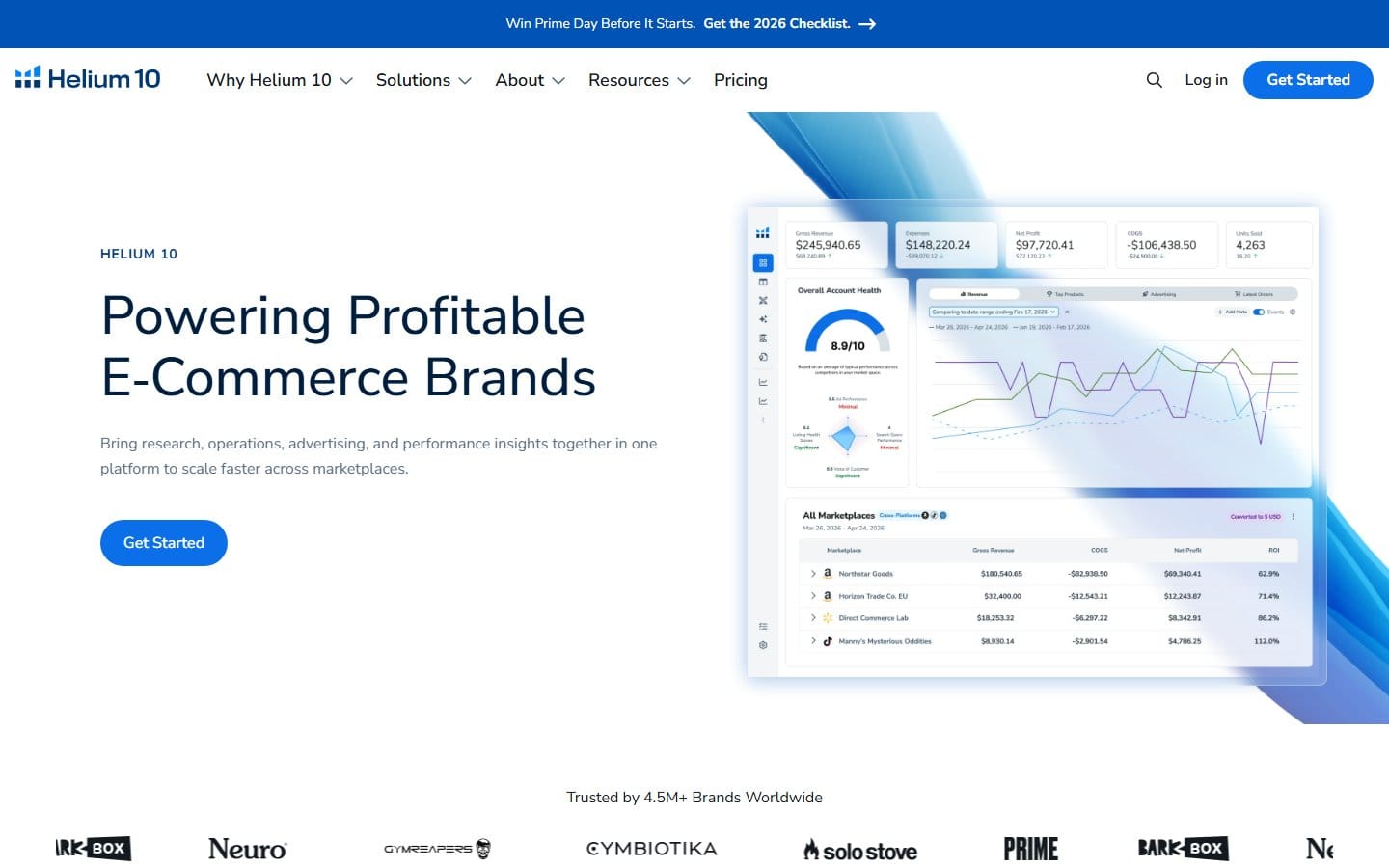
Helium 10 (Amazon, Walmart, and TikTok Shop seller suite) is the closest thing the industry has to a single platform covering every stage of the seller workflow — from finding a product idea to monitoring keyword rank after launch. Its listing-specific tools include Listing Builder for AI-assisted copy creation and Scribbles for keyword integration, while Cerebro and Magnet handle the reverse ASIN lookups and keyword discovery that feed into those listing builds.
Strengths
- Cerebro (reverse ASIN lookup) and Magnet (keyword discovery) together show you which keywords competitors rank for and which are worth targeting in your own listing.
- Listing Builder and Scribbles work in tandem — build your copy, track which keywords you've used, and watch your listing quality score update in real time.
- Covers the full seller workflow beyond listing optimisation: product research (Black Box, Xray), PPC management (Adtomic), and financial analytics (Profits) are all under one roof.
Best fit
Helium 10 suits sellers who want a single platform covering Amazon, Walmart, and TikTok Shop from product research through to financial analytics — though Cerebro and Magnet are capped at 250 uses per month on the Platinum Plan.
Jungle Scout
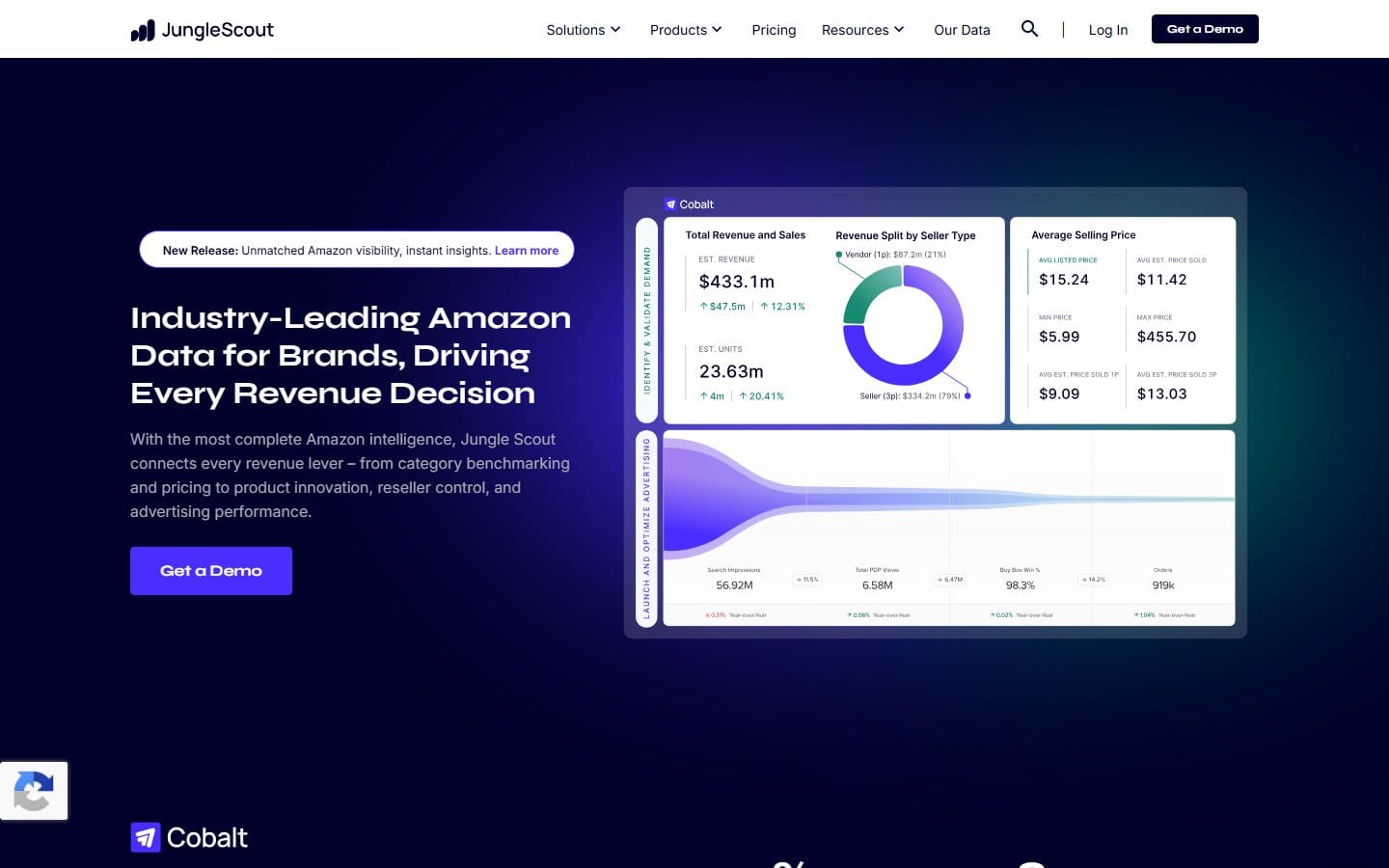
Jungle Scout (Amazon product research and listing optimisation platform) has been around long enough that most Amazon sellers have at least tried it, and it remains a strong choice in 2026 for brands that want reliable keyword data without the feature sprawl of a larger suite. Its Keyword Scout tool supports reverse ASIN lookups, and the broader platform covers supplier sourcing, inventory management, and review automation alongside listing work.
Strengths
- Keyword Scout delivers reverse ASIN lookups and keyword tracking — the two functions most sellers use daily for listing optimisation.
- Supplier Database is a genuine differentiator: you can move from keyword research to sourcing without switching platforms.
- Browser extensions for both Chrome and Firefox make in-context product and competitor research frictionless.
Best fit
Jungle Scout suits Amazon sellers, brands, and agencies who want an integrated research-to-operations platform — but the Starter plan is limited to a single user, so teams will need to budget accordingly.
SellerApp
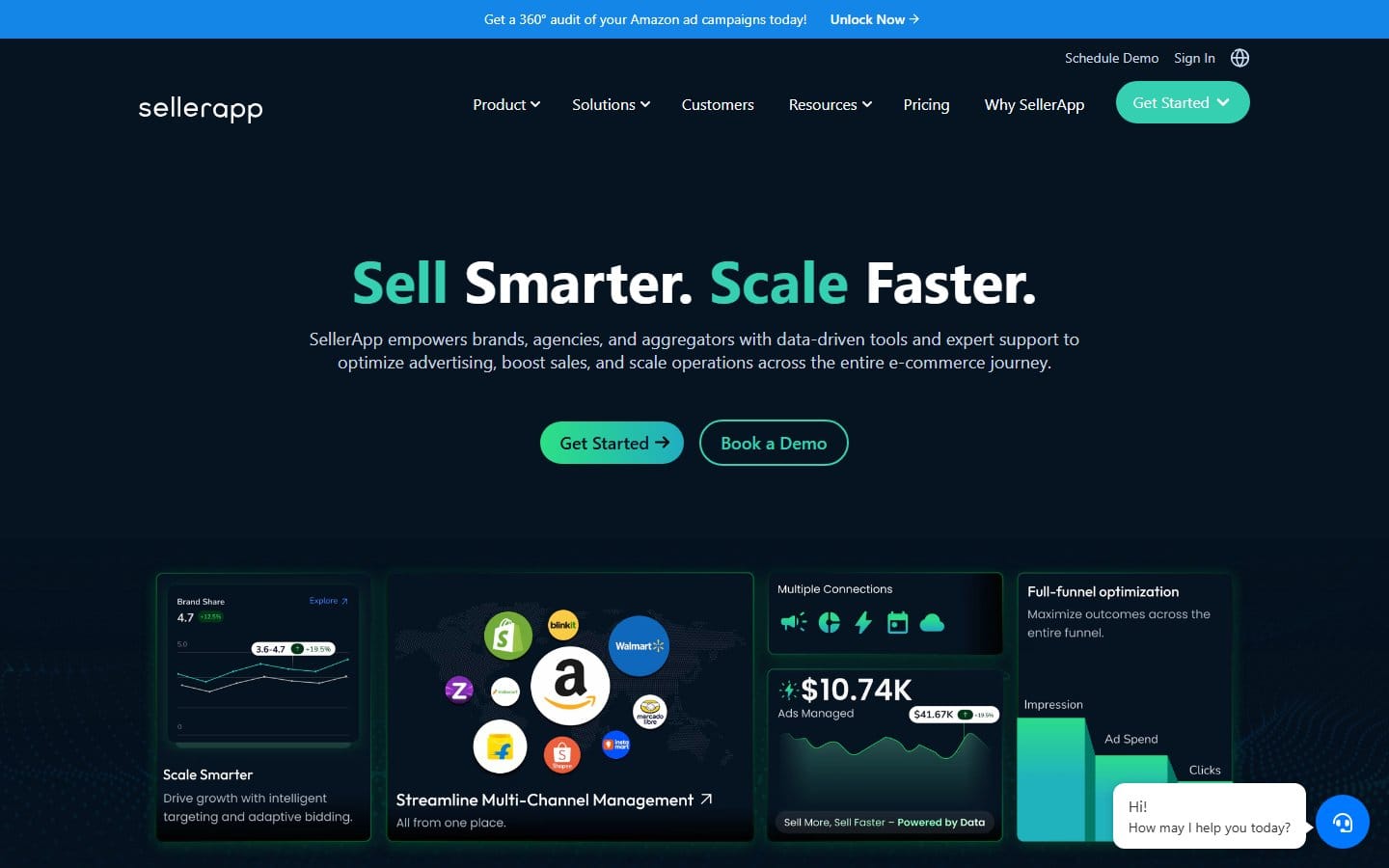
SellerApp (Amazon and Walmart seller intelligence platform) targets sellers at every stage, from first-time FBA launchers through to larger operations running PPC at scale. The listing optimisation module includes quality analysis — it scores your listing and flags specific gaps — which makes it useful for auditing a large catalogue rather than just building new listings.
Strengths
- Listing quality analysis scores your listings and surfaces specific improvement areas, rather than just handing you raw keyword data and leaving you to figure it out.
- PPC management and advertising automation sit alongside listing tools, so you can connect keyword performance in ads directly to listing copy decisions.
- Free tier available, so new sellers can try it before committing to a paid plan.
Best fit
SellerApp works well for Amazon sellers of all sizes who want to combine listing optimisation with PPC management in one place — though the Freemium plan is limited to tracking 2 products and 10 searches per day for product and keyword research.
SmartScout
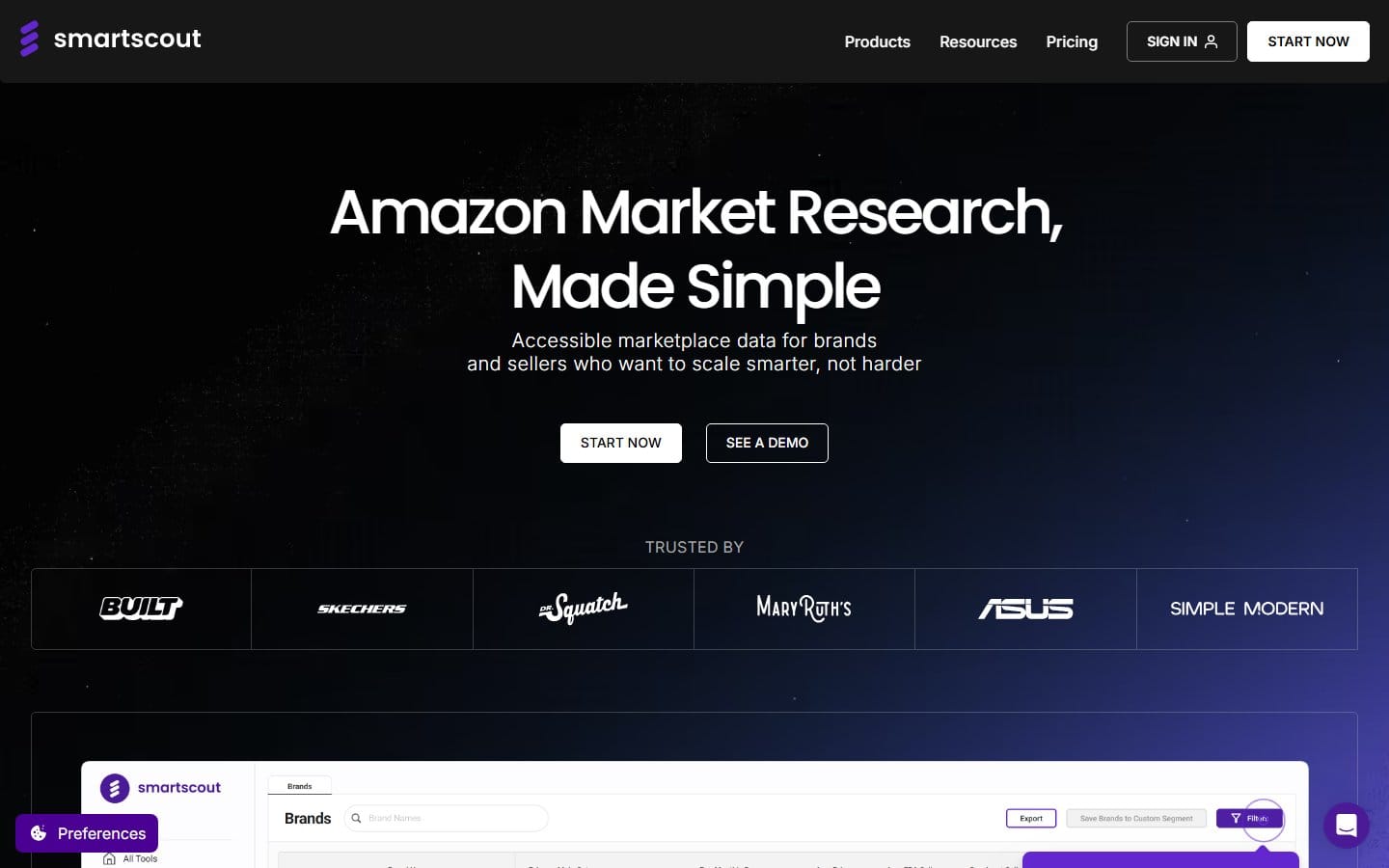
SmartScout (Amazon analytics and AI research platform) takes a different angle to most tools on this list. Where others lead with keyword databases, SmartScout leads with brand and competitive intelligence — a full database of Amazon brands with brand-specific filters, and a geographical seller map that's genuinely useful for wholesale and reseller research. Its AI Listing Architect then uses that competitive context to build keyword-optimised listings.
Strengths
- AI Listing Architect creates listings with the right keywords and messaging in minutes, drawing on SmartScout's underlying brand data.
- Brands Database gives you brand-level market intelligence that most keyword-focused tools don't offer.
- Free tier available for sellers who want to evaluate the platform before committing.
Best fit
SmartScout is built for brands, resellers, and FBA sellers who want to combine competitive brand analysis with AI-assisted listing creation — though some ASINs don't show up when searching for all products related to a specific brand.
AMZScout
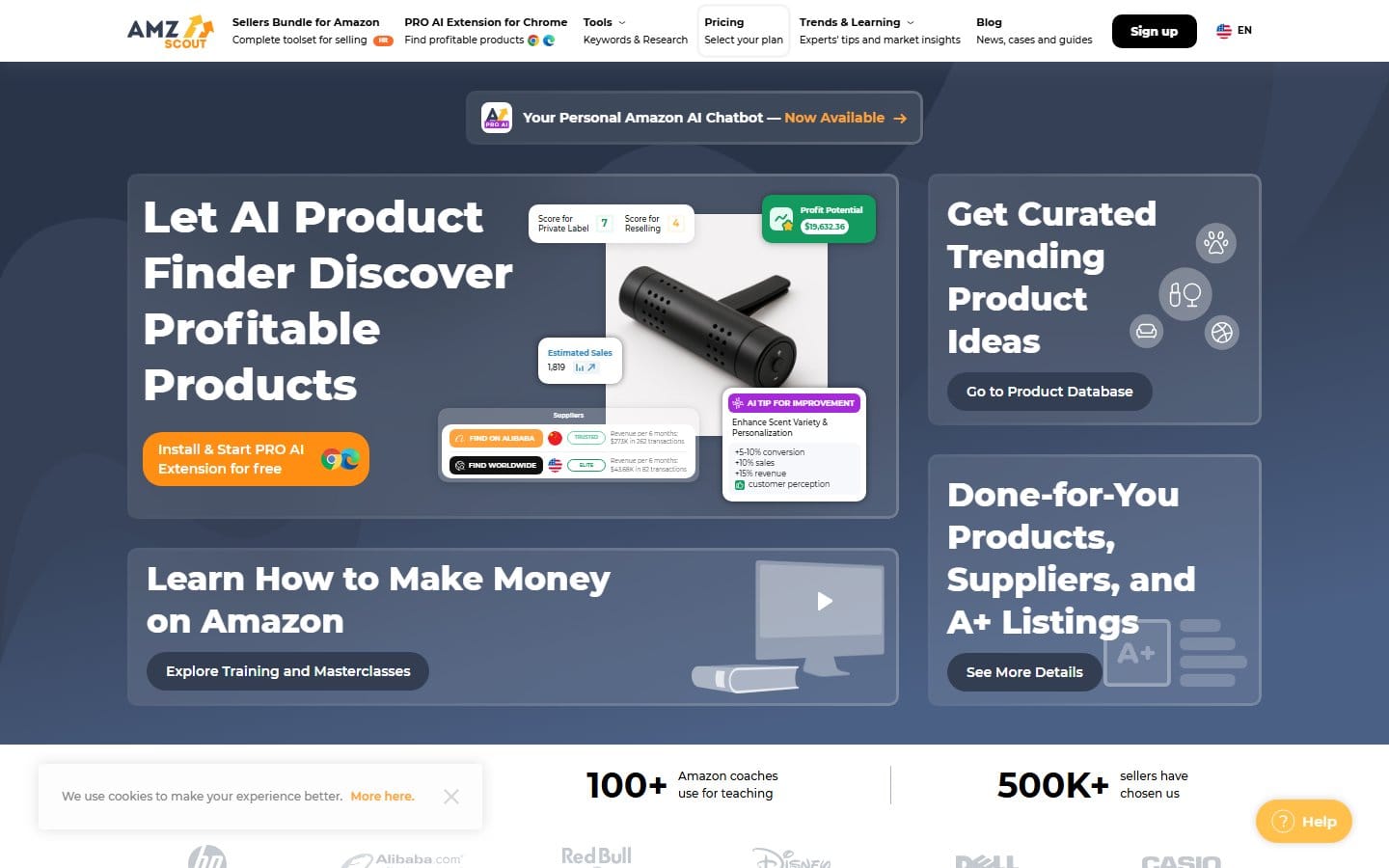
AMZScout (Amazon FBA product research and listing tool) is a focused platform that does product research and listing optimisation well without trying to be everything. Its AI Listing Builder generates product listings from scratch, the AI Review Analyser surfaces product improvement ideas from competitor reviews, and the PRO AI Extension brings niche analysis directly into the Amazon interface.
Strengths
- AI Listing Builder creates unique product listings using keyword research data, cutting the time from product launch decision to live listing.
- AI Review Analyser turns competitor review data into product improvement ideas — useful for both new listing creation and existing listing refreshes.
- Product Tracker monitors daily sales and rating changes, giving you performance context around your listing decisions.
Best fit
AMZScout suits Amazon FBA sellers focused on product research and listing optimisation at the earlier stages — it's worth knowing upfront that it lacks tools for later-stage workflows like review automation or advertising analysis.
DataHawk
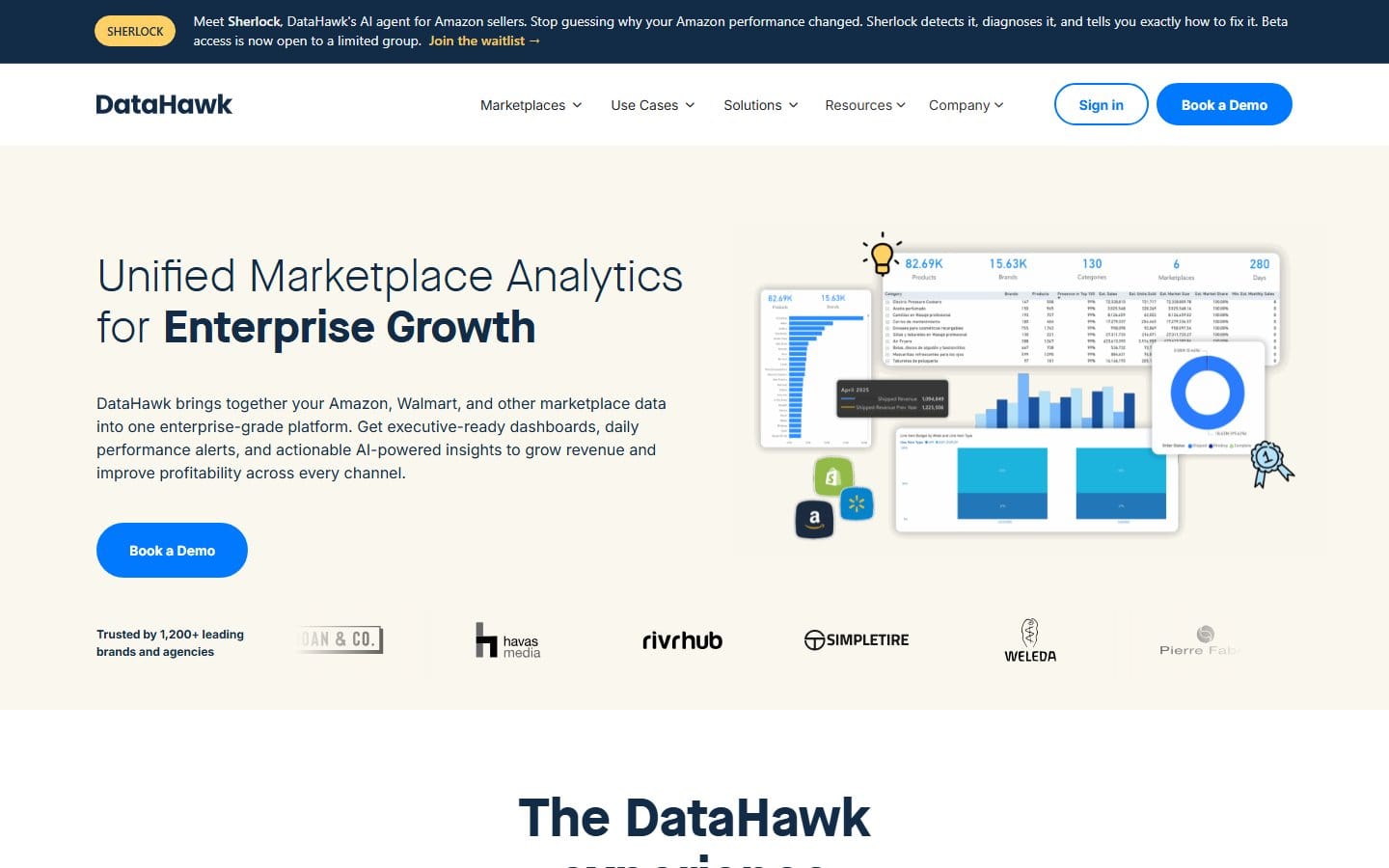
DataHawk (marketplace analytics and listing optimisation platform) is the data-nerd's choice. It covers keyword tracking and listing optimisation like the others, but its real differentiator is analytics depth — AI-powered anomaly detection, automated reporting, and native integrations with Power BI, Tableau, Snowflake, and Google Sheets. If your team runs weekly performance reviews in a BI tool rather than a dashboard, DataHawk fits that workflow in a way most seller tools simply don't. It also covers Amazon and Walmart from one platform — useful if you're managing a multi-channel operation.
Strengths
- Integrations with Google Sheets, Power BI, Tableau, Snowflake, and Zapier make it straightforward to pull Amazon listing and ranking data into your existing reporting stack.
- AI-powered anomaly detection flags sudden changes in keyword rankings or listing performance before they become costly problems.
- Unified coverage across Amazon and Walmart means agencies and multi-marketplace brands don't need separate tools for each channel.
Best fit
DataHawk is best for e-commerce brands, agencies, and consultants who need to feed marketplace data into BI tools and custom reporting workflows — though data export speeds are occasionally slow.
Ecomtent
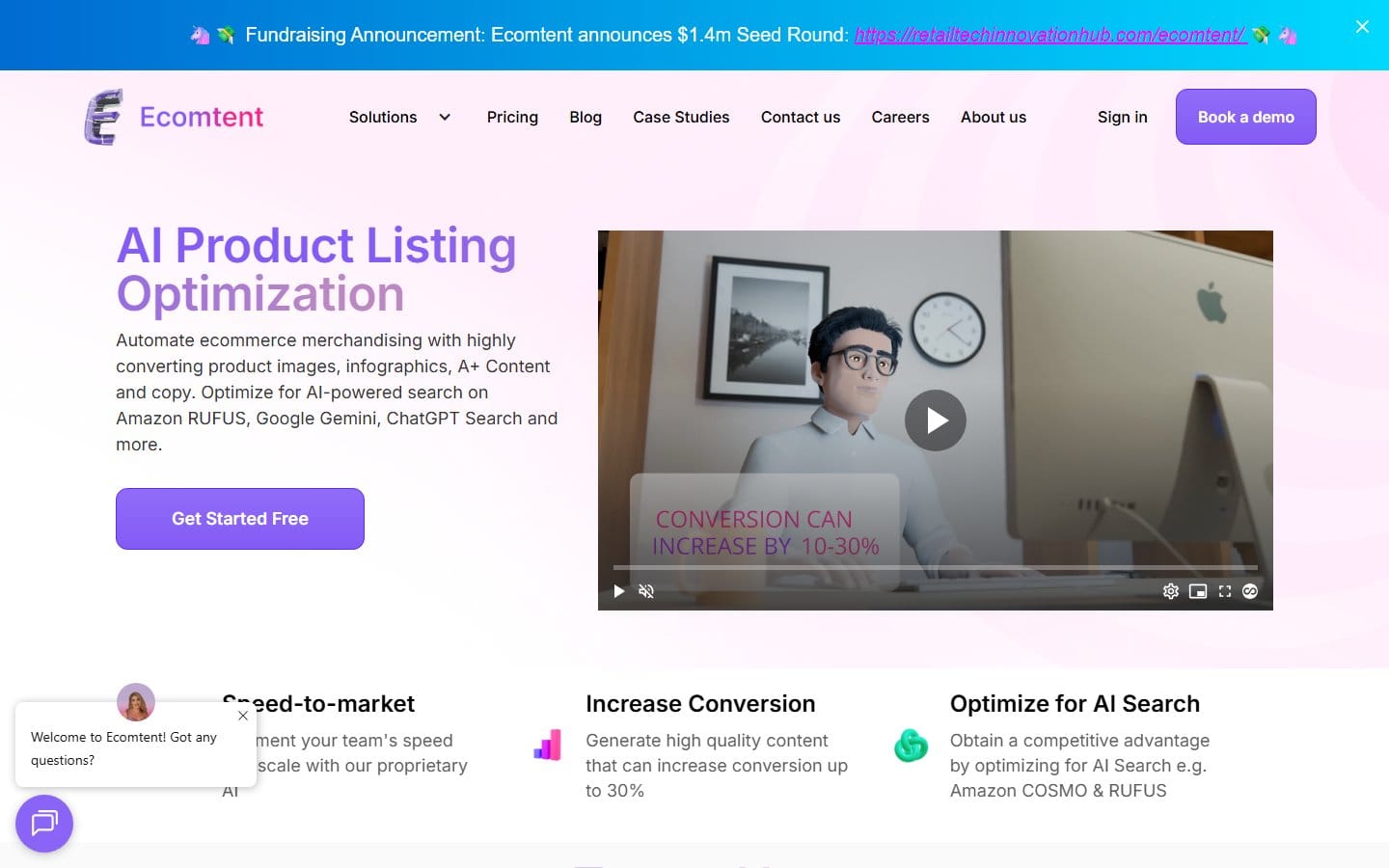
Ecomtent (AI product content generation platform) is the most specialised tool on this list. It doesn't do keyword research or product tracking — it does one thing: generate high-converting product content at scale. That means AI-created lifestyle images, infographics, A+ Content, and SEO-optimised copy, with specific optimisation for Amazon's COSMO semantic graph and Alexa for Shopping (formerly Rufus). For a brand managing hundreds of SKUs across Amazon, Shopify, and Walmart, the content production bottleneck is real. Ecomtent targets exactly that problem.

Strengths
- AI-generated lifestyle images and infographics cut the cost and turnaround time of product photography — significant for brands with large or frequently updated catalogues.
- Copy is optimised for Amazon's COSMO and Rufus/Alexa for Shopping algorithms, not just traditional keyword density.
- Multichannel content management across Amazon, Shopify, Walmart, and eBay from one platform.
Best fit
Ecomtent is built for e-commerce brands and marketplace sellers who need to produce high-converting product content at scale using AI — though Etsy and Facebook Marketplace integrations aren't yet supported.
SellerSprite
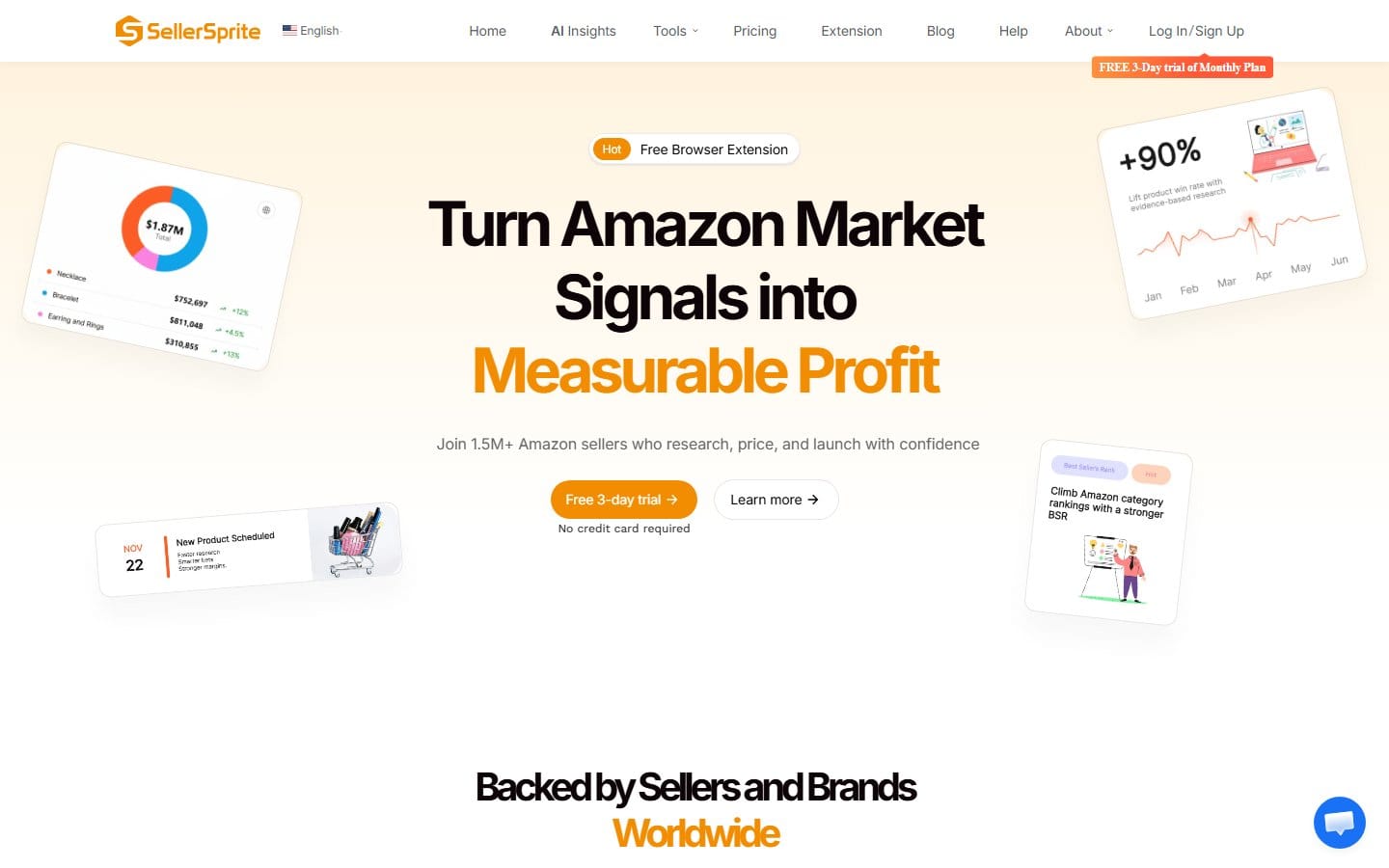
SellerSprite (Amazon keyword research and competitor analysis tool) covers the core research trifecta — product research, keyword optimisation, and competitor analysis — with a Google Trends integration that adds search-trend context to Amazon keyword decisions. The Chrome Extension mirrors most of the web app's functionality, making it practical for sellers who prefer to work directly inside Amazon rather than switching between tabs.
Strengths
- Keyword research and optimisation tools built specifically for Amazon listing improvement, with competitive analysis layered in.
- Google Trends integration gives external search-demand context alongside Amazon-specific keyword data.
- Free tier available for sellers evaluating the platform.
Best fit
SellerSprite works well for Amazon sellers who want an all-in-one tool covering product research, keyword optimisation, and competitor analysis — noting that the Chrome Extension mirrors around 80% of the full web app's functionality.
ZonGuru
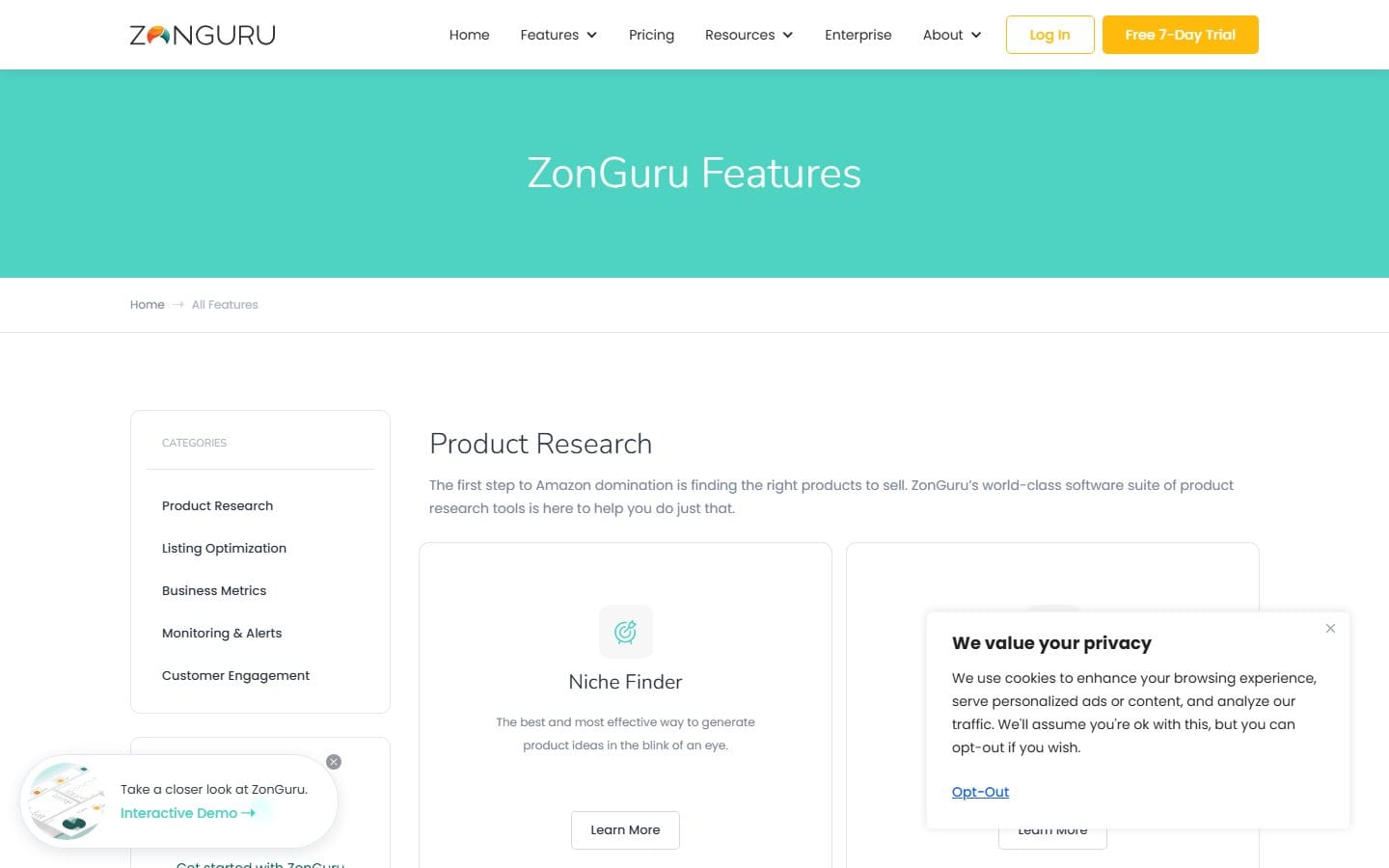
ZonGuru (all-in-one Amazon seller platform) has a well-thought-out set of focused tools rather than a sprawling feature list. Keywords on Fire targets competitor keyword gaps specifically — it surfaces the keywords your competitors rank for that you don't, which is exactly the right framing for listing optimisation. The Listing Optimiser then uses that data to build or improve your listings, and Easy Source connects directly to Alibaba.com for supplier matching once you've validated your product idea.
Strengths
- Keywords on Fire identifies competitor keyword gaps and surfaces high-opportunity terms your listings are missing.
- Listing Optimiser uses data-driven inputs to craft product listings rather than relying purely on AI-generated copy.
- Easy Source integration with Alibaba.com connects the research and optimisation workflow to sourcing in one platform.
Best fit
ZonGuru suits Amazon sellers and brands who want AI and data-driven tools for optimisation and growth in one place — though the Seller plan's pricing scales based on the number of active SKUs in the past 90 days, so costs can rise with catalogue size.
FeedbackWhiz
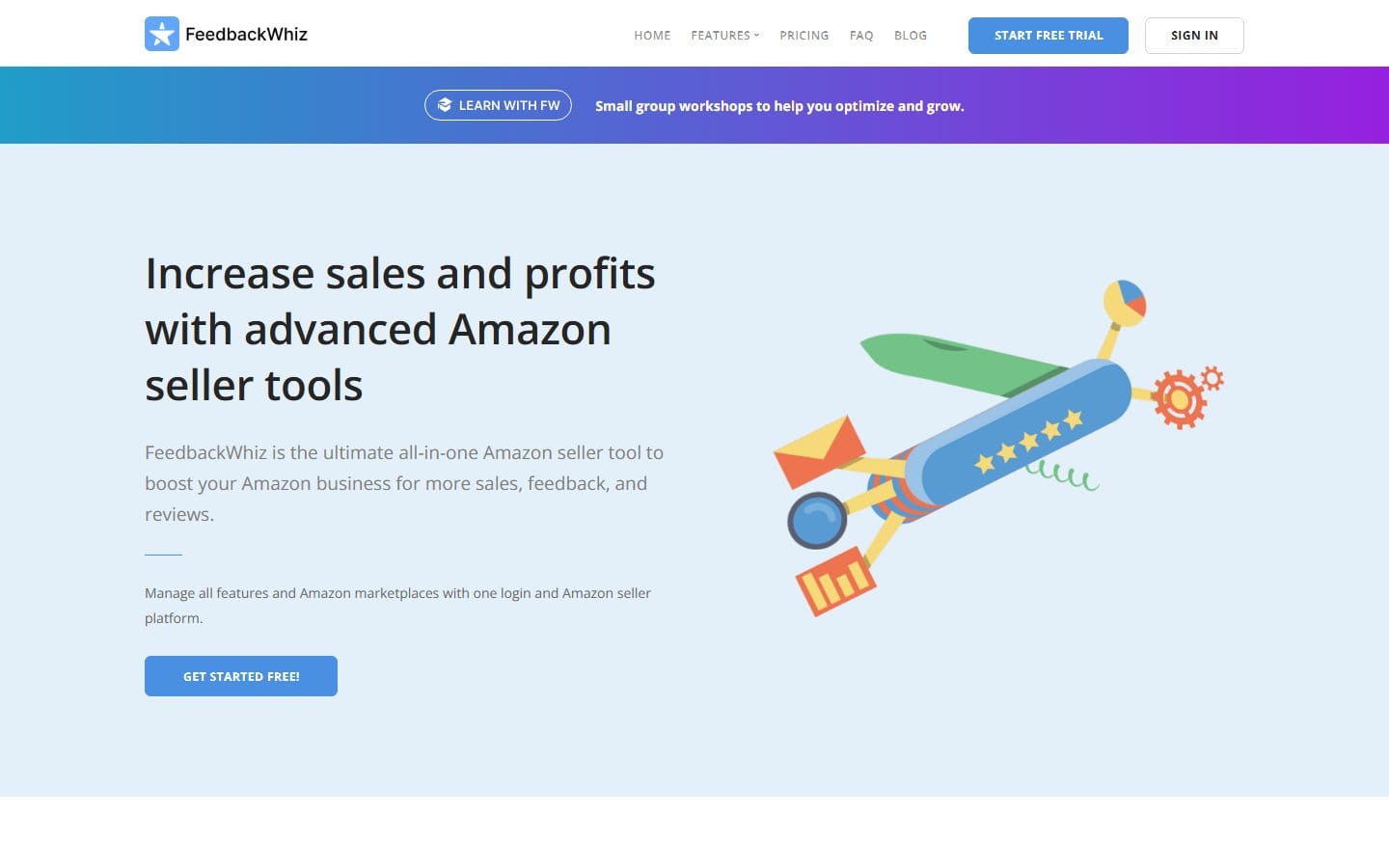
FeedbackWhiz (Amazon and Walmart review and seller feedback management platform) sits at the edge of what we'd call "listing optimisation" — it won't help you write better copy or find new keywords. But it directly affects listing performance through review volume and rating, which influence both conversion rate and ranking. Review automation, listing-change alerts (including hijacker detection), and buy box monitoring make it a smart complement to a primary optimisation tool rather than a standalone choice.
Strengths
- Request a Review automation and custom email campaigns drive review volume systematically, which affects listing performance directly.
- Product alerts for listing changes, hijackers, and buy box status catch listing integrity issues before they cost you sales.
- Profits and accounting dashboard gives business-level financial context alongside the review and feedback data.
Best fit
FeedbackWhiz is the right choice for Amazon and Walmart sellers who want to protect and improve their listings through review management and listing monitoring — noting that the Starter tier is limited to 2,000 emails per month.
At a glance
| Tool | Best for | Free tier | Best integration |
|---|---|---|---|
| Helium 10 | Full-workflow suite for Amazon, Walmart, TikTok Shop sellers | Yes | Amazon, Walmart, TikTok Shop |
| Jungle Scout | Amazon sellers and agencies needing research-to-operations coverage | No | Chrome & Firefox Extension, API |
| SellerApp | Sellers combining listing optimisation with PPC management | Yes | Amazon Seller Central, Walmart |
| SmartScout | Brands and resellers needing competitive brand intelligence | Yes | Amazon |
| AMZScout | FBA sellers focused on early-stage product research and listing builds | Yes | Amazon |
| DataHawk | Brands and agencies feeding marketplace data into BI tools | Yes | Power BI, Tableau, Snowflake, Zapier |
| Ecomtent | Brands generating AI product content at scale | No | Amazon, Shopify, Walmart, eBay |
| SellerSprite | Keyword research and competitor analysis for Amazon sellers | Yes | Amazon, Google Trends |
| ZonGuru | Data-driven listing optimisation and sourcing in one platform | Yes | Amazon, Alibaba.com |
| FeedbackWhiz | Review management and listing protection on Amazon and Walmart | Yes | Amazon, Walmart |
Frequently asked questions
What is the best tool for Amazon keyword research?
Helium 10's Cerebro and Magnet are the most widely used keyword research tools for Amazon in 2026, covering reverse ASIN lookups and broad keyword discovery respectively. Jungle Scout's Keyword Scout is a strong alternative, particularly for sellers who want keyword research integrated with supplier and inventory data. And if your specific problem is competitive gap analysis — finding keywords your competitors rank for that your listings are missing — ZonGuru's Keywords on Fire is purpose-built for exactly that.
How do I optimise my Amazon listing in 2026?
You're satisfying multiple systems at once now. Keyword indexing for core search ranking. Semantic relevance for the COSMO knowledge graph. Natural-language phrasing for Alexa for Shopping. In practice, that means building keyword-rich titles and bullet points using a tool like Helium 10's Listing Builder or ZonGuru's Listing Optimiser, pairing them with high-quality images and A+ Content, and running A/B tests via Amazon's Manage Your Experiments to validate what actually converts. Don't skip Amazon's own free tools either — Brand Analytics (for brand-registered sellers) and the Enhance My Listing AI tool are both underused.
What are the key elements of a perfectly optimised Amazon listing?
A fully optimised Amazon listing in 2026 includes: a keyword-rich title that reads naturally; five bullet points addressing key benefits and common buyer questions; a description (or A+ Content for brand-registered sellers) with rich media; backend search terms covering synonyms and alternative phrasings not in the visible copy; high-resolution main image and supporting lifestyle/infographic images; and a competitive price backed by strong review volume. Getting the review side right — using a tool like FeedbackWhiz for systematic review requests — matters as much as the copy itself, because ratings directly affect conversion rate and ranking.
How do I check if my Amazon listing is indexed for a keyword?
The most straightforward method is Helium 10's Index Checker, which verifies whether Amazon has indexed your listing for specific backend and frontend keywords. You can also do a manual check by searching ASIN [your keyword] directly in the Amazon search bar — if your product appears, you're indexed for that term. Amazon's own Brand Analytics dashboard also shows which search terms your products are appearing for, though it's limited to brand-registered sellers.
Which tool should you actually use?
Here's the honest answer: most growing brands end up with two tools, not one. A research and listing-build tool (Helium 10, Jungle Scout, or ZonGuru depending on your workflow) does the keyword and copy work. A more specialised tool handles your specific bottleneck — Ecomtent if that's content production at scale, DataHawk if it's analytics reporting, FeedbackWhiz if it's review management. That pairing is more cost-effective than paying for a suite that covers everything at medium depth.
When we were running our own brands, the biggest mistake we made was subscribing to too many platforms with overlapping keyword databases and not enough focus on the conversion side — images, A+ Content, review velocity. The keyword research tools are mature enough now that the differences between the top options are marginal. Where you actually gain an edge in 2026 is in content quality and testing cadence. Start with a leaner operations stack, pick one strong research tool, and invest the saved budget in better creative. If you're also managing inventory across channels while running these optimisations, it's worth reading how Shopify and Amazon FBA inventory sync fits into that broader workflow — optimised listings that go out of stock lose rank fast, and that's a separate problem worth solving in parallel.
Screenshots are from each tool's public pricing or features page, captured May 2026. We are not affiliated with any third-party tool listed unless explicitly noted.